






Choose the content to read
- At what age should wisdom teeth be removed?
- Does wisdom tooth removal hurt?
- How long does it take to recover from wisdom tooth removal?
- What can I eat after wisdom tooth removal?
- How much does wisdom tooth removal cost?
- Where can I have wisdom teeth removed?
Wisdom Tooth Removal
Wisdom tooth removal is a surgical procedure that extracts a third molar tooth that is unable to erupt normally from the jawbone. Wisdom tooth/teeth frequently grow abnormally as opposed to regular permanent teeth. Mal-directional eruptions of wisdom teeth, both horizontal and angulated, will squeeze and push against the tissues under the gums, roots, and adjacent molars, causing pain, soreness, and swelling. As a result, when wisdom tooth pain occurs, the dentist typically recommends wisdom tooth extraction or removal as soon as possible to relieve pain and reduce the risk of future dental issues.
What are wisdom teeth?
Wisdom teeth are teeth that are usually unable to erupt properly in the occlusal schemes due to physical crowding or obstructions, such as adjacent teeth, overly dense bones, or abnormally thickened soft tissue, preventing them from erupting normally through the gum or bone due to insufficient space in the jaw. Wisdom teeth are most commonly found in the third molars, upper canines, lower premolars, upper premolars, and second molars.
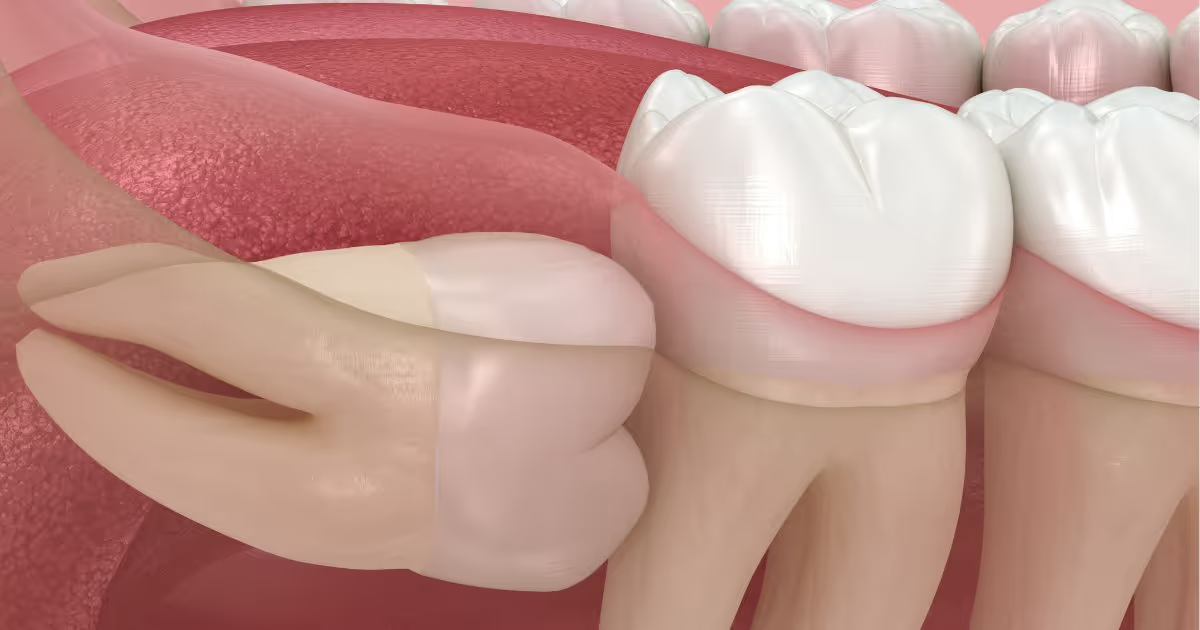
(Horizontal Impaction)
How many types of wisdom teeth?
Wisdom teeth are classified into 4 types based on their angle and degree of protrusion from the gums, as well as how they affect the adjacent teeth, including the following:
- Mesial impaction is a type of impaction in which the wisdom teeth erupt at an angle pointing toward the front of the mouth, actively pushing the front molars until they cause a toothache (angular impaction) by going up at an angle to the side. This type of wisdom tooth often cannot fully erupt and is the most common type of wisdom tooth.
- Vertical impaction is a type of wisdom tooth that erupts vertically, parallel to the anterior teeth, but only partially emerges from the gum or is covered by bone due to insufficient jaw space. Typically, a dentist can surgically remove this without significant complications.
- Distal impaction is the most challenging type of impaction among all types of wisdom teeth. This type of wisdom tooth angles upward, heading towards the back of the mouth—the opposite direction of the wisdom tooth (mesial). It complicates surgery because the posterior mandible (jawbone) is in the line of the extraction. The dentist will consider the extraction technique based on the angle at which the wisdom tooth erupts.
- Horizontal impaction is a type of impaction in which the wisdom teeth lie horizontally at a 90-degree angle and push against the tooth root of an anterior tooth. It is often deeply embedded and covered with thick bones. The wisdom teeth move forward through the gum tissue and collide with the adjacent molar teeth. This is the most painful type of wisdom tooth and can only be diagnosed with X-rays.
What are the symptoms of wisdom tooth pain?
- A dull, aching, and constant pain in the back of the jaw
- Wisdom tooth pain radiates to adjacent molars
- Gum pain when chewing food or touching the tooth with the tongue.
- Pericoronitis, swollen gums, red gums
- Gum disease, periodontal disease, periodontal abscess
- A cyst or a fluid-filled sac around the wisdom tooth
- Bleeding from the gums or teeth
- Bad breath
- Poor food taste appreciation
- Limited or difficult mouth opening; severe pain when opening the mouth.
- If the infection is severe, you may experience fever, sore throat, and swollen lymph nodes on the underside of the chin. Urgent treatment is required.
At what age should wisdom teeth be removed?
The ideal age for wisdom tooth removal is before 25 years old or between 17 and 25. This is because the tooth root has not yet fully developed, making it easier for the dentist to extract the impacted tooth, allowing the wound to heal more quickly. However, if left untreated until a later time, the tooth root will gradually extend closer to the nerve, and the jawbone will be denser, making surgery more challenging and complicated. There is also a heightened risk of complications such as nerve injury or sinus perforation. As a result, dentists recommend extracting wisdom teeth before symptoms develop.
How is a wisdom tooth diagnosed?
The dentist will combine clinical examinations and X-ray imaging to diagnose wisdom teeth, assess the tilt of the impacted tooth relative to its front teeth (e.g., tilted toward the front, tilted backward, or lying horizontal), and gauge the depth of the tooth impaction, including the gum and surrounding bone. They will evaluate the tooth's bone impaction (partial or complete) to determine the need for bone resection, as well as pain management options during surgery.
What is the preparation before wisdom tooth removal?
- Patients taking medication for an underlying disease should inform their doctor in advance if they need to temporarily discontinue the medication, particularly anticoagulants or thrombolytics.
- It is recommended that you eat at least 2 hours before having your wisdom teeth extracted or surgically removed.
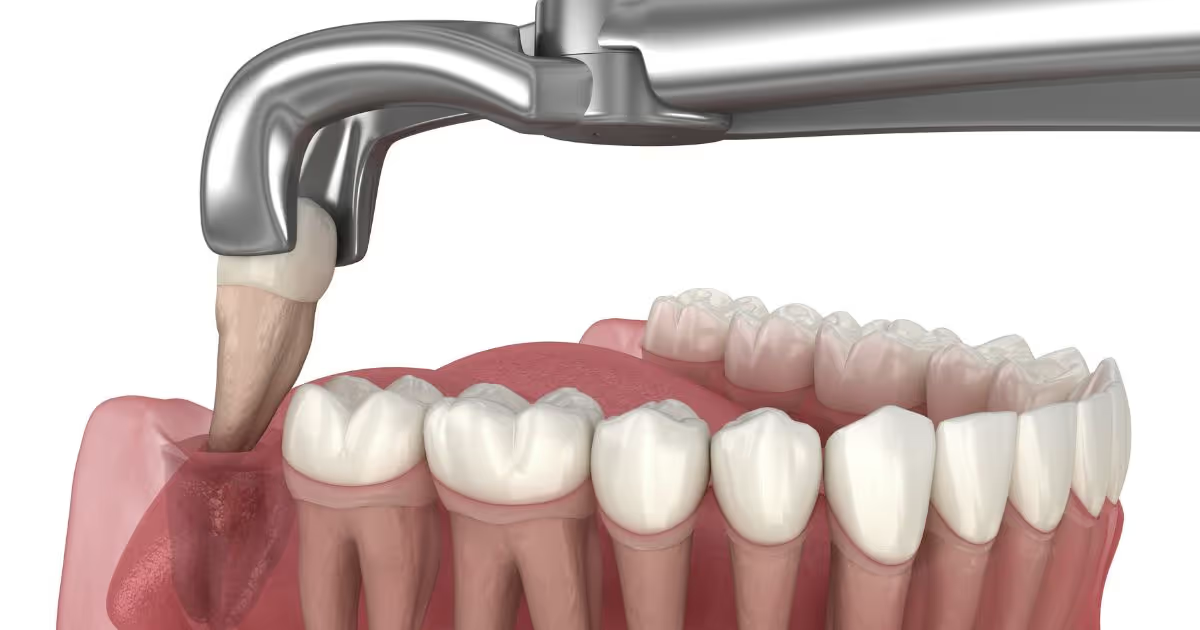
What is the wisdom tooth removal procedure?
- The dentist may consider local anesthesia, general anesthesia, or sedation, depending on the patient's needs and the doctor's discretion.
- The dentist will surgically open the gum, exposing the impacted wisdom tooth and bone. If the wisdom tooth embeds in bone, the dentist will remove some of the bone and cut the wisdom tooth into smaller pieces to make removal easier and less damaging to the surrounding tissues.
- The dentist will clean the tooth socket and close the incision with either dissolvable or non-dissolvable sutures, depending on each case and the doctor's discretion.
What is the wisdom tooth removal aftercare?
- Bite on the gauze continuously for at least 1-2 hours to stop bleeding or until the bleeding stops and the blood clots. Avoid strenuous activities and take precautions to avoid injury.
- Apply a cold compress to the side of your cheek for the first 48 hours, and after 48 hours, apply a warm compress until the swelling subsides.
- Take the pain medication prescribed by your dentist and discontinue it once the pain has subsided. However, continue taking the full course of antibiotics as prescribed.
- Brush the other teeth as usual, being careful not to touch the surgical site. Avoid using mouthwash. Gently rinse your mouth with water instead.
- For the first 2-3 days, eat soft, bland, tepid, or cold foods. Avoid chewing on the surgical site until the symptoms improve.
- Avoid smoking and drinking alcohol for at least 3-7 days to reduce the risk of infection, prolonged bleeding, or blood clots in the wound.
- 1-2 weeks after surgery, attend the dentist appointment for suture removal and follow-up.
Does wisdom tooth removal hurt?
The dentist will numb the area with a local anesthetic or other analgesics before removing the wisdom tooth. In complex cases requiring surgery, an anesthesiologist will administer general anesthesia before the procedure to reduce pain and achieve a pain-free state. Some pain and swelling may occur after the extraction; the dentist will prescribe pain medication to alleviate pain.
How long does it take to recover from wisdom tooth removal?
The pain after wisdom tooth surgery may last up to 4-6 weeks or until the gum wound heals. Therefore, you should be careful that vigorous brushing, chewing, or sporting activities do not impact the surgical wound. This can cause the wound to reopen and bleed repeatedly.

What can I eat after wisdom tooth removal?
After wisdom teeth removals, one should consume liquids and soft foods and avoid extremely hot or cold foods for 3-5 days.
- Congee, a fish-flavored rice porridge
- Scrambled eggs
- Soup
- Soft fish such as salmon, sea bass, and pomfret
- Yogurt, pudding, milk
- Smoothies made with mashed vegetables, such as mashed potatoes and pumpkin.
- Seedless mashed fruit such as mashed bananas, ripe papayas, and avocados
How much does wisdom tooth removal cost?
The cost of wisdom tooth removal varies depending on the type and location of the wisdom teeth, as well as whether they protrude through the gums. To reduce pain during surgery, the surgeon may consider administering local or general anesthesia, which incurs additional costs. Furthermore, the complexity and the condition of wisdom teeth, such as gingivitis, endodontists, periodontitis, tooth decay, or cysts, which require additional treatment, are other factors that determine the cost of the procedure. As a result, if you experience pain in your wisdom tooth, you should schedule an appointment with a dentist as soon as possible to have it removed. It helps reduce dental costs and avoid side effects that could result in unnecessary expenses.

Where can I have wisdom teeth removed?
MedPark Hospital, Bangkok, Dental Center, is ready to provide wisdom teeth removal services for both ordinary and complex cases. MedPark employs advanced 3D digital dental X-rays to accurately locate impacted wisdom teeth, alongside cutting-edge dental surgical equipment and anesthesia machines, operated by a team of skilled anesthesiologists, to ensure every urgent case receives treatment with utmost care. This approach promotes faster pain relief, minimizes complications, and contributes to your overall oral and dental health, ultimately resulting in strong, healthy teeth and long-lasting functionality. Highlights of MedPark Dental Center are as follows:
- Experienced oral surgeons specializing in all types of wisdom tooth removal, with personalized treatment plans.
- Advanced infection prevention systems and an air ventilation system ensure sterile, safe, and clean air.
- Expert anesthesiologists with options for general anesthesia, local anesthesia, or oral or IV sedation.
- A full spectrum of cutting-edge dental technologies, including the iTero Scanner, Digital Intraoral X-Ray, and 3D CT Digital Imaging.
- In-house digital CAD-CAM lab within the hospital's dental center; easy, convenient, and quick appointments at a one-stop location.
FAQ
1. How long does wisdom tooth removal take?
Typically, wisdom tooth removal takes approximately 20-60 minutes, depending on the complexity of the case for each individual.
2. How long does the pain last after wisdom tooth removal?
Typically, post-surgical pain resolves within 7-10 days. For the first 48 hours after surgery, dentists recommend applying cold compresses for 15–20 minutes, followed by 15–20-minute breaks. Apply warm compresses 3-4 times daily for 15-20 minutes over the next 48 hours, alternating with 15-20-minute breaks, in addition to pain medication. Pain will gradually subside and improve.
3. What is the complication of wisdom tooth inflammation?
Wisdom tooth inflammation can cause a variety of other oral issues, including:
- Damage to other teeth: If the wisdom tooth moves and squeezes into the neighboring molars, it may damage the molar or increase the risk of infection surrounding the wisdom teeth. This pressure can result in crowded teeth, crooked teeth, gum disease, and may require orthodontic treatment.
- Cysts: A fluid-filled sac around the wisdom tooth caused by a buildup of bacteria that can damage the molar bones, teeth, and nerves, causing complications that may require tissue and bone removal.
- Tooth decay: Wisdom teeth that partially protrude from the gums are more susceptible to tooth decay than other teeth because they cause crowded teeth and make cleaning difficult, resulting in the accumulation of bacteria that causes tooth decay.
- Gum disease: Just like tooth decay, impacted wisdom teeth can lead to gum disease due to ineffective cleaning, causing gingivitis, periodontal disease, infection, inflammation, toothache, swollen gums, and undesirable bad breath.


