





Choose the content to read
- What disease can ablation therapy treat?
- What are the indications for ablation therapy for liver cancer?
- Who is not suitable for ablation therapy for liver cancer?
- What are the side effects of ablation therapy for liver cancer?
- What are the benefits of ablation therapy for liver cancer?
- Ablation therapy for liver cancer MedPark Hospital
Ablation Therapy for Liver Cancer
Ablation therapy for liver cancer is a minimally invasive procedure involving using radiofrequency ablation (RFA) or microwave ablation (MWA) via a needle-shaped probe inserted directly through the skin to heat and destroy the cancerous tumors. Ablation therapy can treat a wide range of cancers, including liver cancer, lung cancer, kidney cancer, and bone cancer, as well as cancer that has spread to the liver, early-stage cancer with tumors smaller than 5 cm, and inoperable cancer. Ablation therapy for liver cancer can effectively destroy the entire cancerous tissue, has minimal impact on nearby organs, significantly relieves cancer pain, and is highly safe.
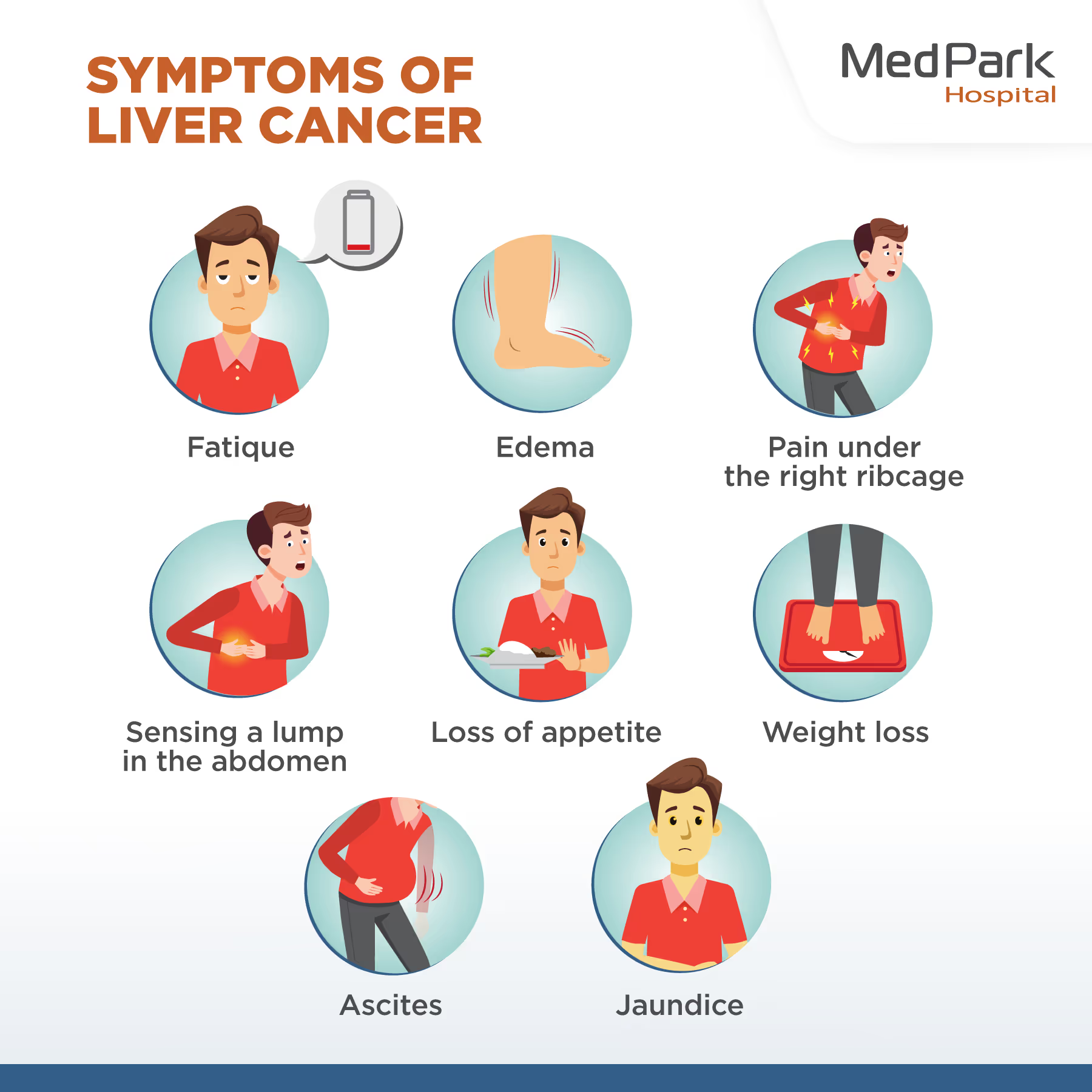
Why ablation therapy for liver cancer?
Liver cancer surgery requires the removal of a portion of healthy liver tissue. Therefore, after surgery, the remaining liver has to work harder to compensate for the resected liver tissues. This is especially true for those suffering from chronic hepatitis and cirrhosis, both of which significantly impair liver function. As a result, liver cancer surgery could pose a high risk of liver failure.
Ablation therapy for liver cancer is a technological cancer treatment modality without the need for surgery. Radiofrequency ablation or microwave ablation via a needle-like probe generates heat to destroy cancerous tumors and a 0.5–1 cm margin of healthy liver tissue, eliminating residual cancer cells and preventing cancer from spreading to nearby organs. Ablation therapy for liver cancer achieves good results comparable to surgery, causes less tissue damage, significantly reduces the risk of cancer recurrence, and is also an effective treatment option in conjunction with other treatments.
What disease can ablation therapy treat?
- Liver cancer stage 1–2
- Lung cancer stages 1–2
- Bone cancer, stage 2
- Kidney cancer
- Breast cancer
- Thyroid cancer
- Cancer that has spread to the liver
- Cancer that has spread to the lungs
- Neoplasm
- Neuropathic pain
- Arthritis
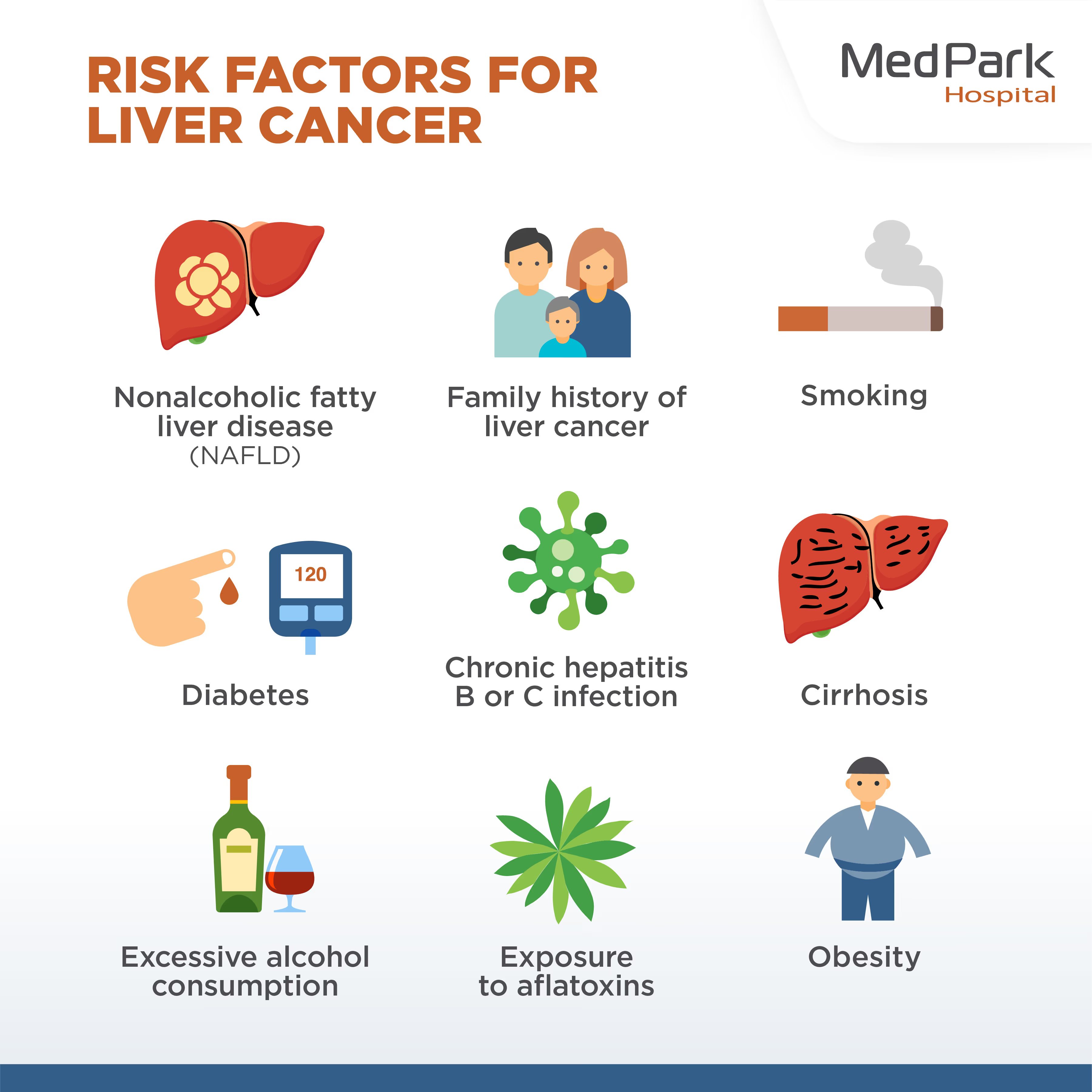
What are the indications for ablation therapy for liver cancer?
- Liver cancer, less than 5 cm in size.
- Liver cirrhosis that is not treatable with surgery
- Used in conjunction with surgery to improve treatment outcomes.
- Those with underlying diseases or the elderly are at risk if they undergo surgery.
Who is not suitable for ablation therapy for liver cancer?
- Those with a large liver cancer size.
- Those with liver failure.
- Those with severe, uncontrolled infections.
What is the diagnosis before ablation therapy for liver cancer?
Intervention radiologists will consider using ablation therapy for liver cancer to treat cancer based on diagnostic results, assessing the stage of cancer, combined with diagnostic CT scan or MRI imaging. For those who have difficult-to-treat cancer, such as near a large blood vessel or major organ, the intervention radiologists will consider treating cancer with cryoablation therapy or irreversible electroporation (IRE), depending on the doctor’s discretion.
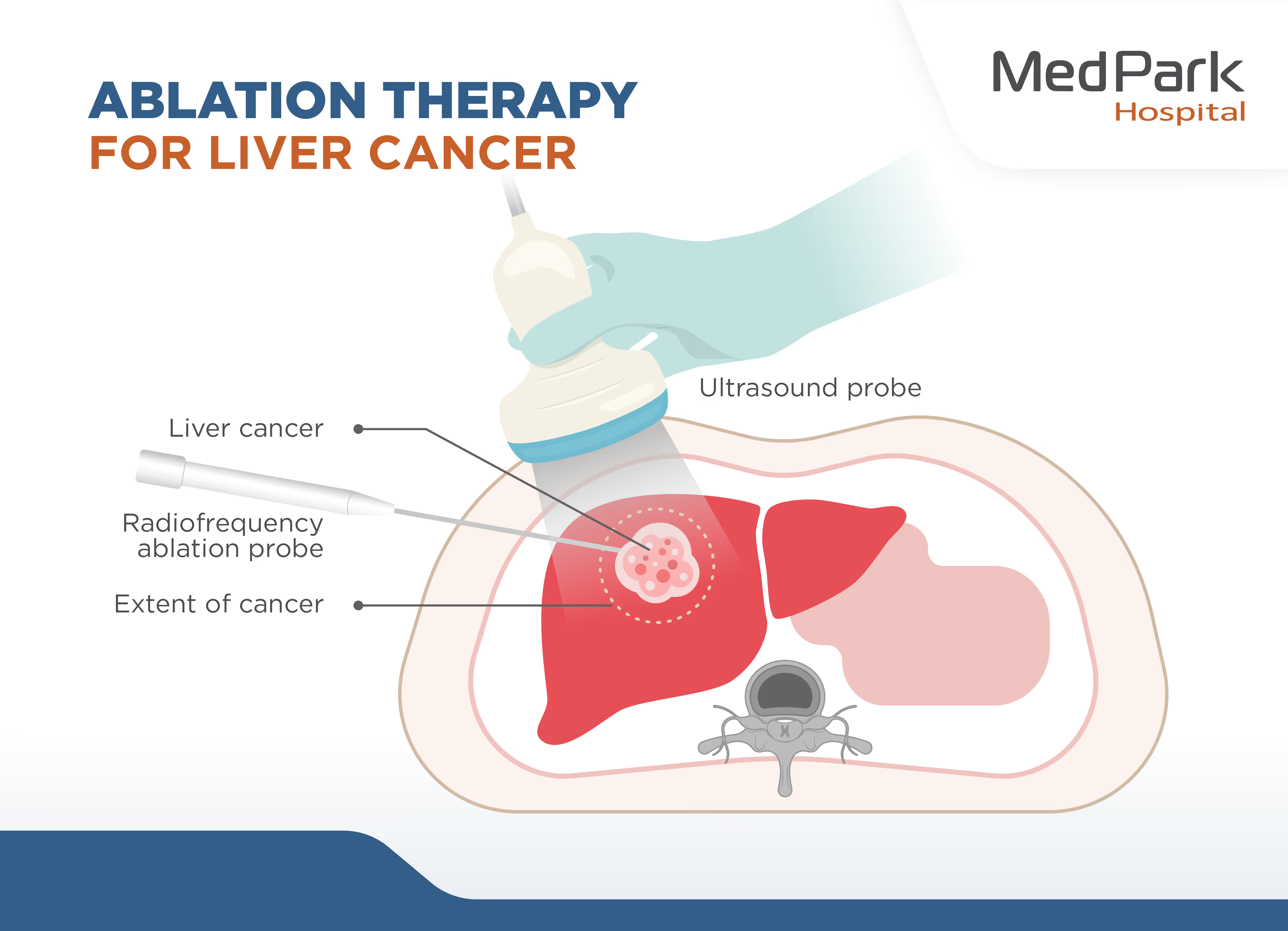
What is the procedure for ablation therapy for liver cancer?
Ablation therapy for liver cancer at MedPark Hospital uses advanced medical technology, prioritizing safety and treatment success outcomes regarding the following steps:
- The intervention radiologist will determine the appropriateness of the treatment of each patient.
- Patients will be admitted to the hospital for blood tests, chest X-rays, electrocardiograms, and risk assessments by an internal medicine doctor and an anesthesiologist.
- The interventional radiologist performs ablation therapy for liver cancer.
- Patients will be hospitalized for 1-2 nights following treatment.
- Patients can resume normal activities one week after treatment.
- The doctor will schedule a follow-up appointment 4-6 weeks after treatment to evaluate the outcome with a CT scan or MRI.
What are the side effects of ablation therapy for liver cancer?
Common side effects of ablation therapy for liver cancer include abdominal pain and nausea, which may last for 1-2 days. These symptoms can be relieved with pain relievers and anti-inflammatory medications as prescribed by the doctor.

What are the benefits of ablation therapy for liver cancer?
- Yields good treatment outcomes similar to cancer surgery
- Using the MIS technique: minimally invasive, less pain, quick recovery.
- High safety, low risk, and low complications
- Affects fewer surrounding tissues and internal organs, with less blood loss.
- Effectively reduces cancer pain
- Short hospital stays of only 1-2 days.
- Quickly return to work and resume daily activities.
- Safe for the elderly, vulnerable, and those with underlying diseases.
- Timesaving and cost-effectiveness (compared to surgery)
- Enhances the patient's quality of life.

Ablation therapy for liver cancer MedPark Hospital
Diagnostic Radiology Center, MedPark Hospital, Bangkok, Thailand is supervised by seasoned teaching faculty intervention radiologists with extensive experience both nationally and internationally, ready to provide seamless diagnostic and therapeutic treatment for treating complex cancers and tumors using radiofrequency ablation, cryoablation, microwave ablation, and other cancer treatments with gold standards, advanced techniques, and FDA-approved medical equipment, aids in a fast, accurate and safe, allowing for the highest treatment efficacy, while providing consistent postoperative care to reduce side effects, prevent complications, and speed up recovery, enabling patients a chance of curing the disease, have a good quality of life, and strong physical health.