





Hand Numbness, Palm Pain, and Wrist Pain May Indicate Carpal Tunnel Syndrome, Treatable with Minimally Invasive Surgery and Fast Recovery
Numbness in the hands, pain in the palms or wrists, and frequent unwitting dropping of objects—these may sound like minor issues that many people overlook. However, did you know that these symptoms are early warning signs of carpal tunnel syndrome? This condition significantly reduces hand functionality and, if left untreated, can have a long-term impact on your quality of life.
Carpal tunnel syndrome is curable with modern, highly effective treatment options, including minimally invasive surgery (MIS), which causes less tissue injury, supports faster recovery, and enables an earlier return to daily activities.
In this article, we provide an in-depth exploration of this condition, from the vital role of the nerves traversing through the wrist and its underlying causes, symptoms, diagnosis, and treatment strategies that improve quality of life, from the perspective of Dr. Kanchai Malungpaishrope, an orthopedic surgeon specializing in Hand and Microsurgery at the Orthopedic Center, MedPark Hospital. His expert insights will help you make informed decisions in selecting the most appropriate treatment for carpal tunnel nerve compression.

No matter how brilliant the mind may be, without hands that obey its directive, true creativity cannot flourish.
Our hands are among the most essential organs we rely on throughout every stage of life—from grasping objects, writing, typing, and eating, to texting, gaming, driving, playing sports, and creating works of art. Every one of these activities depends on the coordinated movement of our hands. Although humans possess intelligence superior to all other creatures, without hands, we would be unable to create, express, or achieve our full potential.
The act of grasping an object depends on the coordinated function of the muscles in the hand, orchestrated by commands transmitted from the brain through the nerve innervating the muscles in the arm and hand. Beyond enabling precise control of grip and movement, these nerves also convey sensations and temperature back to the brain in less than a fraction of a second.
Dr. Kanchai highlighted the crucial role of sensory nerves, noting that “the perception of pain is a vital protective mechanism that safeguards us from many environmental dangers. When nerve function is impaired, sensory perception deadens, which may result in severe harm, such as injuries from underperception of sharp objects or heat.”

Who is at risk of carpal tunnel syndrome?
“Many people believe that carpal tunnel syndrome is due to excessive repetitive use of the wrist. There is currently no definitive medical evidence linking heavy wrist use as the primary cause of this condition. There is also no evidence to confirm that the disease is statistically more prevalent in any specific occupation.”
Dr. Kanchai explained that, based on reported incidence, nerve compression at the wrist is most prevalent in adults aged 30 to 40 years and older and is rarely seen in children. It suggests that advancing age may be a primary contributing factor to the development of the condition. In addition, certain diseases, such as diabetes, can lead to nerve degeneration secondary to chronically elevated blood sugar levels. As a result, even mild nerve compression may cause significant problems, making these conditions crucial contributing factors.
How can we tell if there is a wrist nerve compression?
The three main symptoms of wrist nerve compression (carpal tunnel syndrome) are:
- Numbness in the fingers: Especially in the thumb, index finger, and middle finger, and sometimes partially in the ring finger. A simple way to notice this is to note that the sensation in the affected hand differs from that in the other.
- Pain in the wrist and palm: Patients often experience a dull, aching pain in the wrist and palm. In some cases, the pain may radiate to the fingers. The pain frequently flares up at night, waking up patients who must shake their hands for relief.
- Frequent dropping of objects: It occurs because the muscles at the base of the thumb, innervated by the affected nerve, gradually waste away after prolonged nerve compression. As a result, patients will end up with poor grip strength, frequently drop objects, and be unable to use their hands as intended.
Dr. Kanchai added, “If you have numbness in a hand, a tingling sensation at the fingertips, or pain in the palm or wrist, you should seek evaluation by a specialist as soon as possible to plan appropriate treatment.”
An orthopedic hand specialist can diagnose wrist nerve compression with high accuracy and easily through a physical examination, which is the accepted global standard. In some equivocal cases, nerve conduction studies can help confirm the diagnosis.
“Testing for how well and how fast electrical signals travel through your nerves and muscles, including nerve conduction studies (NCV) and electromyography (EMG), helps assess how well the nerves conduct signals and how the muscles function. These tests allow doctors to determine the severity of nerve compression and choose the most suitable treatment.”
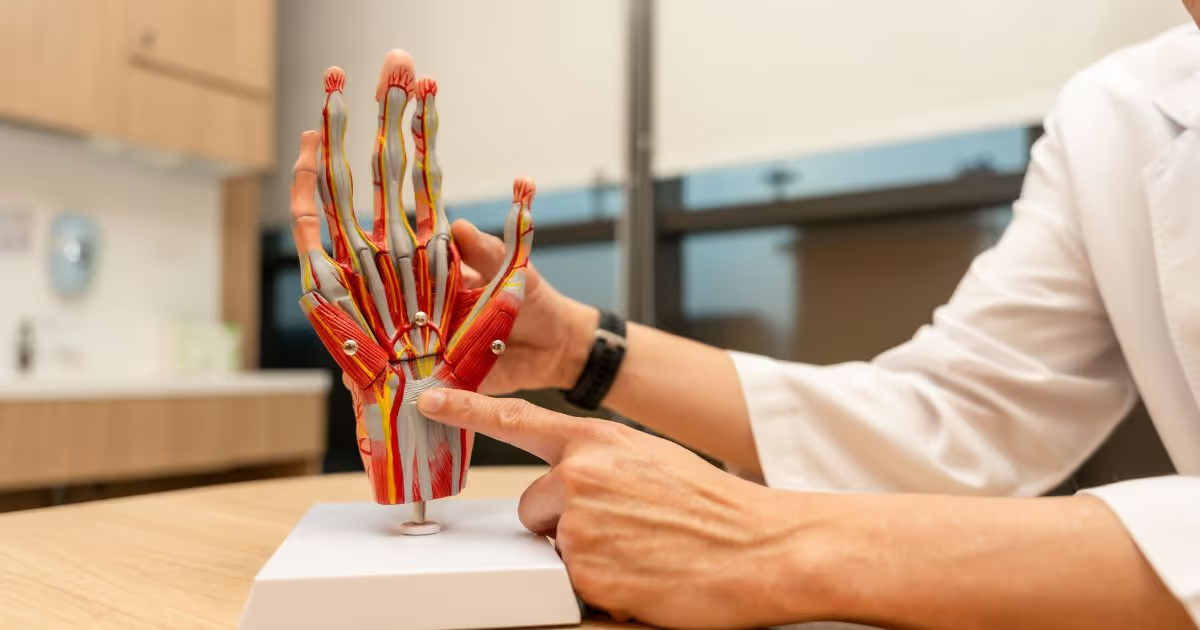
Carpal tunnel syndrome: early detection can obviate the need for surgery.
For patients with early-stage carpal tunnel syndrome, doctors usually prescribe conservative treatments, including modifying daily activities by avoiding frequent or prolonged wrist flexion. Wearing a properly fitted wrist support at night to keep the wrist in a neutral position is also an effective treatment option that can significantly reduce nighttime pain and numbness in the hand.
In cases where pain significantly interferes with daily life, doctors may prescribe pain-relieving medication to improve comfort. Moreover, supplementation with nerve-supporting vitamins, such as vitamins B1, B6, and B12, may help slow nerve degeneration in patients with mild symptoms.
Beyond medication and behavioral modification, several physical therapy modalities can help improve symptoms, including:
- Peripheral magnetic stimulation can help reduce pain and numbness and promote nerve recovery.
- Laser therapy helps reduce swelling and inflammation of the affected nerve.
- Shockwave therapy, which helps reduce inflammation and stimulate new blood vessel formation (neovascularization).

Precise treatment of carpal tunnel syndrome with minimally invasive surgery
When the disease becomes severe, causing pain, numbness, muscle wasting, weakness, and frequent dropping of objects, and when conservative treatment and medication no longer help, surgery may be advisable to relieve the nerve compression.
In addition to open surgery, patients may also choose minimally invasive surgery, which entails only a small incision at the wrist, approximately 1 centimeter in length.
“Despite its technical challenge and the requirement for advanced surgical expertise in a cramped operative field, minimally invasive surgery offers the benefits of reduced blood loss, minimal tissue trauma, simplified wound care, lowered infectious complications, accelerated recovery, and earlier restoration of hand function when compared to open surgery.”
How long does it take to regain normal hand function?
“Typically, patients can return to daily activities, including lifting heavy objects, exercising, and playing sports, within one month.”
Dr. Kanchai emphasized that postoperative self-care is crucial, especially during the first week after surgery. Patients should avoid activities that require heavy use of the hand or excessive wrist strain, such as lifting heavy objects.
Based on his experience, most patients can resume using their hands for basic daily self-care or using their mobile phones as early as the next day after surgery, once the pain has significantly subsided. Within 2–3 days after surgery, some patients can return to work, provided that their job does not involve strenuous wrist movements.

Simple joys of a carpal tunnel surgeon
Current innovations and technological advances enable patients to have more effective treatment.
“Although hand pain and numbness due to carpal tunnel syndrome may not be as life-threatening as many serious diseases, the symptoms can negatively impact quality of life. When patients come to consult us, and we can help improve their condition—whether through surgical or non-surgical means—we are overjoyed with their happiness.”
Dr. Kanchai shared that true happiness of a surgeon lies not only in a successful operation, but in witnessing the smiles and joy of patients that result from the care they receive.
“I believe this is how all doctors, not just surgeons, think — that we always ask ourselves how we can make tomorrow better than today for our patients; how to help them feel less pain, recover more quickly from surgery, smile more broadly, and receive an experience that truly allows them to feel their improved quality of life after surgery.”
MedPark Orthopedic Center provides precise treatment for carpal tunnel syndrome.
The Orthopedic Center at MedPark Hospital can diagnose and treat carpal tunnel syndrome at any stage of development. Adding to the expertise of our surgeons specializing in hand surgery and microsurgery, we work collaboratively as a multidisciplinary team with specialists from relevant fields. Our highly experienced nursing staff provides attentive patient care, supported by advanced medical equipment and international standard operating rooms.
For those who suspect that they may be experiencing symptoms of carpal tunnel syndrome, the doctor offers this advice:
“The key to successful treatment of carpal tunnel syndrome is early recognition and prompt medical consultation. Once doctors identify the stage of the disease, they can develop an appropriate and precise treatment plan. Today, we have standardized treatment protocols and advanced technology, which are important factors that help patients achieve a better quality of life.”