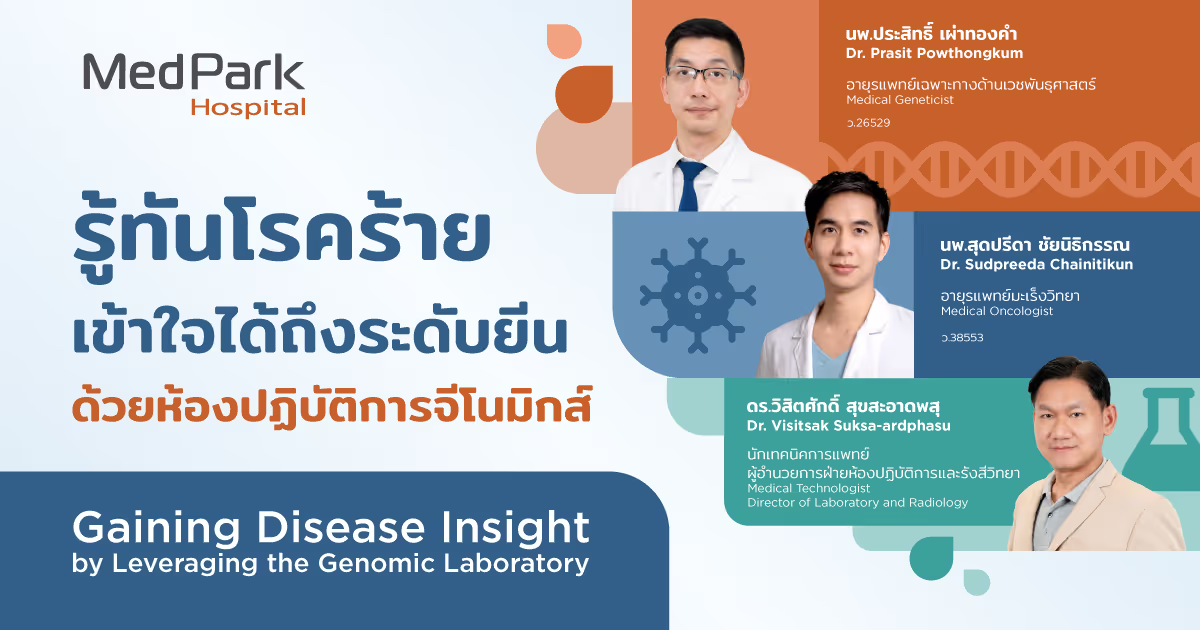





Gaining Disease Insight by Leveraging the Genomic Laboratory
Key highlights from the launch of the Genomic Laboratory at MedPark Hospital. A significant stride forward in personalized patient care.
At certain stages of treatment, “timeliness” is as critical as accuracy. Waiting just a few weeks for test results can significantly influence treatment decisions and outcomes. Genomic medicine, therefore, transcends Next Generation Sequencing (NGS) technology. It enables faster diagnosis and creates opportunities for timely disease prevention, strategic planning, and more effective treatment.
These reflect MedPark Hospital’s core mission to advance personalized treatment through Precision Medicine, an approach that tailors care for each patient based on genetic information. Guided by this vision, MedPark Hospital officially launched its Genomic Laboratory on Friday, 30 January 2026, at The Forum, marking a significant step beyond conventional care toward truly patient-centered treatment.
From Sequencing to Clinical Care
Dr. Prasit Powthongkum, an internist specializing in medical genetics, stated, “The laboratory standard ensures that the data generated are of high quality and that the analytical results are accurate. However, interpretation remains essential, with the inclusion of additional clinical information in patient care. This process depends on close collaboration among doctors and a multidisciplinary team to parse the data into appropriate treatment plans.”
The concept of “from the laboratory to patient care” highlights that genetic testing does not end with a readout of genes. Its authentic value lies in connecting genetic findings with the patient’s clinical presentation. It requires close collaboration among medical geneticists, specialty physicians, and a multidisciplinary team to ensure that genetic test results are interpreted and applied appropriately in patient care.
Know and Prevent Early — Understanding Hereditary Cancer Risk
Cancer is not driven solely by external factors. In some cases, it is due to inherited genetic mutations passed down through generations, placing some individuals at a significantly higher risk of developing the disease than the general population.
According to Dr. Visitsak Suksa-ardphasu, Director of Laboratory and Radiology, “Every person inherits half of their genetic material from their father and the other half from their mother. If either parent carries a high-risk gene, their children will inherit the gene. Structural changes in genes—known as mutations—may lead to hereditary diseases, including certain types of cancer.” Cancers are generally of two main categories: cancers that arise sporadically from various environmental factors and hereditary cancers caused by inherited gene mutations.
The most commonly observed hereditary cancers include:
- Breast cancer
- Ovarian cancer
- Colorectal cancer
Individuals who carry gene mutations have a higher risk of developing certain diseases. Two of the most well-known genes are BRCA1 and BRCA2, which function to repair DNA and regulate cell division. When these genes do not function properly, DNA damage can accumulate in cells, increasing the likelihood of developing breast and ovarian cancer.
Dr. Visitsak further explained the two-hit theory: A gene has two copies; a person who inherits a mutation in only one copy may not develop a disease immediately. However, if the remaining normal copy later becomes mutated by factors such as aging, environment, or lifestyle, cancer may develop sooner than in the general population. This situation is where genomic medicine plays a vital role—through early genetic testing to assess risk, guide preventive strategies, and support appropriate health planning before disease occurs.
Who Should Consider Genetic Testing for Hereditary Cancer Risk?
- Individuals with a family history of early-onset cancer or multiple relatives affected by the same type of cancer
- Patients who have been diagnosed with cancer and wish to understand the hereditary cancer risk for their family members
Genetic testing is typically needed only once, as the genes inherited from one’s parents remain unchanged throughout life. Testing panels may be gender-specific: we screen for 23 cancer types in women across 74 genes, and 22 cancer types in men across 79 genes.
Transforming Cancer Treatment with Genomic Medicine
Dr. Sudpreeda Chainitikun, a medical oncologist, explained that NGS technology plays a crucial role in modern cancer care. Because cancer arises from genetic mutations, patients with the same type of cancer may have different mutation profiles. NGS testing enables doctors to select treatments that precisely match each patient’s specific mutations, particularly for targeted therapy. Genomic medicine, therefore, helps in choosing treatment more accurately, improving effectiveness, and reducing side effects compared with conventional chemotherapy.
MedPark Hospital’s Genomics Laboratory is not defined solely by advanced technology or sophisticated testing. It represents another step forward in patient care, beginning with an understanding of everyone at the genetic level. Integrating laboratory genomic data into treatment decisions enables earlier prevention, strategic planning, and proactive health management from the outset—not only for patients, but also for their families and loved ones. Genomic medicine is therefore an essential part of holistic healthcare, aimed at supporting better long-term quality of life.