






Gastroenterologists and Hepatologists: Physicians Who Treat Straightforwardly
Gastrointestinal and liver diseases are among the most prevalent health conditions, affecting individuals of all genders and across every stage of life—from childhood through advanced age. These conditions span common symptoms such as abdominal pain, bloating, diarrhea, and constipation to serious and potentially life-threatening illnesses, including inflammatory bowel disease, colorectal cancer, hepatitis, and cirrhosis. Gastroenterologists and hepatologists, commonly known as GI doctors, diagnose, manage, and treat complex digestive conditions.
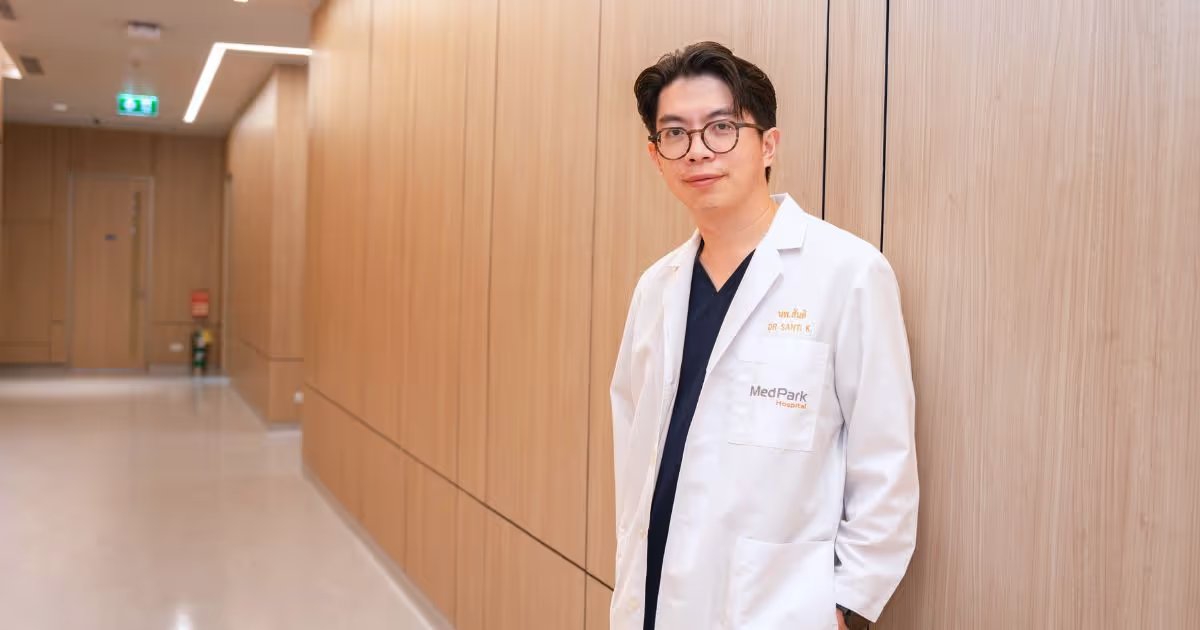
We had the privilege of speaking with Dr. Santi Kulpatcharapong, also known as Dr. Nick, a gastroenterologist and hepatologist at the Gastrointestinal and Liver Center, MedPark Hospital. He shared thoughtful insights into his professional journey and his role as a gastrointestinal endoscopist. This field has undergone incredible technological advancement in recent years.
Gastroenterology: A Specialty That Truly Resonates—Forthright and Candid
During my years as a medical student, the first time I observed an endoscopic procedure, I was instantly captivated. It was an innovative and remarkably sophisticated procedure that felt like a perfect fit for me. Unlike surgery, it does not require long hours of standing, and from that moment, I felt confident that this was a field in which I could truly excel.
Dr. Nick’s path to becoming a gastroenterologist and hepatologist began with a period of self-discovery during his sixth year of medical school. An exposure to a gastrointestinal endoscopy unit while working at a provincial hospital sparked a strong and immediate interest. He went on to train in internal medicine and gain exposure to its various subspecialties. Dr. Nick found that the philosophy and clinical approach of gastroenterology and hepatology resonated strongly with him. This realization ultimately led him to pursue this specialty, along with a fellowship in advanced gastrointestinal endoscopy.
“If you choose nephrology, you need to be comfortable working with numbers. Endocrinologists and infectious disease specialists, on the other hand, often rely on taking a detailed and nuanced medical history. In gastroenterology, the approach to treatment is relatively direct. It doesn’t feel overly intricate or burdensome, and it also allows me to engage in hands-on procedures that I genuinely enjoy, such as endoscopy. For me, gastroenterology is the specialty that aligns best with who I am.”

Endoscopy: A Medical Procedure Resembling a Game
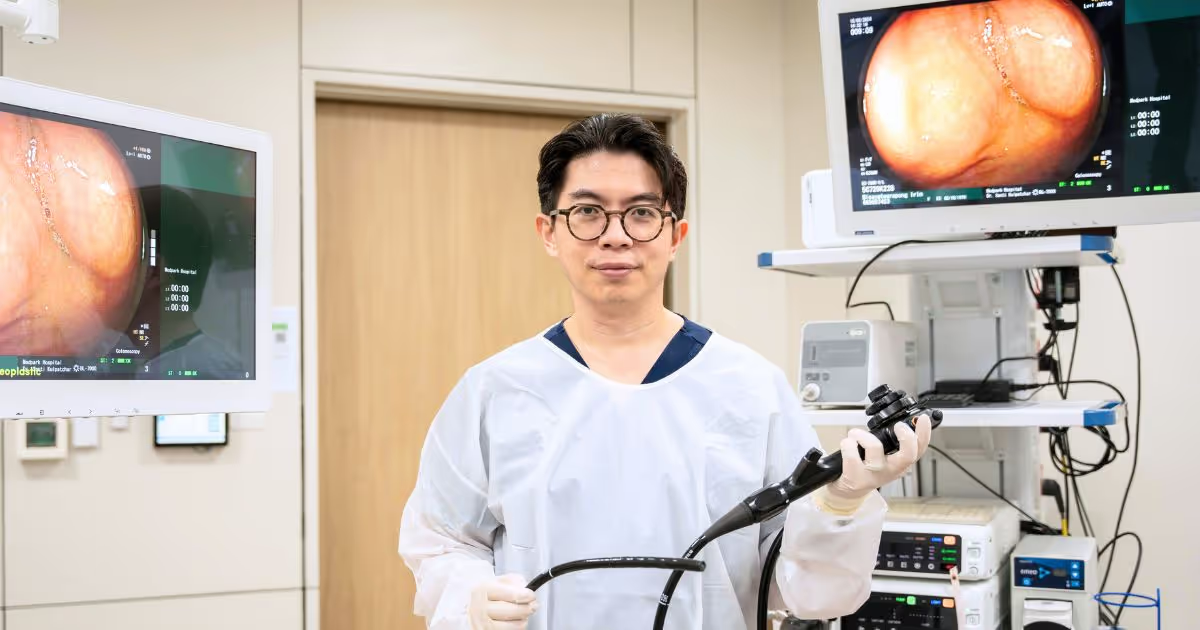
“Endoscopy is a technically demanding procedure that, in many ways, feels like playing a game. My left hand controls a joystick, steering it left or right, while my right hand steers the camera. The procedure requires continuous hand–eye coordination, and experience is essential to performing it well.”
Dr. Nick explains that the field of gastroenterology and hepatology is, in fact, extensive, offering numerous pathways for further sub-specialization. However, regardless of the direction one chooses, a fundamental skill shared by all gastroenterologists is proficiency in gastrointestinal endoscopy. Endoscopy is a procedure that demands a high level of concentration and strong problem-solving skills, as doctors can never be quite sure of what they will encounter during each examination. Every procedure requires readiness to respond to any possible clinical scenario.
Beyond technical expertise, Dr. Nick emphasizes the importance of honesty in patient care. Doctors must always provide beneficial advice, perform procedures only when they are truly necessary, avoid interventions that offer no real value, and clearly explain each step of care, ensuring that patients feel informed and reassured.
“My mentor once told me, ‘A truly good endoscopist knows when an endoscopy is not needed.’ If a patient has no clear clinical indication, there is no reason to proceed. We must always take the patient’s overall health and circumstances into careful consideration and ensure that every procedure we perform genuinely benefits the patient. Every treatment decision should be grounded in sound medical judgment.”
Advanced Endoscopy: A Discipline That Continues to Narrow the Gap with Surgery
“Today, advanced endoscopic procedures are increasingly overlapping with what has traditionally been the domain of surgery. It does not imply they have become the standard approach for all conditions, but in selected cases, they offer an effective alternative to surgical intervention. For patients, this can translate into less physical trauma.”
Dr. Nick explains that today’s advanced gastrointestinal endoscopy extends beyond procedures such as endoscopic retrograde cholangiopancreatography (ERCP) for the biliary and pancreatic systems and now encompasses a wide range of therapeutic interventions. As medical technology continues to advance rapidly, the scope of endoscopy has expanded far beyond diagnostic evaluation and is increasingly approaching the realm of surgical treatment. For example, endoscopic ultrasound (EUS) not only enables detailed visualization of the gastrointestinal tract and adjacent organs, but also allows for tissue biopsy and therapeutic procedures such as biliary drainage or the drainage of intra-abdominal cysts. Innovations such as the full-thickness resection device (FTRD) are game-changers, offering new hope for patients with early-stage colorectal and gastric cancers by enabling treatment without traditional surgery. We are also seeing the emergence of third-space endoscopy, a technique in which physicians use an endoscope to operate within the deeper layers of the digestive tract.

“I believe there are two areas that will see particularly significant advancement. The first is artificial intelligence (AI), which we integrate into colonoscopy for colorectal cancer screening, with platforms such as Deep GI. The second is the ongoing development of endoscopic devices and accessories, which will continue to expand the therapeutic repertoire of gastrointestinal endoscopy and bring it ever closer to the capabilities of surgical treatments.”
Working, Learning, and Growing Every Day at MedPark Hospital
“At MedPark, I’m surrounded by exceptional mentors across every specialty. Working here feels like I am practicing medicine and learning at the same time, allowing me to grow a little more each day.”
Dr. Nick has been part of MedPark Hospital since its very beginning, making him one of the hospital’s founding physicians. He finds genuine satisfaction working with the Gastrointestinal and Liver team, citing strong teamwork and collaboration with highly respected senior doctors as key reasons.
Beyond the hospital walls, when he hangs up his white coat, Dr. Nick devotes his time to his family. He is a loving father to his three-year-old daughter and, in his spare time, enjoys cheering on his favorite football club, Tottenham Hotspur.
