





A Neurologist Who Embraces Advanced Technology to Deliver Compassionate Neurological Care
“Experiencing hallucinations, hearing voices, or noticing sudden behavioral changes? See a neurologist first. Don't go to a shaman just yet.”
A humorous remark with an important medical message reflects the widespread misconceptions about neurological disorders that still exist in Thailand's multicultural society. In this edition of MedPark Stories, we spoke with Dr. Chutanat Yotsarawat, a neurologist, who shares her vast experience caring for patients.
Neurology: A Notoriously Challenging Path
Is it true that “neurology” is one of the most challenging specialties in medicine? According to Dr. Chutanat, every medical specialty comes with its own unique challenges. Neurology is deemed complex because the unseen nervous system orchestrates nearly all bodily functions.
“I first realized the impact of neurology when my aunt became ill. She saw many doctors, but no one could identify the cause of her condition. Eventually, she was referred to a neurologist. At the time, I was still a medical student, and I was deeply impressed by the way the doctor carefully took her medical history and performed a thorough examination. I could see the attention and dedication that ultimately led to the correct diagnosis.”
After choosing neurology as her specialty, Dr. Chutanat was granted numerous opportunities for advanced training. This included a short-term study program and clinical internship in epilepsy at the Cleveland Clinic in the United States. She learned and worked alongside world-renowned neurologists, many of whom are textbook authors on epilepsy. The experience broadened her perspective on patient care, while allowing her to learn systematic clinical workflows and cutting-edge medical technologies not yet available in Thailand.
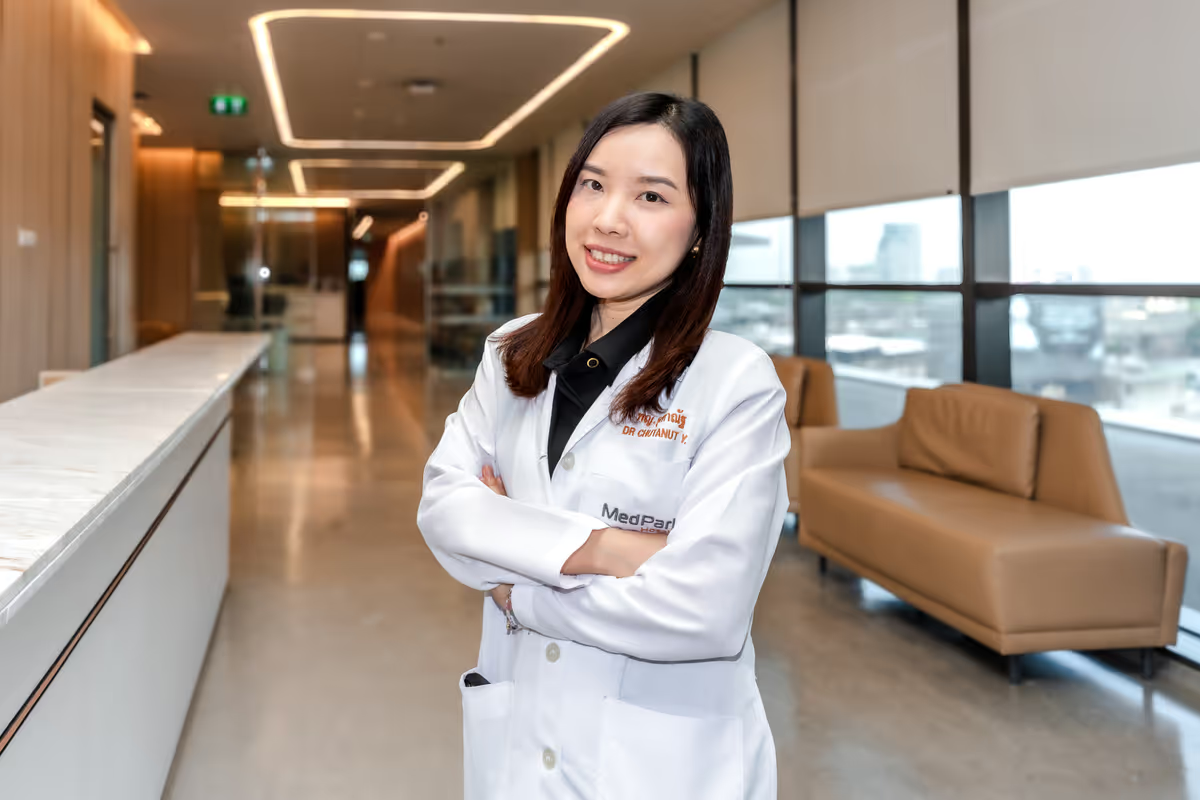
Neurologists: Decoding the Complexities of the Nervous System
Dr. Chutanat's clinical interests encompass a broad spectrum of neurological disorders, particularly epilepsy and neurocritical care, both of which she finds uniquely challenging. She also actively studies other common neurological conditions.
“Recently, I've become increasingly interested in headache disorders because they affect so many people. The pain can be so debilitating that it interferes with patients' daily lives and prevents them from carrying out daily activities. That's why I want to help as many people as possible get back to living their lives.”
Today, neurological care incorporates advanced technologies for evaluation and treatment, offering patients more personalized options. These innovations enhance diagnostic accuracy while significantly shortening the time needed to diagnose and treat.
“There was a patient who developed severe optic nerve inflammation and lost vision in both eyes caused by a very rare autoimmune disorder. The patient had undergone extensive testing at several hospitals and had almost given up hope of seeing again.”
“When the patient first came to us, we exhausted every effort, working step-by-step as a team alongside the patient and their family. We did encounter unexpected challenges along the way that disrupted our timeline and caused occasional setbacks. But because we maintained constant communication and depended on the collaboration of a multidisciplinary team of specialists, the patient has now regained their sight and can live their life at about 70 - 80 percent levels. Even if it isn't a full 100 percent, this is truly a new lease on life for them.”
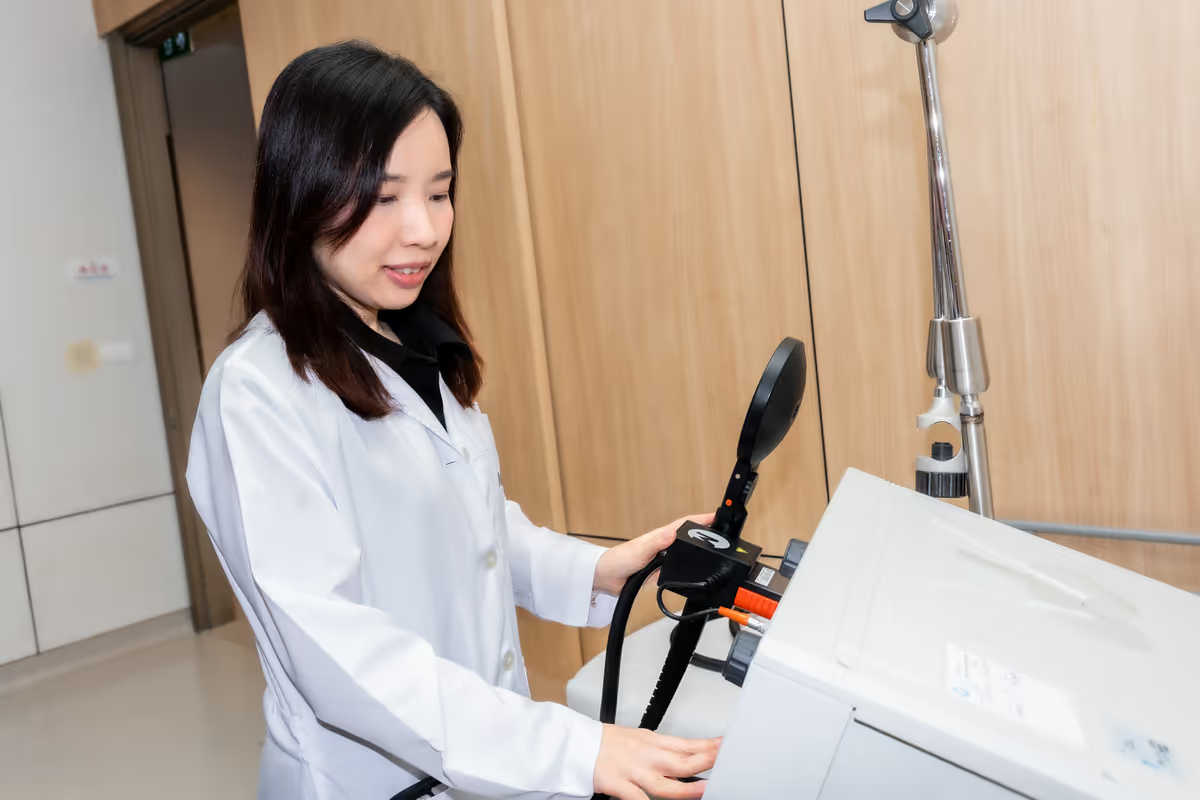
Caring for the Hearts and Minds of Patients and Families: A Core Responsibility of a Neurologist
“Everyone has different emotional needs and ways of coping. As doctors, we have to know when to take off our doctor hat and put on our human hat,” Dr. Chutanat stated.
One of the greatest challenges doctors frequently face is clear communication to foster correct understanding— delivering clinical facts wrapped in profound empathy. Medical treatment cannot achieve the best possible outcomes without the understanding and cooperation of patients and their families. This is especially important when making difficult decisions together. In some situations, the medically best treatment may not be the most appropriate choice for a patient's circumstances at that time.
“It all starts with genuinely wanting the best for our patients. When you truly care about someone, you're committed to doing everything you can to help them. Many neurological disorders cannot be cured. We can't change the course of nature, but we can help patients and their families achieve the best possible quality of life, prepare for what's ahead, and learn to live with the condition.”
Great neurologists: more than medical knowledge.
Asked what characterizes a great neurologist, Dr. Chutanat's answer is simple. A neurologist must not only have strong clinical expertise but also a commitment to lifelong learning, continually updating their knowledge to keep pace with advances in medicine and technology.
This means staying up to date with the latest research and exploring new treatment approaches. Every specialty has its own research resources and clinical updates. This includes attending scientific conferences and short training programs to stay current and continually develop expertise.
“Another essential aspect is communication. Communicating with patients and their families takes just as much skill. What seems routine to us may be completely foreign to patients and their families. Without clear communication, misunderstandings can arise, leaving them feeling that we haven't done everything we could or provided the best possible care.”
Lastly, Dr. Chutanat believes that looking after her own emotional well-being is just as important. The demands of the profession bring constant pressure, stress, and high expectations, making it essential to find healthy ways to manage stress, let go, and accept that outcomes won't always be what we hope for. Doing so helps ensure that emotional strain never affects the care provided.
Neurological Warning Signs You Should Never Ignore
Dr. Chutanat advises that anyone experiencing warning signs of a neurological disorder should seek medical attention as soon as possible. After an initial evaluation, patients who require specialized care can ask their physician for a referral or conduct online research to find a neurologist with expertise in their specific condition. Choose an accredited hospital with advanced technology and experienced specialists, or one that fits your healthcare coverage.
“Neurological disorders are often chronic conditions. Once treatment begins, you'll usually see the same neurologist for a long time. That's why it's so important to choose a doctor you trust—someone who communicates clearly, helps you understand your condition, and gives you confidence throughout your treatment journey.”
Dr. Chutanat emphasizes the importance of preventive neurology. Whatever the condition, preventing disease is always preferable to treating it. Early detection not only improves treatment outcomes but also provides patients with more treatment options.
Advice from a Neurologist
A common misconception is that neurological disorders always involve mental illness or psychiatric conditions. Neurology focuses on diseases of the brain, spinal cord, peripheral nerves, and muscles, although some neurological disorders may have associated psychiatric symptoms.
“Behavioral changes are sometimes mistaken for a psychiatric condition, leading patients to see a psychiatrist first. If the underlying cause is determined to be a neurological disorder, the patient will be referred to a neurologist.”
Neurological Red Flags That Require Prompt Medical Attention
“Most people with obvious neurological symptoms, such as weakness, numbness, facial drooping, loss of consciousness, seizures, or a severe headache, will usually seek medical attention. However, there are other symptoms that people often fail to recognize as out of the ordinary, such as changes in behavior, episodes of staring or unresponsiveness, acting out dreams during sleep, phantom smells that aren't there, or persistent headaches. These symptoms also require evaluation by a doctor.”
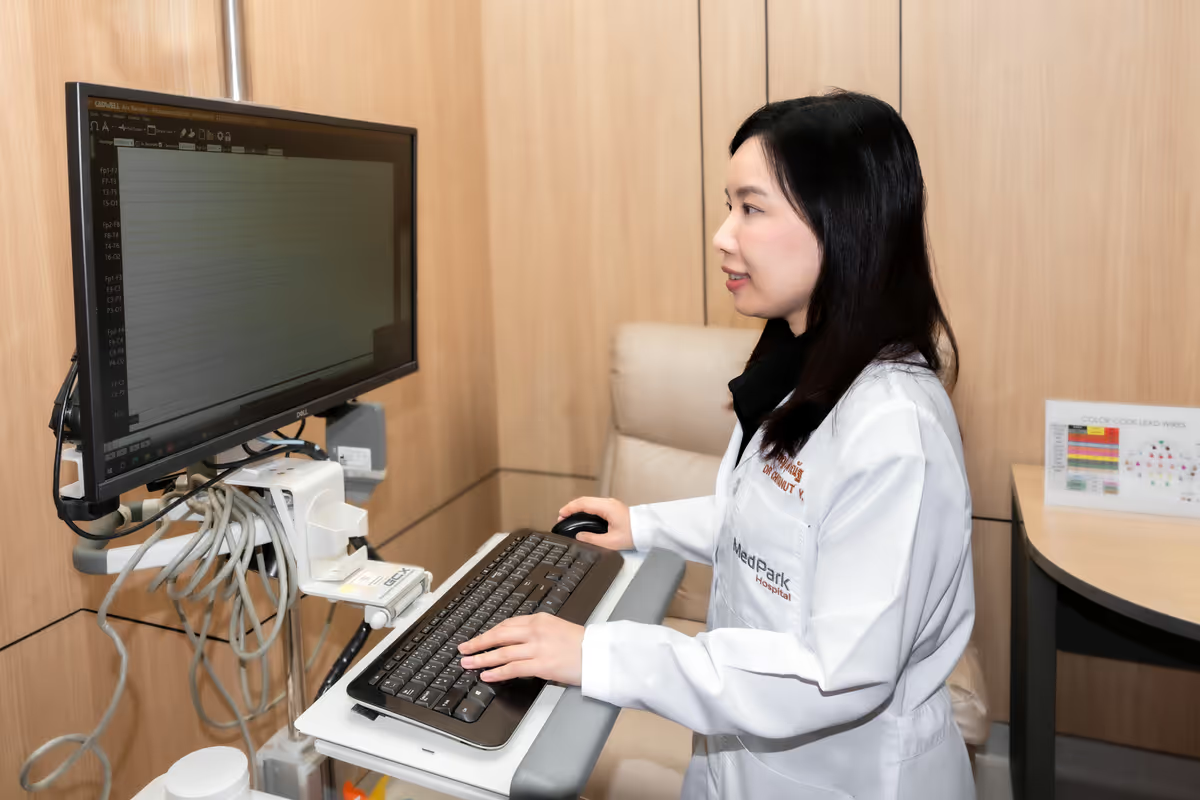
Reliable Neurological Care at MedPark Hospital
The Neurology Center at MedPark Hospital provides comprehensive care for neurological and brain disorders, supported by advanced diagnostic technologies and a multidisciplinary team of specialists. Our diagnostic capabilities include electroencephalography (EEG), electromyography and nerve conduction studies (EMG/NCS), and visual and auditory evoked potential (VEP/AEP) studies.
“A noteworthy therapeutic modality is the TMS (Transcranial Magnetic Stimulation) device. Capable of stimulating the brain, peripheral nerves, and musculature, it represents a significant advancement from traditional pharmacotherapy. Modern technology now permits site-specific stimulation, thereby enhancing therapeutic efficacy.”
Although the brain and nervous system are remarkably complex, neurological disorders are more common than many people realize. What starts as a minor symptom can suddenly turn into a major life event, compromising a patient's quality of life overnight. Consequently, one must remain vigilant and not dismiss even the slightest warning signs.