





MedPark Hospital: Where Complex Care Meets Environmental Stewardship.
“Have you ever wondered how much energy a large hospital consumes in a single day?”
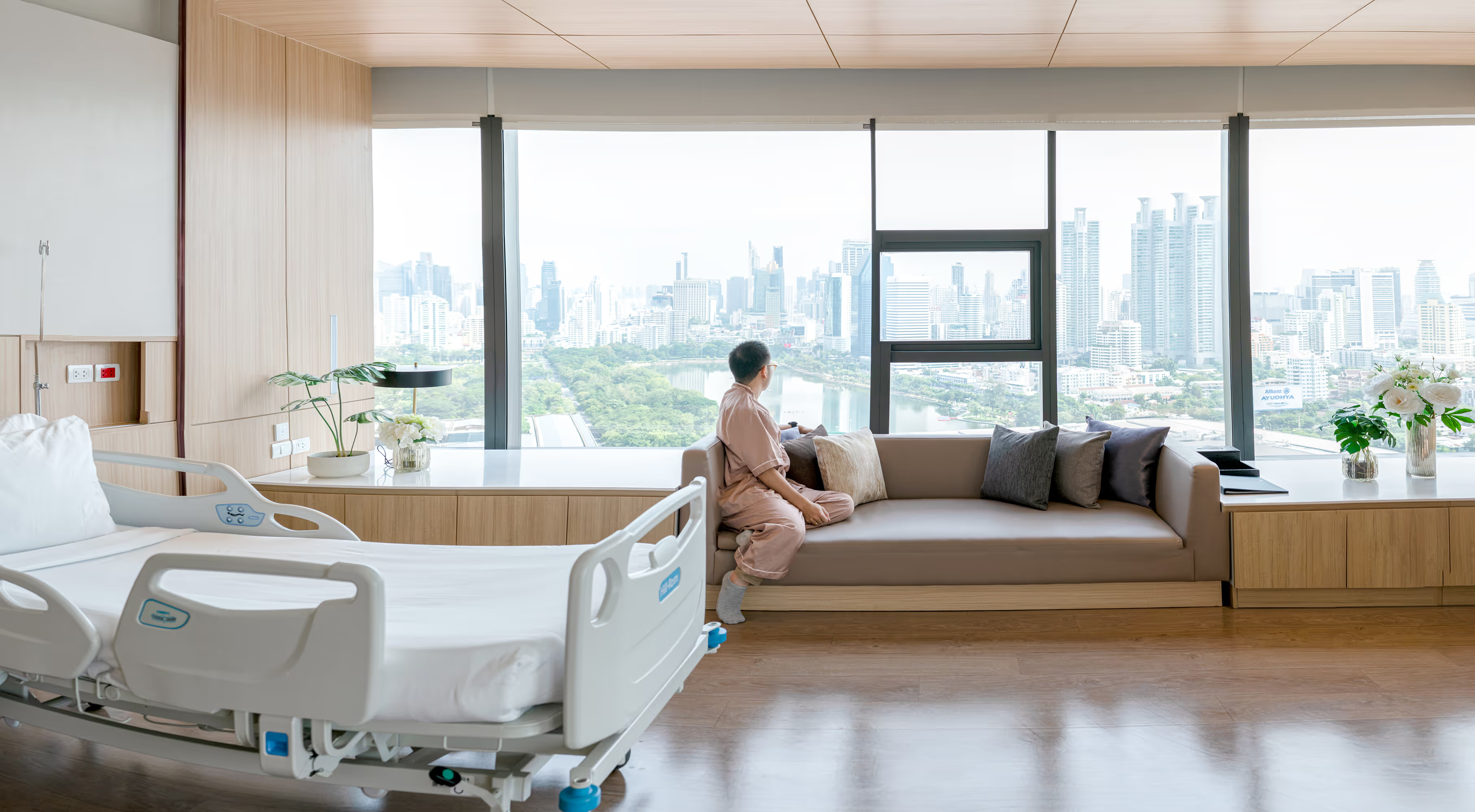
Because hospitals dedicate every second to caring for lives, they require an immense amount of energy each day to maintain the safest possible environment for patients and visitors. But what if a hospital could deliver world-class health care while also advancing the environmental sustainability agenda and contributing to a healthier, more livable planet?
When sustainability is not a mere concept, but something measurable and actionable.
The design of MedPark Hospital aligns with the "green building" philosophy from the outset. The strategic orientation of the hospital building is to optimize natural sunlight, while reducing unnecessary heat gain and lowering energy demand. These thoughtful design details played a key role in achieving LEED Gold certification (2021), an internationally recognized benchmark for sustainable building standards, marking the foundation of a deliberate, efficient, and responsible approach to resource management.
Sustainability requires integrated, long-term organizational management, not short-term projects. By establishing clear goals, metrics, and continuous monitoring, our vision for sustainability is becoming increasingly tangible over time.

In 2025, MedPark Hospital reduced electrical consumption by 2.71% relative to revenue and by 7.6% per unit of floor area compared with 2024. At the same time, total greenhouse gas emissions declined from 9,800 to 9,186 tCO₂e, representing a 6.3% reduction year-by-year.
Energy: The first step toward organization-wide transformation
Electricity offers the most encompassing and distinct metric for resource utilization across a hospital. Throughout every clinical and operational area, energy demand extends far beyond basic lighting; it sustains air conditioning systems, temperature-controlled pharmacy storage, advanced environmental and air quality management systems, technologically sophisticated diagnostic and therapeutic equipment for complex conditions, elevators, and fully integrated building safety and security infrastructure.
MedPark Hospital optimizes energy use not just as a matter of reduction, but as a discipline of maximizing efficiency across every system. Its HVAC and chiller infrastructure are intelligently tuned to match real-time clinical and operational demand. We engage and empower our workforce of over 1,000 personnel to actively participate in responsible energy use, as we believe that energy is not just a line item on a balance sheet, but a key metric of our organizational management excellence.
Carbon: From an invisible emission to a measurable, manageable outcome
Across the continuum of patient care, every activity within a hospital carries a carbon footprint. From electricity use and HVAC operations to water consumption and even clinical pathways, each process contributes to greenhouse gas emissions, impacting the environment.

We implement greenhouse gas reduction initiatives in recognition of environmental responsibility. A year-on-year comparison between 2024 and 2025 demonstrates that MedPark Hospital achieved a 6.3% reduction in total greenhouse gas emissions.
While this figure may appear modest, in the context of a LEED Gold Certified Hospital operating 24/7 with energy-efficient equipment and infrastructure, this is a meaningful and sizable reduction and a critical first step toward a long-term goal to provide exceptional patient care alongside environmental responsibility.
Sustainability that permeates every aspect of care at MedPark Hospital.
What is most compelling is not only the macro-level vision of green building design, but the embedded sustainability in our clinical practice. These include optimizing the use of anesthetic agents, resulting in a 16% reduction in tCO₂e compared with the previous year, while also mitigating the environmental impact associated with anesthesia delivery.
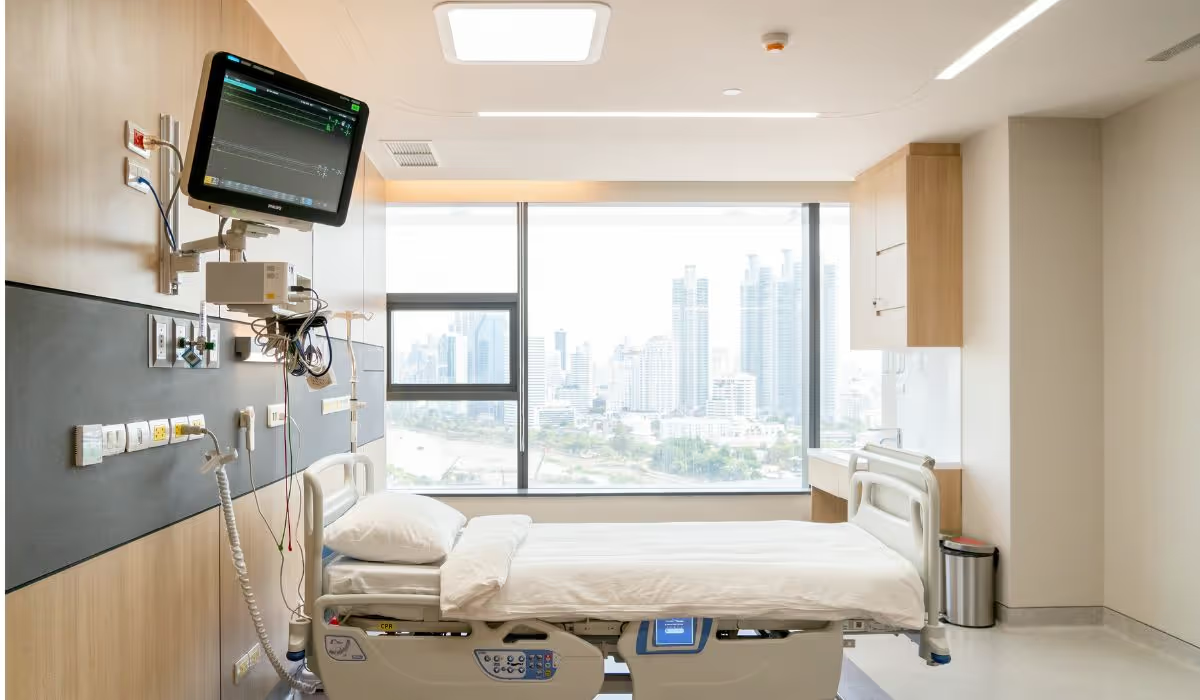
Moreover, we continue to expand our telemedicine services, enabling selected patient groups to access medical consultations without physically traveling to the hospital. Beyond convenience and time saving, this approach helps curtail carbon emissions from transportation, as well as lowering air pollution from urban traffic congestion.
These changes represent a significant evolution in healthcare, shifting from focusing solely on treating patients to a holistic approach that incorporates environmental impacts and translates them into practical, real-world action.
Water and waste management: From disposal to recyclable resources
Another notable metric is water consumption. In 2024, the hospital used 169,986 cubic meters of potable water. By 2025, this decreased to 169,325 cubic meters per year, reflecting a 1.88% reduction in water use at MedPark Hospital.
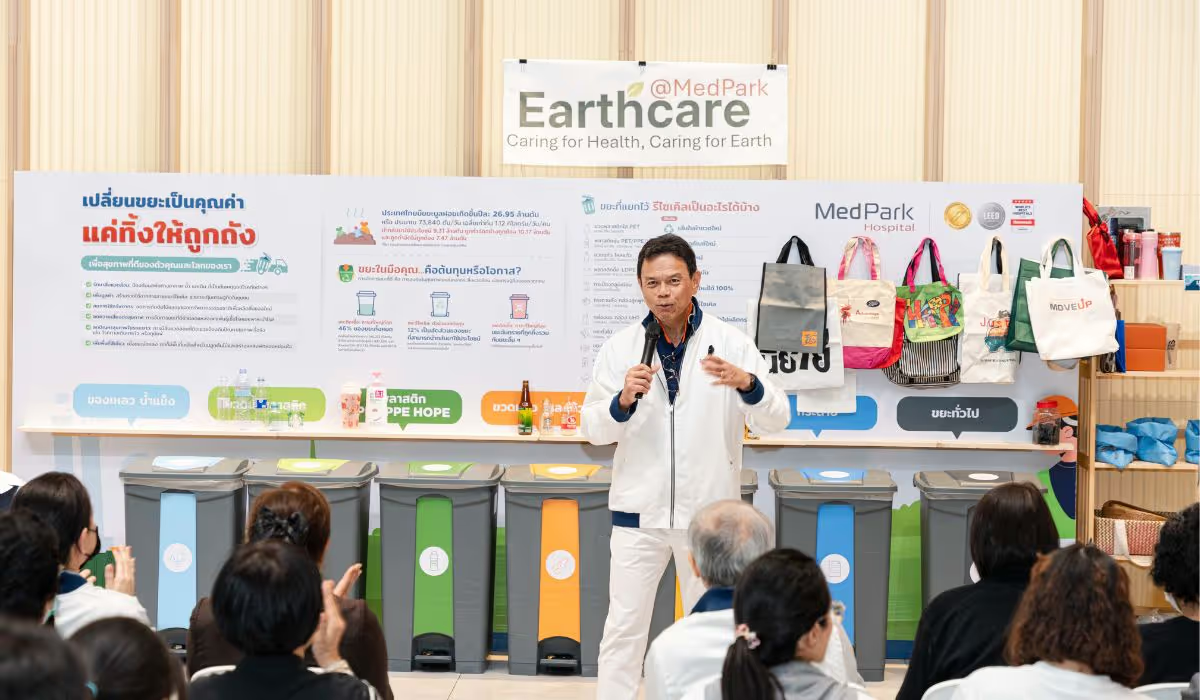
MedPark Hospital has redefined its approach to water stewardship by prioritizing the responsible and efficient use of water. After use, some of the wastewater is treated through dedicated systems and repurposed for non-clinical applications, including cooling towers and the maintenance of green landscapes inside and outside the hospital building.
Similarly, the hospital manages its waste with the same recycling philosophy, systematically repurposing non-hazardous waste; for example, deriving compost from food waste, energy from plastics, and donating textiles for reuse.
29.4% of waste has been repurposed, with a target to reach 40% by 2029.
Transformation does not end within the organization.
Sustainability is not realizable in isolation. MedPark Hospital, therefore, extends this commitment across its suppliers and broader value chain, because environmental responsibility does not stop at the hospital entrances.
MedPark procures 28% of its materials through environmentally responsible sourcing, and 41% of its suppliers have sustainability policies.
Because we believe that any single organization cannot achieve monumental change through its own dedication and efforts, it must be collective pacts with partners who share a common vision and commitment to the same values.
Core mission: From caring for lifelong health to shaping a more livable, sustainable world
The journey of MedPark Hospital began with simple, fundamental questions and has progressively evolved into a structured, strategically driven system. What originated as an architectural design philosophy has advanced into integrated energy management, rigorous carbon measurement, and the continuous refinement of clinical and operational processes. Over time, this commitment has extended extramurally, cultivating partnerships with suppliers and strategic collaborators who share a unified vision of environmental practice.

These efforts demonstrate that sustainability is a guiding principle, thoughtfully integrated into every decision and seamlessly embedded in daily patient care.
While current gains may not yet represent the peak, they mark a meaningful step forward, attesting that a world-class, patient-centered care is deliverable in parallel with genuine environmental responsibility.
Looking ahead, the definition of “the best hospital” may extend beyond clinical excellence, expertise, and service quality to include “the ability to sustain a healthier planet and support long-term health and well-being for all.”


