





What is PGT-M?
PGT-M (Preimplantation Genetic Testing for Monogenic Disorders) is a genetic test performed on IVF-conceived embryos. It is used to identify embryos free from specific single-gene disorders that may be inherited from parents who are carriers or affected by the disease. The most suitable embryo is then selected for transfer into the uterus.
This test is particularly recommended for couples who are carriers of, or affected by, inherited monogenic disorders that may be passed on to their children, such as thalassemia, cystic fibrosis, and muscular dystrophy.

What are the benefits of PGT-M?
Reduces the risk of transmitting genetic disorders
PGT-M enables the selection of disease-free embryos at the blastocyst stage, helping couples who are carriers of or affected by single-gene disorders to have healthy children free from these conditions.
Minimizes the need for pregnancy termination
Genetic abnormalities were traditionally identified after conception. PGT-M enables risk assessment before embryo transfer, helping patients conceive with greater confidence and peace of mind while reducing the likelihood of emotionally challenging decisions later.
Empower informed family planning.
PGT-A, a screening test to check if they have the correct number of chromosomes, and PGT-M allow comprehensive assessment of genetic and chromosomal health. This improves the selection of the most viable embryo, reducing anxiety and supporting informed family planning under specialist care.
Can be paired with HLA matching to support sibling treatment (Savior Sibling)
In selected cases, PGT-M combined with HLA matching enables the identification of embryos that are both disease-free and tissue-compatible with an affected sibling. This approach is particularly valuable for families with children requiring stem cell transplantation, such as those with conditions like thalassemia. Cord blood stem cells collected at birth can then be used for treatment.
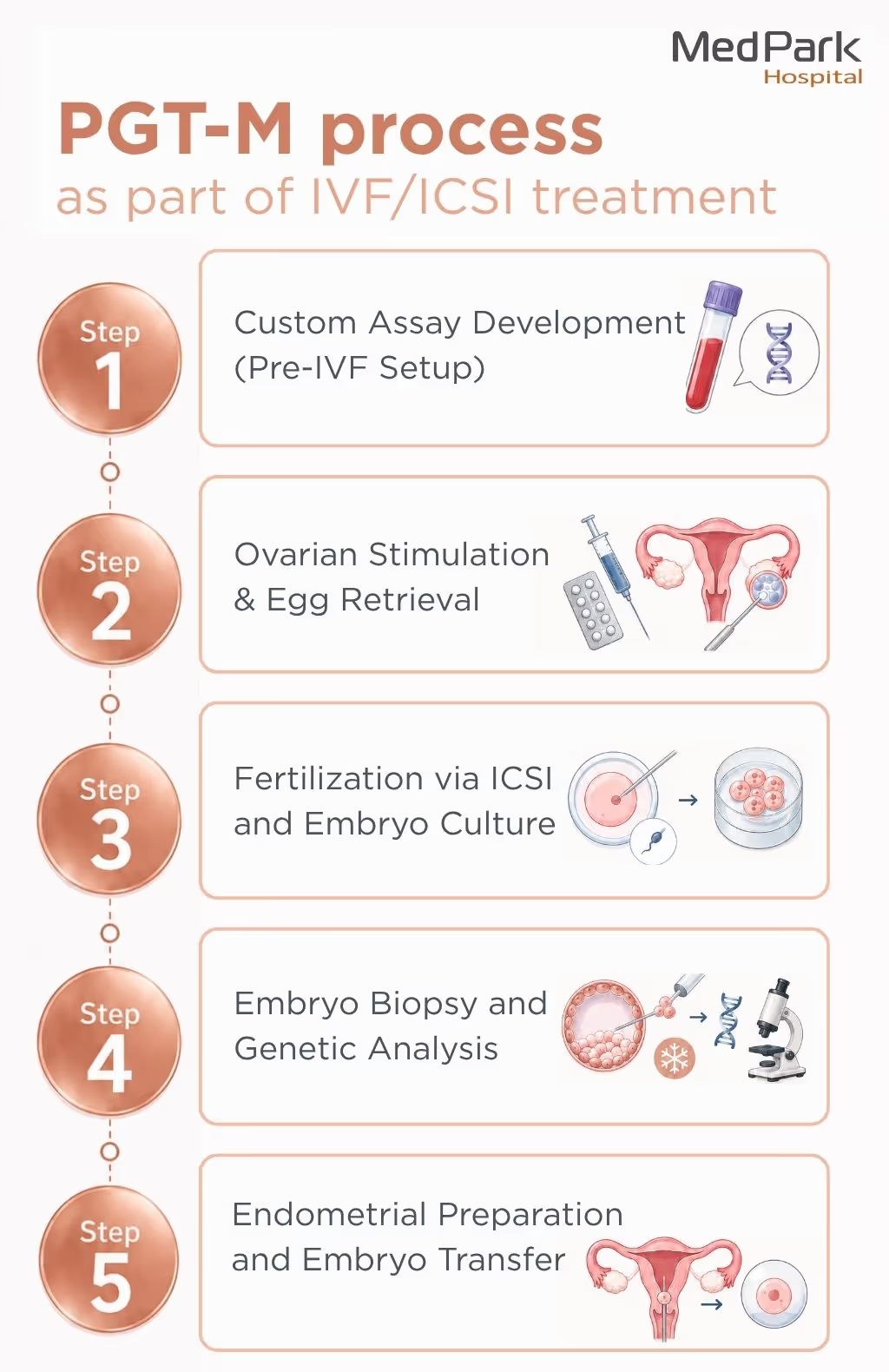
What is the PGT-M process as part of IVF/ICSI treatment?
- Step 1: Custom Assay Development (Pre-IVF Setup) (Approx. 1 - 2 months)
Before ovarian stimulation begins, blood samples are drawn from the couple (and sometimes immediate relatives with a history of the disease). The genetics lab analyzes DNA to design custom reagents that can detect specific mutated genes in embryos. - Step 2: Ovarian Stimulation & Egg Retrieval (Approx. 10 - 14 days)
Once the customized test kit is ready, the female partner begins daily hormone injections for about 10–12 days to stimulate the growth of multiple eggs. Afterwards, the doctor performs an egg retrieval procedure. - Step 3: Fertilization via ICSI and Embryo Culture (Done on Days 5–6 of embryo development)
Embryologists select the healthiest single sperm to inject directly into each mature egg (ICSI) for fertilization. The embryos are then cultured in a specialized incubator for 5–6 days until they reach the blastocyst stage. - Step 4: Embryo Biopsy and Genetic Analysis (Approx. 2 - 4 weeks)
When the embryos reach the blastocyst stage, embryologists use a laser to make a tiny opening in the outer shell and extract only a few cells from the outer layer (trophectoderm). The inner cell mass is left entirely untouched. These cells are tested using the custom reagents prepared in Step 1 to identify normal, disease-free embryos. At this stage, doctors usually recommend concurrent PGT-A testing to assess chromosome numbers. After the biopsy, the embryos are cryopreserved. - Step 5: Endometrial Preparation and Embryo Transfer (Approx. 2 - 3 weeks)
Once the genetic results are available, the female partner takes oral or injectable medications to prepare the uterine lining to be at its optimal thickness. On the scheduled transfer day, the frozen embryo is thawed and gently transferred into the uterine cavity to allow for implantation and pregnancy.
How Do PGT-M and PGT-A Differ?
While both PGT-M and PGT-A are embryo genetic screening technologies used during IVF/ICSI, they serve different purposes:
- PGT-M tests for “specific inherited genetic disorders” at the single-gene level.
It identifies specific gene mutations passed down through families. It is intended for couples who know they are carriers or affected by a single-gene disorder, e.g., thalassemia or muscular dystrophy. The test involves analyzing genetic sequences at specific loci and requires a personalized testing protocol, typically taking 1–2 months to prepare. This approach is best suited for individuals with a confirmed family history of monogenic disease. - PGT-A screens for “overall viability” at the chromosome level.
PGT-A evaluates embryonic chromosomal numbers and structural integrity. It optimizes embryo selection and improves implantation success rates by screening for abnormal chromosomal numbers, such as those associated with Down syndrome. It is highly recommended for women who are 35 and older or patients with a history of recurrent miscarriage.
Which genetic disorders can PGT-M detect?
PGT-M screens for single-gene mutations inherited from parents.
- Thalassemia
- Cystic Fibrosis
- Duchenne Muscular Dystrophy (DMD)
- Spinal Muscular Atrophy (SMA)
How long does the PGT-M process take?
The testing process for PGT-M takes longer than PGT-A because it requires custom assay development, which takes about 1 to 2 months. Additionally, embryo cells must be sent to the laboratory for analysis.

Does PGT-M improve pregnancy success rates?
It does not directly increase success rates, but it helps improve the chances of a healthy pregnancy because it minimizes the need for multiple embryo transfers and reduces the emotional trauma of having to terminate a pregnancy due to severe fetal abnormalities.
However, pregnancy success also depends on other variables, such as maternal age and the condition of the uterine lining, rather than PGT-M alone.
Can PGT-M lower the risks of a child inheriting a genetic disease?
Yes, PGT-M significantly lowers the risk of inheriting a monogenic disease by detecting the gene mutation that runs in the family. Its accuracy is approximately 98–99%. However, despite this high accuracy, there may still be a small margin of error due to biological factors, such as embryo mosaicism. Amniocentesis is, therefore, required between 16 and 20 weeks of pregnancy.
How many viable embryos will be left after PGT-M?
The number of remaining embryos depends on several factors, including the number of eggs retrieved, embryo quality, and the inheritance pattern of the disease (dominant vs. recessive).
Generally, starting with about 10 retrieved eggs, approximately 3–5 embryos successfully develop into viable blastocysts suitable for biopsy. During gene testing, embryos are screened based on heritability probabilities. For instance, with a recessive disease like thalassemia, embryos have a 75% chance of passing the criteria (either completely healthy or non-affected carriers). For dominant diseases, the probability drops to 50%. Furthermore, if chromosomal screening (PGT-A) is added, the number of viable embryos may decrease further, especially in older patients.
Is the PGT-M procedure painful?
The PGT-M test itself causes no pain because it is performed on embryonic cells in a laboratory. However, the accompanying IVF/ICSI process may cause some physical discomfort:
- Ovarian Stimulation: Injections may cause minor bloating or abdominal discomfort.
- Egg Retrieval: Performed under sedation, so no pain is felt during the procedure. Afterwards, patients may experience mild pelvic cramping similar to menstrual cramps, which can be managed with pain relievers.
If I am doing IVF, is PGT-M necessary?
PGT-M is not necessary for every IVF patient. It is only recommended if:
- Both partners are carriers of the same recessive gene disorder (e.g., thalassemia carriers of the same type), which carries a 25% risk of having a severely affected child.
- Either partner has a dominant genetic disorder (e.g., neurofibromatosis, polycystic kidney disease, or certain types of spinal muscular atrophy), which carries a 50% risk of transmission.
- The couple has a history of giving birth to a child with a single-gene disorder or has undergone a medical termination of pregnancy due to genetic abnormalities.
For couples without these specific risks, PGT-M is generally unnecessary, and doctors may recommend PGT-A instead.
How much does PGT-M cost?
PGT-M is a highly specialized genetic test that requires custom assay development for each case. As such, it is associated with relatively high costs. The overall cost may vary depending on several key factors, including:
- Type of monogenic disorders (rarer mutations may require more complex assay development)
- Custom assay development tailored to each family
- Number of embryos tested
- Laboratory technology and standards
- Co-testing with PGT-A, which may further increase the overall cost
The estimated cost of PGT-M genetic testing is approximately THB 20,000 per embryo*. This fee covers genetic testing of the embryo only. It does not include other treatment-related procedures, such as ovarian stimulation, egg retrieval, IVF/ICSI, embryo culture, embryo biopsy, embryo cryopreservation, or embryo transfer. The total treatment cost may vary depending on each patient's individualized treatment plan.
* Terms, conditions, and pricing are subject to MedPark Hospital's policies.
For more information about the estimated cost of PGT-M, please contact the MedPark IVF Fertility and Genetics Center.
Location: 20th Floor, Counter A (West Lift)
Tel: +66 2 090 3020
Hours:
Monday–Friday: 8:00 AM–6:00 PM
Saturday–Sunday: 8:00 AM–4:00 PM

PGT-M at MedPark IVF Center
MedPark IVF Fertility and Genetics Center provides comprehensive, all-in-one fertility care. Our team is led by reproductive endocrinology and infertility specialists working alongside male reproductive system specialists. We guide couples closely through every step to alleviate worries and ensure informed decision-making. Our advanced technology, AI-assisted embryo selection, and strictly controlled lab environments ensure optimal embryo development.