





Choose the content to read
- What causes hip fractures in the elderly?
- What is the PFNA surgery procedure?
- What is postoperative PFNA surgery?
- What is the recovery time for PFNA surgery?
- What are the complications of PFNA surgery?
- PFNA surgery MedPark Hospital
PFNA (Proximal Femoral Nail Antirotation)
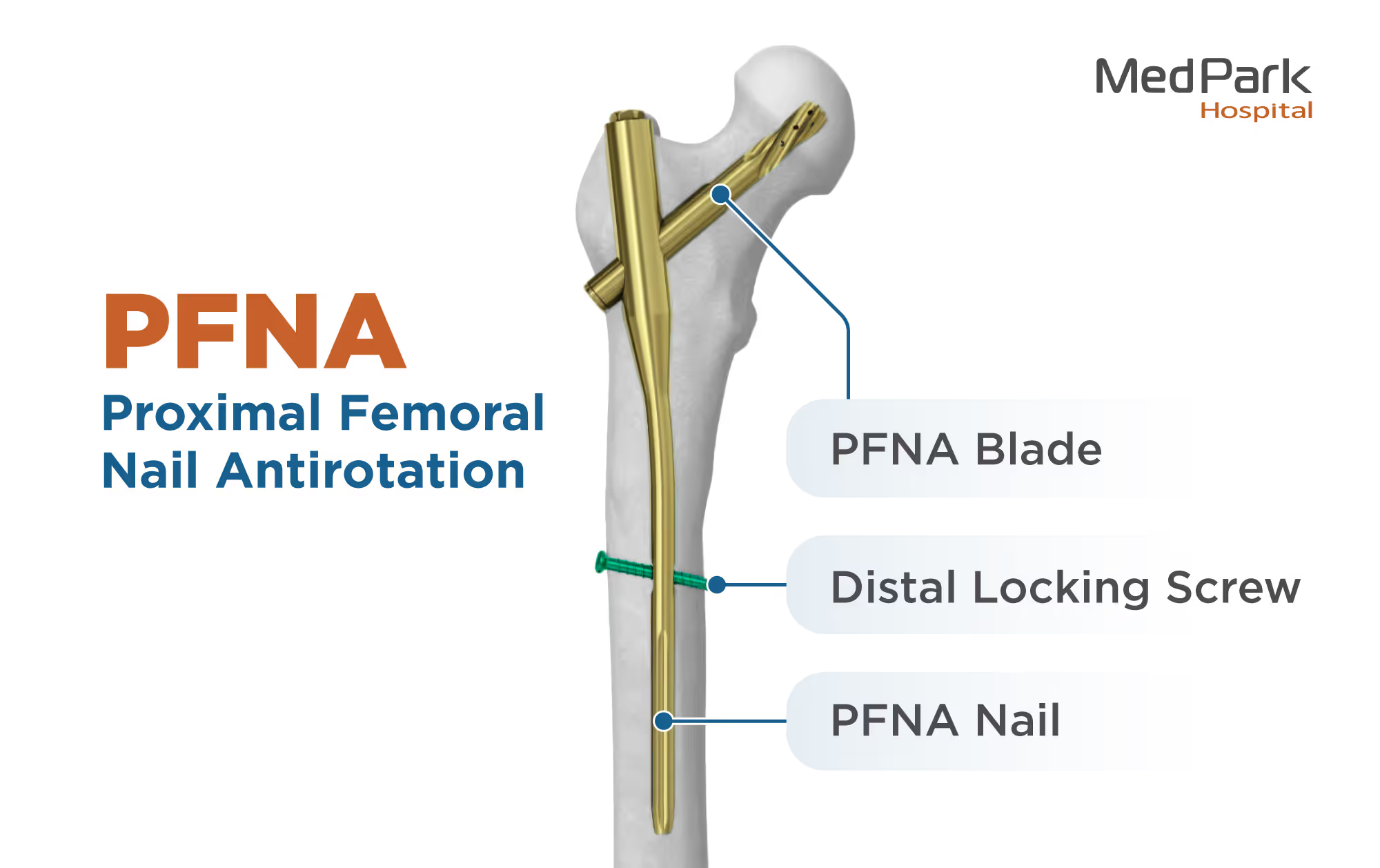
PFNA (Proximal Femoral Nail Antirotation) is a surgical procedure for the fixation of proximal femoral (hip) fractures that involves realigning the intertrochanteric fractures and inserting a specialized intramedullary nail into the medullary canal through a small 2-3 cm incision to stabilize the fractured bone in its original position. PFNA surgery accelerates hip fracture healing, increases stability, reduces bed rest complications, and allows patients to regain mobility, including sitting, walking, and daily activities, more quickly.
Why PFNA surgery?
Hip fractures in the elderly are serious injuries and a life-threatening condition that requires surgical intervention within 24-48 hours. because it will lead to severe hip pain, inability to move the hip, a limited range of motion, difficulty bearing weight on the fractured leg, and potentially leg deformity. It also leads to complications such as deep vein thrombosis, pressure sores/bedsores, urinary or respiratory tract infections, and the possibility of disability, bedriddenness, and death.
PFNA surgery is a highly effective and safe procedure for treating intertrochanteric fractures in the elderly that require only small incisions, leave minimal pain, and cause less blood loss. The intramedullary nail effectively stabilizes bone fragments, reduces the risk of bone corrosion, and prevents femoral head rotation, even in elderly patients with pre-existing osteoporosis. PFNA surgery accelerates the bone healing process and has a short recovery time; patients can initiate weight-bearing walking soon after the surgery.
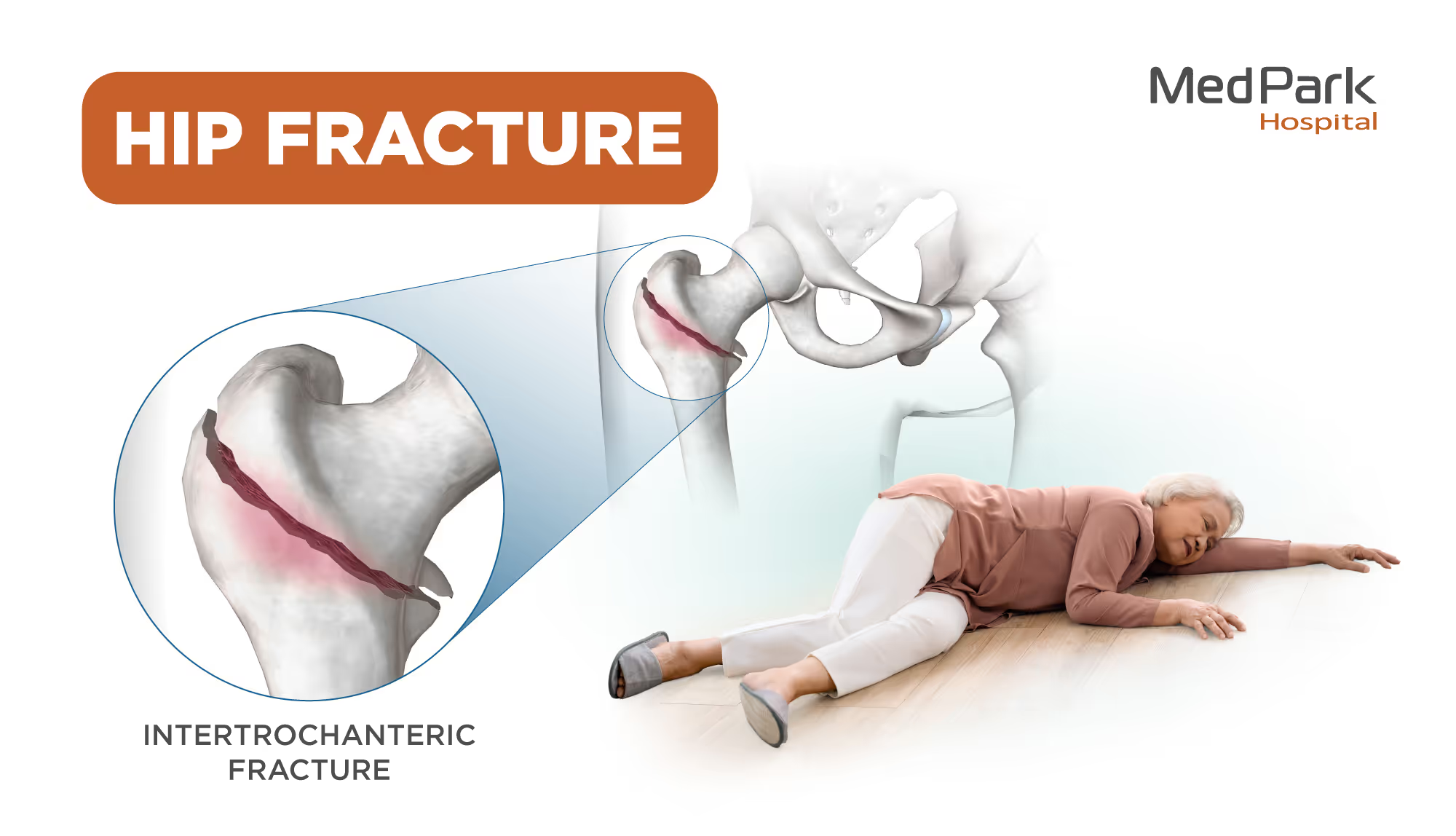
What causes hip fractures in the elderly?
Hip fractures in the elderly are primarily caused by falls. In addition, most elderly people experience age-related bone mass loss, which leads to decreased bone density and thinning, increasing the risk of osteoporosis and bone fractures. Common causes of hip fractures among older adults are as follows:
- Osteoporosis and bone density loss, particularly in women
- Falls, slips, and trips
- Increasing age
- Calcium and vitamin D deficiencies weakened bone density
- Muscle weakness, muscle mass loss, sarcopenia, leading to loss of balance
- Side effects from certain medications, such as sleeping pills, sedatives, and antidepressants
- Vision impairment, blurred vision, hazy vision, cloudy vision, and presbyopia (age-related farsightedness)
- Environmental factors such as low indoor lighting, wet and slippery floors, sloping floors, uneven or rough surfaces, and obstructions in walkways
- Wearing loose shoes, shoes with poor traction, or loose-fitting clothing
What is the diagnosis before PFNA surgery?
Orthopedic surgeons will diagnose a proximal femoral fracture by taking a detailed history of pain, the severity of hip pain, the level of pain, a history of falls, whether the patient can stand up independently or move their hip, whether they can walk weight-bearing, and if there are any abnormal movements or bone deformities, followed by a physical examination and medical imaging to confirm and classify the type of fracture, as follows:
- Hip X-rays: Examine both hips in anterior-posterior and lateral views to determine the fracture site, type of fracture, and degree of osteoporosis, as well as compare the neck-shaft angle between the normal and fractured sides. Examine the curvature of the femur, the size of the femoral canal, and the surrounding pathology.
- CT scans: Delineate proximal femoral fractures in detail; identify small fractures that are obscured, overlapping, or invisible on X-rays; and rule out femoral neck and pelvis fractures.
- Bone density (BMD) tests: Determine the T-score and osteoporosis degree to select appropriate bone fixation materials that will prevent collapse and reduce the risk of repeat surgery. This also enables orthopedists to predict recovery time and provide personalized vitamin D regimens.
What is the PFNA surgery procedure?
PFNA (Proximal Femoral Nail Antirotation) surgery at MedPark Hospital adheres to international standards, prioritizing patient safety and surgical success outcomes to achieve treatment goals of accelerating intertrochanteric fracture healing, providing hip stability, and assisting patients in quickly regaining the ability to walk and resume their daily lives.
What is preoperative PFNA surgery?
- Discontinue the use of blood thinners, including aspirin or warfarin.
- Patients with pre-existing conditions, those taking regular medications, or those with a history of drug allergies should notify doctors in advance.
- Refrain from eating and drinking for 8 hours before surgery to prevent aspiration during anesthesia and surgery.
Intraoperative PFNA surgery
- The orthopedic surgeon positions the patient on a traction table and performs closed reduction using digital fluoroscopy to visualize the fractured bones and internal pathology in real time while determining the entry point.
- The surgeon makes a single small incision 2-3 cm above the tip of the greater trochanter to locate the entry point into the medullary canal and inserts a guide wire to direct the intramedullary nail.
- The surgeon uses an awl to enlarge the medullary canal before inserting the selective PFNA nail along the predefined trajectory using an insertion handle. The surgeon then checks to make sure the PFNA nail is in the proper position and compatible with the proximal femur in both anterior-posterior and lateral views.
- The surgeon makes a lateral stab incision with a sleeve assembly and an aiming arm to insert a PFNA blade spiral screw toward the PFNA nail through the femoral head to abut intertrochanteric fractures firmly together and prevent the femoral head from rotating before checking the optimal and safe TAD (Tip Apex Distance).
- The surgeon made another lower lateral stab incision using an aiming arm to insert a distal locking screw into the lower part of the femur, then screwed the end cap over the tip of the greater trochanter and used fluoroscopy to check the correct positions before suturing the incision closed.

What is postoperative PFNA surgery?
- To prevent infection, keep the wound dry for 10-14 days or until the stitches are removed.
- Take the pain relievers and antibiotics prescribed by your doctor continuously. Avoid smoking and drinking alcohol, as these can slow wound healing.
- Soon after the surgery, your doctor will advise you to start walking and bearing weight on the operated leg with a walking aid or walker.
- Sit in a standard chair or high chair and move your ankle frequently to improve blood circulation and prevent blood clots.
- Eat calcium-rich foods such as milk, small fish that can be eaten whole, leafy green vegetables, black sesame seeds, and dried beans.
What is the recovery time for PFNA surgery?
Typically, patients undergoing PFNA (Proximal Femoral Nail Antirotation) surgery can start bearing weight on the operated leg soon after the surgery, with significant improvement visible within 4-6 weeks. Complete bone healing takes 3-6 months (on average, 4 months), and patients can resume their normal activities within 3-6 months.
What are the complications of PFNA surgery?
Common complications of PFNA (Proximal Femoral Nail Antirotation) surgery include deep vein thrombosis, infection, varus collapse, or helical-blade migration. However, these complications have a low incidence rate of 2.6-13.3%. Overall, PFNA surgery is a safe and highly effective procedure for minimizing potential complications from intertrochanteric fractures.

What is the success rate of PFNA surgery?
PFNA (Proximal Femoral Nail Antirotation) surgery is a highly effective procedure for the rapid healing of intertrochanteric femoral fractures, with a success rate of 90-96%. This surgical procedure is particularly beneficial in elderly patients who have fallen, with positive and satisfactory outcomes. Most patients can mobilize, walk, and resume their presurgical activities within 6 weeks.
What are the benefits of PFNA surgery?
- Minimally invasive surgery: minimal pain, less blood loss, less soft tissue damage, and significantly reduced risk of infections.
- Greatly secure and stable with a helical blade system, ensuring rigid fixation, ideal for elderly patients with osteoporosis.
- Significantly minimizes complications and the risk of fixation failure, greatly preventing femoral head rotation.
- Speedy recovery and mobility: quicker resumption of sitting, walking, and weight-bearing, reducing complications from being bedridden.
- Shorter hospitalization, only 1-2 nights required, starting weight-bearing on the foot after 48 hours, and markedly recovering within 1-2 months.
- Remarkably yields better treatment outcomes compared to traditional surgery, significantly reducing postoperative pain and improving quality of life.

PFNA surgery MedPark Hospital
Orthopedic Center, MedPark Hospital, Bangkok, led by a team of highly experienced orthopedic surgeons, is ready to provide complex PFNA (Proximal Femoral Nail Antirotation) surgery in elderlies, utilizing a high-quality, FDA-approved intramedullary nail and state-of-the-art medical technology and international standard operating rooms, integrating advanced surgical techniques to aid in a quick, precise, and safe surgical approach, ensuring optimal treatment outcomes while consistently providing post-operative care to minimize complications, promote speedy recovery, and help patients regain preoperative hip functions, including standing, sitting, walking, and other daily activities quickly.