





Integrating AI to Tackle Insomnia: Insights from a Sleep Medicine Specialist
Artificial Intelligence (AI) is gradually becoming an integral part of our everyday life, with more people utilizing it for tasks ranging from work support and data analysis to creative design and marketing strategy. As technology and wearable medical devices advance, the role of AI in health and medicine is evolving in parallel, raising the question: How much can we trust AI to manage our health? In this article, Assist. Prof. Dr. Jirayos Chintanadilok, a specialist in sleep medicine, offers his insider perspective on the role of AI in healthcare, particularly in addressing sleep disorders and promoting overall well-being.
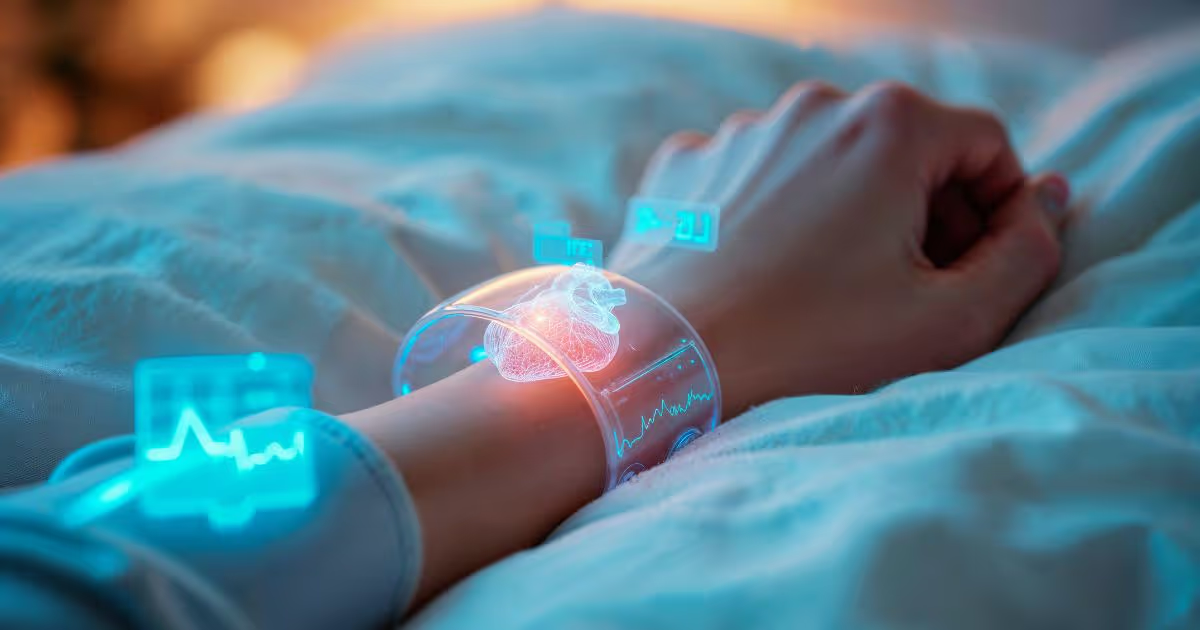
High-Quality Data Breeds High-Quality AI Performance
Developing an AI system requires high-quality training datasets, the most critical factor for its performance efficacy. Today, AI systems trained on vast medical datasets are increasingly applied to support clinical decision-making and treatment planning. When AI training data are accurate, unbiased, and comprehensive, we can entrust the AI system to help reduce the workload and save time for doctors and health professional staff, for instance, by streamlining the gathering of medical histories, managing health records, and analyzing diagnostic test results.
However, medicine and healthcare must contend with a vast diversity of datasets and the nuanced health conditions of individual patients, which present considerable challenges. The accuracy of an AI system may be limited by its training, leading to potential unreliability in diagnosing complex diseases and syndromes. Current medical AI applications primarily serve as clinician assistants to enhance decision-making accuracy, for example, assisting in surgical procedures or endoscopic examinations to detect abnormalities.
Leveraging AI to Address Insomnia: A Basic Human Challenge
“Experiencing occasional sleep difficulty does not automatically qualify as having insomnia. For an individual to be formally diagnosed with insomnia, the sleep disturbance must be persistent, continuing for a period exceeding one week, during which the individual is unable to fall asleep on demand, leading to a demonstrable impact on the efficiency of daily life and work performance," explained Assist. Prof. Dr. Jirayos.
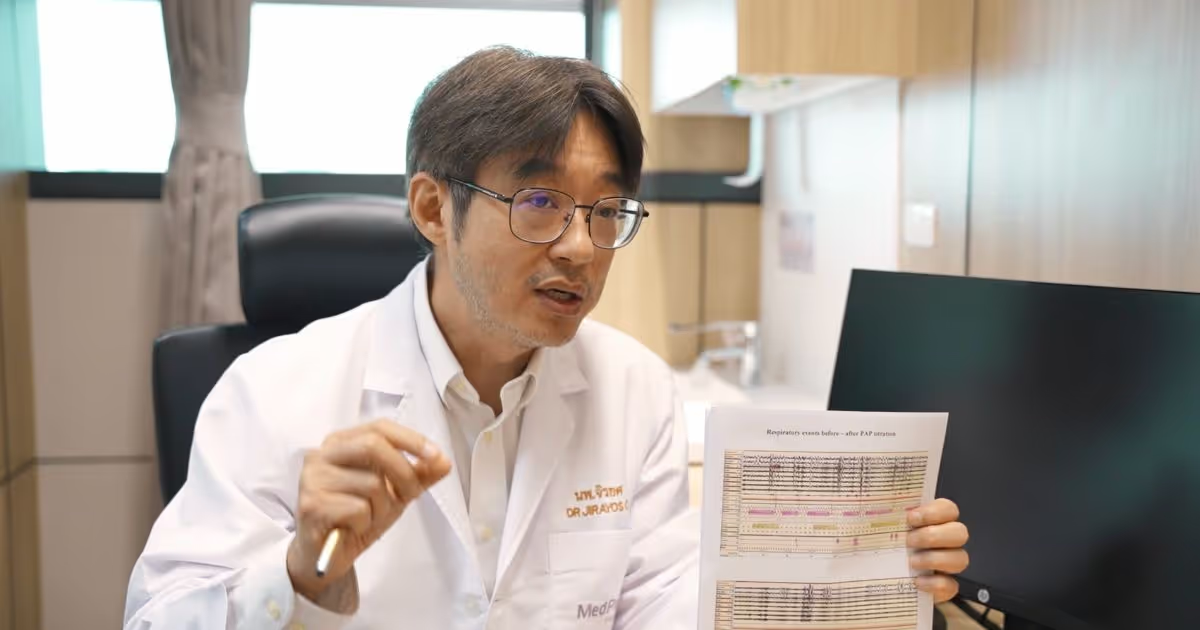
Given that the treatment for insomnia is not merely confined to pharmacotherapy but also involves behavioral modifications, this has led to the development of AI-driven algorithms developed to analyze patient data and provide structured, step-by-step recommendations for managing sleep issues. The AI system processes patient-level data to assess behavioral patterns. The information is accessible to doctors to support clinical decision-making and diagnosis, reducing the need for multiple in-person visits for history-taking and follow-up, as AI can assist in gathering and analyzing data.
Assist. Prof. Dr. Jirayos cited an example of a sleep improvement program called Sleepio, developed abroad by Big Health Inc. to address the underlying causes of insomnia in adults. Sleepio navigates users through a six-week program that collects detailed information on their sleep patterns, including weekly CBT-I assessments, sleep diaries, and various AI-assisted support features. The program is medically certified and can help cut down the frequency of hospital visits. Nevertheless, doctors advise using Sleepio with professional behavioral therapy and physician guidance to optimize treatment outcomes.

"In recent years, we have seen remarkable efforts to harness medical technology to enhance human quality of life, particularly in the field of sleep. For instance, personalized genetic testing can help determine the optimal sleep duration for an individual based on their unique genetic profile. AI can help individuals improve their health and well-being by identifying personalized behavioral modifications to promote their overall health and well-being."
The Truth: Health is Simpler Than We Think
As we develop advanced technologies to improve health and quality of life, Assist. Prof. Dr. Jirayos emphasizes that taking care of our health is easier than we often assume. Only 20–30% of risk factors are beyond our control, primarily determined by genetics. The remaining 70–80% stem from lifestyle behaviors, which we can influence and modify without requiring complex technologies. Today, we also have tools designed to support behavioral change, and their core purpose remains the same: to prevent disease and reduce the risks due to our habits, which account for 70–80%.
As a sleep medicine specialist, Assist. Prof. Dr. Jirayos advises that achieving good health requires investment—and, like any investment, there are risks. However, the lowest-risk strategy is managing our own behaviors, since they are the primary contributors to disease.
“It is imprudent to wait until illness strikes to care for your health. Regular health checkups are essential, because being aware of potential health issues—whether you wish to know or not—is always wiser and better. When incorporating technology to support health management, it should be done mindfully and in balance; we should not exclusively rely on technology. Ultimately, it is we who dictate our own lifestyle, and by doing so, we can effectively address 70–80% of risk factors that stem from our daily habits.”
Can AI Truly Treat Illness?
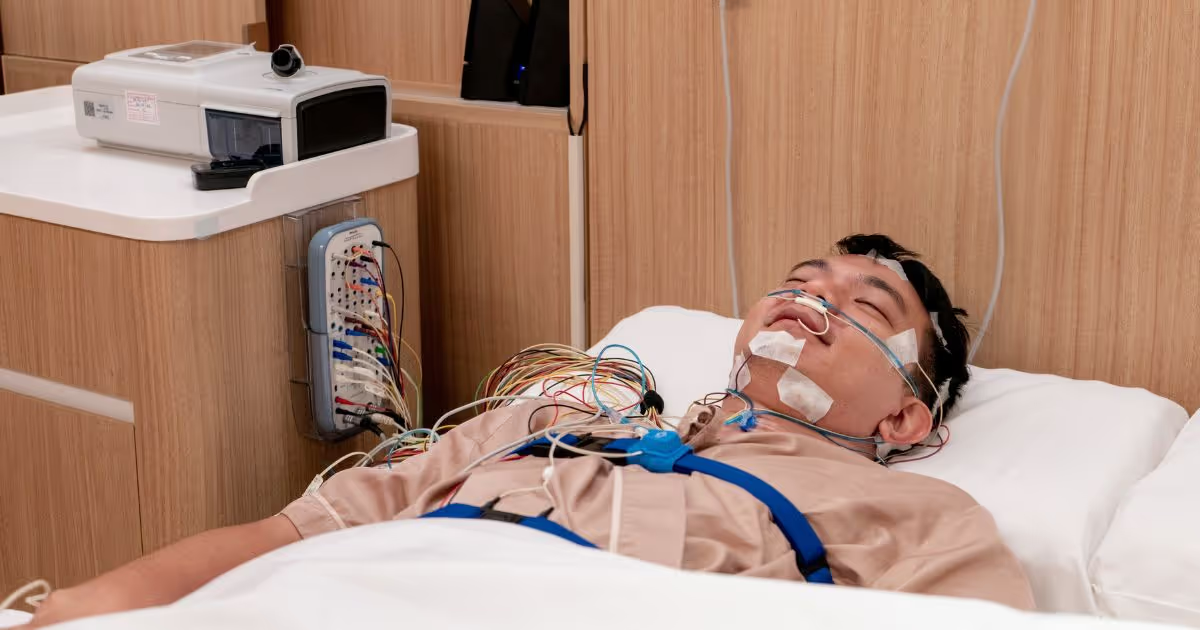
Asst. Prof. Dr. Jirayos indicates that when evaluating whether an AI system is ready for prime time in a clinical field, one should consider specific disease categories, symptom clusters, and functional applications. Providing a comprehensive, generalized answer about AI capabilities across all medical specialties is not feasible. Its clinical utility depends on the developmental stage and comprehensiveness of the training data of each discipline. In certain domains, AI can yield a high degree of accuracy; in others, it should function in an assistive role to physicians, while in some areas, practical application remains unfeasible. But Assist. Prof. Dr. Jirayos maintains an optimistic outlook, noting that AI is trending in a promising direction and will demonstrate increasingly robust clinical utility in the foreseeable future.
"Despite current AI requirements of substantial human oversight and supervision, future iterations may achieve greater sophistication and potentially attain 100% accuracy, which could significantly alleviate doctor workloads and optimize healthcare cost reduction. At this critical juncture, it is we, as human beings, who will chart the future AI trajectory—identifying the optimal equilibrium whereby AI integration complements human professional practice, ensuring equitable benefit to all in this transition."