





Balance Assessment: Preventing Falls in Older Adults and Supporting Post-Injury Rehabilitation
Balance often receives little attention during routine health checkups. Yet it plays a vital role in daily life, influencing not only the risk of accidents but also the quality of life. Impaired balance, caused by aging, injuries from accidents, or physical activities, poses significant health risks. In this edition of Special Scoop, we spoke with Dr. Pheeravut Tantisuvanitchkul, a physiatrist, who shared insights into the importance of balance and comprehensive assessment needed for appropriate care.

Balance: A Key Indicator of Quality of Life in Older Adults
Balance is a physiological function that serves as an indicator of quality of life and functional mobility. Inevitably, advancing age or specific medical conditions can lead to a decline in equilibrioception.
“Geriatric patients and individuals with neurological conditions, such as stroke or paralysis, are at increased risk of falls. Particularly, the elderly with diagnosed or undiagnosed osteoporosis, a single fall can lead to life-threatening fractures.”
Balance assessment typically begins with clinical fundamentals, history taking, and physical examination. The doctor will evaluate the postural stability during sitting and standing, straight-line walking, obstacle negotiation, and turning or circular walking. These often require no specialized equipment.
“A non-instrumental balance test allows physical therapists to assess sit-to-stand movements, including sitting with the eyes open and closed, sitting with arms crossed, or postural control against gentle perturbations, transition to standing -- whether you can stand upright independently without support, deviation, or loss of balance -- followed by a timed walking test. These are preliminary screenings.”
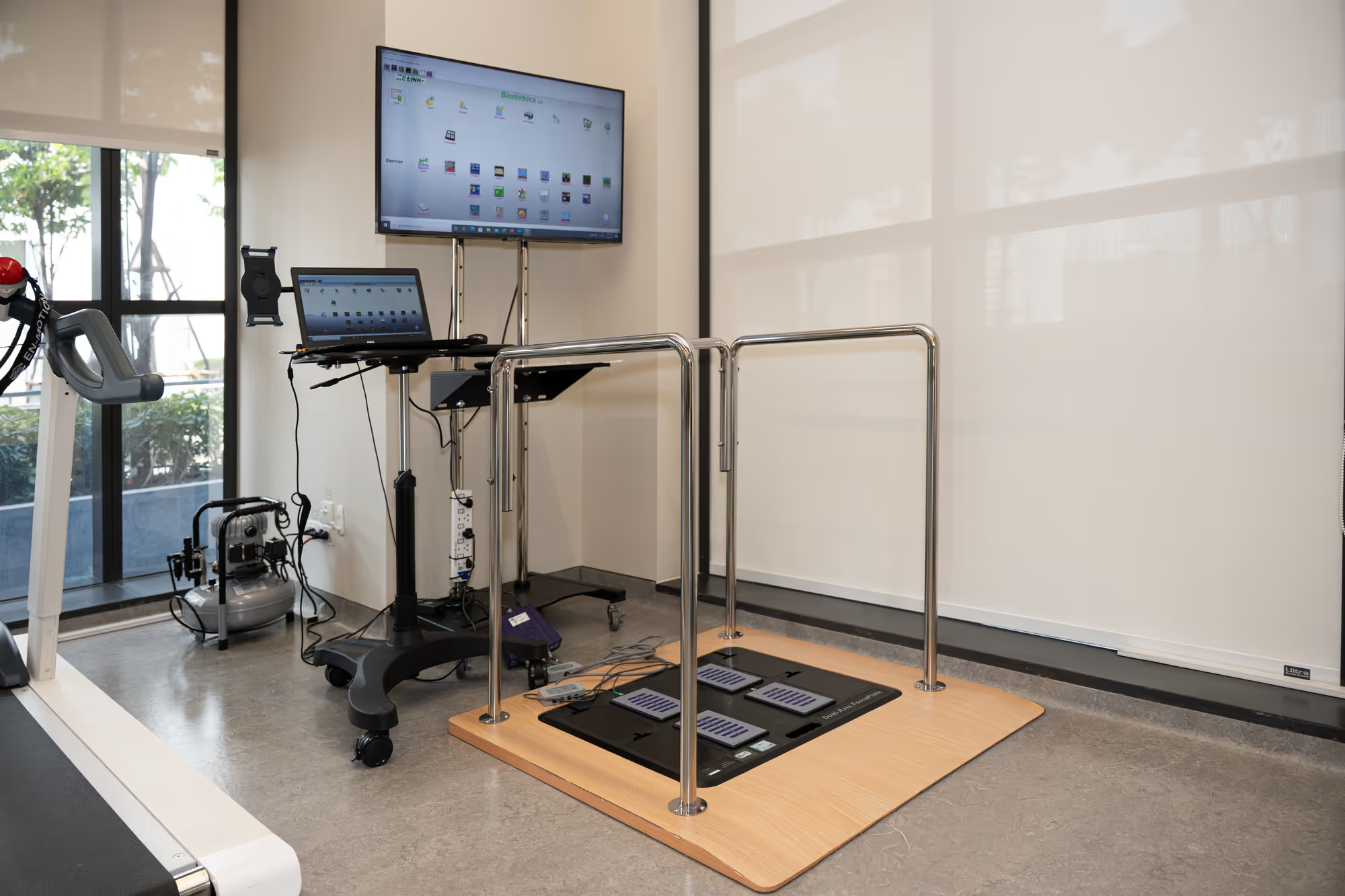
To obtain detailed data for identifying abnormalities in balance and movement, the doctor may utilize a Balance Machine, which can provide specific quantitative data to assess weight-bearing distribution across both feet and measure the limit of stability in four directions without loss of balance.
Balance Machine: Enhancing Postural Stability Assessment
Integrating a Balance Machine into physical therapy enables a highly detailed, quantitative assessment of a patient’s postural stability. The system calculates the center of gravity and precisely measures the range of motion during forward, backward, and lateral weight shifts, comparing the results with baseline standards. It also
evaluates the patient’s ability to return to an upright position safely. These help uncover potential blind spots in postural control and identify balance deficiency.
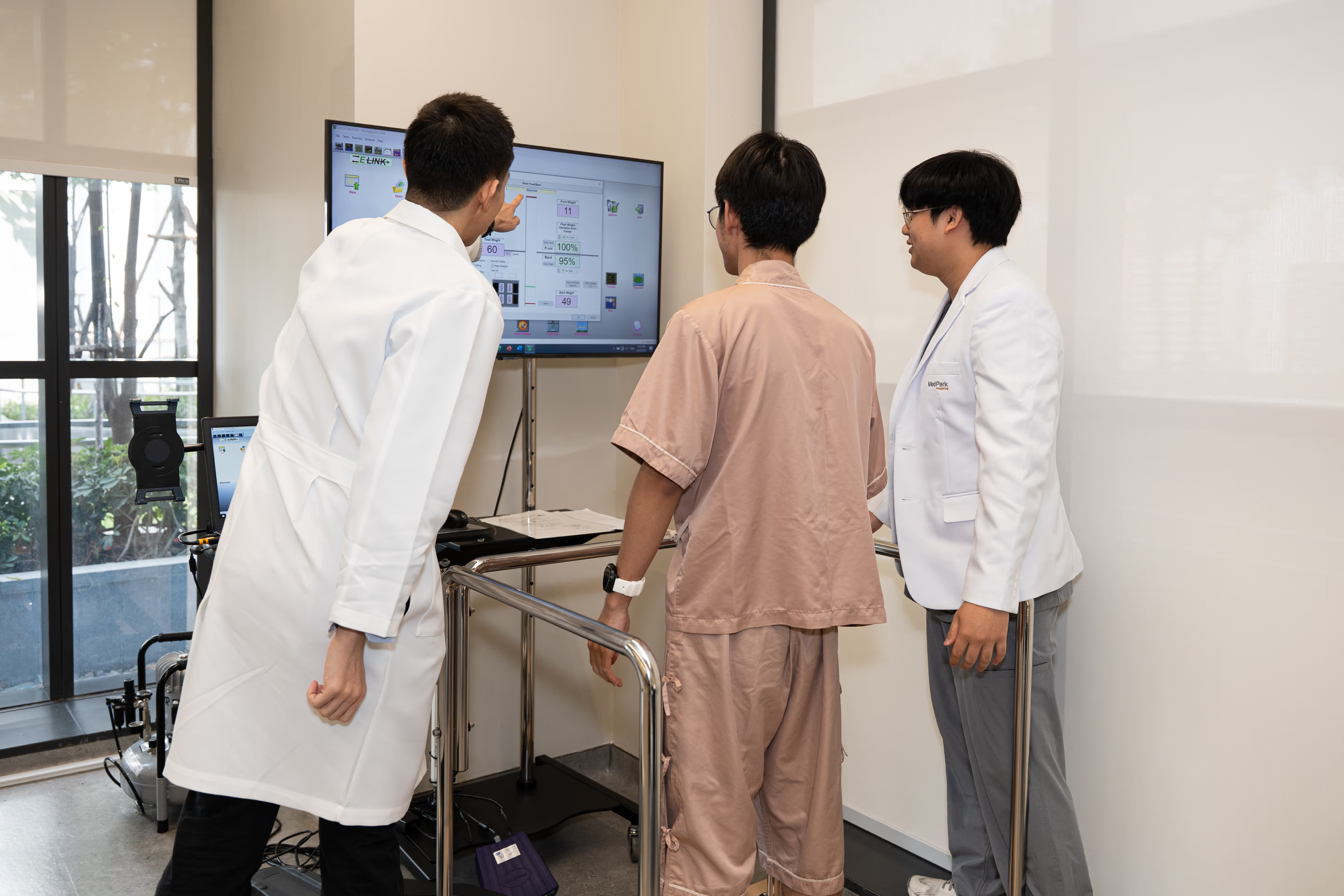
“The machine offers multiple testing modes. In addition to quantitative data for objective balance assessment, the equipment features gamified exercises with customizable difficulty settings and timed trials with score tracking, effectively integrating clinical training with engaging activities.”
Furthermore, quantitative and statistical data provide training outcome and performance trends, allowing doctors and physical therapists to adjust and refine rehabilitation plans for each patient.
“The ultimate goal of balance assessment is proactive prevention. Identifying a fall risk and implementing a personalized physical therapy plan to promote safe, stable movement is far better than treating injuries after a fall. As we age, a single fall can be life-threatening. We should not accept a slow or unsteady gait as a natural part of aging. Through physical therapy, we can significantly improve mobility and enhance quality of life. Even in senior years, moving with agility and confidence is possible.”
Balance Assessment for Rehabilitative Care
While prevention is our primary goal, balance assessment continues to play a vital role in rehabilitation planning when unexpected events occur, such as accidents or fractures.
“Patients with sports injuries or joint strains may not fully regain mobility or weight-bearing tolerance after recovery or surgery, and their gait and balance may also decline. These indicate a balance deficit, and you should seek a medical consultation.”
Even in cases of minor ankle sprains, prolonged immobilization or non-weight bearing can lead to neuromuscular deconditioning in the affected limbs. When full weight-bearing is resumed, patients frequently exhibit impaired gait. Gait training is necessary to minimize the risk of falls and recurrent injuries.
“Some individuals in this group may have had accidents caused by poor balance. Therefore, if we can train them to move efficiently and safely, it will significantly reduce their risk of recurrent injuries or future accidents.”
In post-trauma rehabilitation, non-geriatric patients generally demonstrate favorable outcomes with a shorter recovery timeline. A balance assessment and a structured physical therapy program can therefore enhance recovery.
Recognizing Fall and Osteoporotic Fracture Risk in Older Adults at Home
Regularly observing elderly family members, such as your parents, for changes in their movement patterns is a readily available screening step before seeking specialist care. Key signs to watch for include:
- Could no longer get up to retrieve items or run errands independently, preferring to remain seated, relying on others for assistance, and going out less frequently.
- Slower walking speed, where moving from one place to another takes noticeably longer than before
- Increasing difficulty sitting and standing, including the need to hold onto furniture or rely on external support
“If you notice that your parents are no longer moving as easily as before, it is crucial to seek medical evaluation. Do not ignore the changes. Mobility problems in older adults should never be considered a normal part of aging.”
Dr. Pheeravut explained that balance assessment and rehabilitation in seniors often require time and a gradual approach. While outcomes may not be as rapid or pronounced as in younger individuals, meaningful improvement is still achievable. What matters most is identifying the underlying causes and implementing strategies to prevent falls.
Balance Assessment at the Physical Medicine and Rehabilitation Center, MedPark Hospital
“As Thailand’s demographic transitions headlong toward an aging society, geriatric falls represent a major public health concern. A single fall can result in hip or spinal fractures. Consequently, proactive fall prevention is paramount. Beyond optimizing a patient's quality of life through stable and independent mobility, it can promote safety in daily living.”
Dr. Pheeravut advised that if signs of increased fall risk are noted in older adults at home, particularly changes in mobility, including sitting, standing, or walking, a prompt consultation at the Physical Medicine and Rehabilitation Center at MedPark Hospital is advisable. The center is led by a team of experienced physiatrists and physical therapists and equipped with advanced devices and technologies carefully selected to address mobility issues effectively. Furthermore, we provide screening and multidisciplinary care planning.

“In many cases, balance disorders are not effectively managed through physical therapy alone. Contributing factors may include reduced muscle mass secondary to poor nutrition, neurological conditions, or chronic diseases, such as diabetes, which can directly affect nerve function. Our center can refer patients to specialists across various fields and collaborate to deliver a personalized care plan.”
Because quality of life is not just about mobility, it is about stability and safety in every step.