





Non-Surgical Prostate Cancer Treatment: Preserving Quality of Life and Long-Term Function
Today, being diagnosed with prostate cancer is far less daunting than it once was. With continuous medical advancement, patients now have access to a broader spectrum of highly effective treatment options. Brachytherapy is a radiation therapy that offers high efficacy with minimal physical impact on surrounding tissues. With this non-surgical method, patients recover quickly and can confidently resume their daily activities.

Reasons Brachytherapy Is a Compelling Treatment Option
- No Surgery Required: This eliminates concerns regarding large surgical incisions and significant postoperative pain.
- Rapid Recovery: An extended hospital stay is not necessary. Many patients can return home and resume their normal daily lives almost immediately.
- Computer-Controlled Precision: Sophisticated computer systems precisely control the placement and duration of the radioactive seeds, minimizing impact on surrounding healthy tissues.
- Preserved Sexual Function: The procedure reduces the risk of erectile dysfunction, allowing patients to maintain a happy and fulfilling intimate life.
Brachytherapy: A Minimally Invasive Prostate Cancer Treatment. No Surgery Required.
Radical prostatectomy (RP) or external beam radiation therapy (EBRT) has been the mainstay of prostate cancer treatments. These approaches may carry quality-of-life implications, including prolonged postoperative recovery, urinary incontinence or leakage, and erectile dysfunction. External radiation may also affect surrounding healthy tissues.
While the introduction of the Da Vinci robotic-assisted surgery has improved precision and minimized pain, substantial postoperative quality of life issues remain. Another method gaining significant attention is brachytherapy, a highly safe method supported by extensive clinical trials.
How Is Brachytherapy Performed?
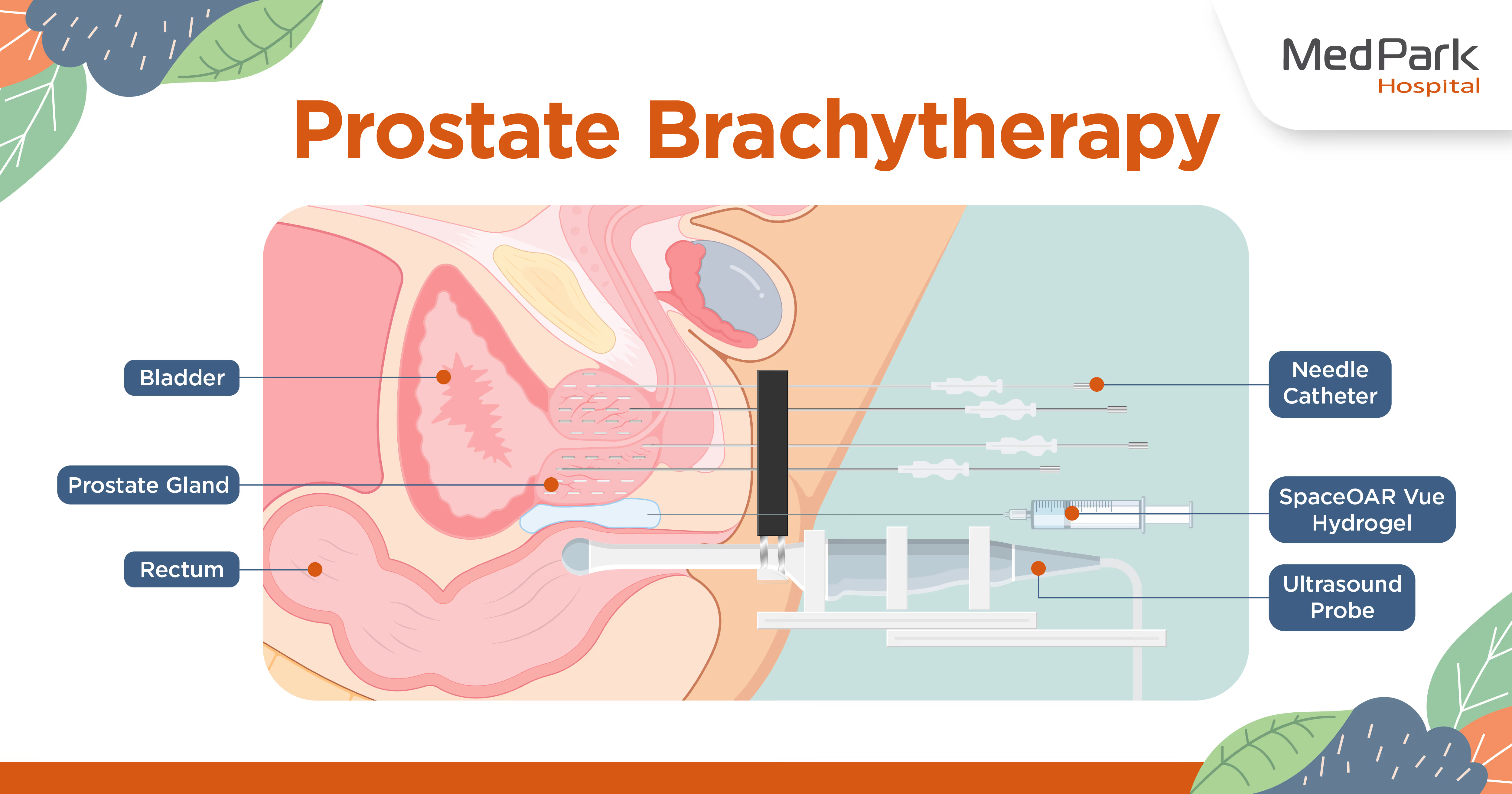
Brachytherapy involves placing tiny radioactive sources directly into the prostate gland to deliver targeted short-range radiation that destroys cancer cells from within. The procedures are of two main types, tailored to each patient's specific needs:
- Low-Dose-Rate (LDR) Brachytherapy: Permanent intra-prostatic placement of low-dose radioactive seeds in a single session. The seed gradually emits radiation and naturally decays over time.
- High-Dose-Rate (HDR) Brachytherapy: A highly radioactive source, commonly Iridium-192, is temporarily placed within the prostate for a short, controlled period using advanced, precise delivery systems. Radioactive seeds are withdrawn after delivering the prescribed dose, leaving no residual radioactivity in the body. This procedure is typically repeated 3–4 times, depending on the individual treatment plan.
Will Surgery Be Needed After Brachytherapy?
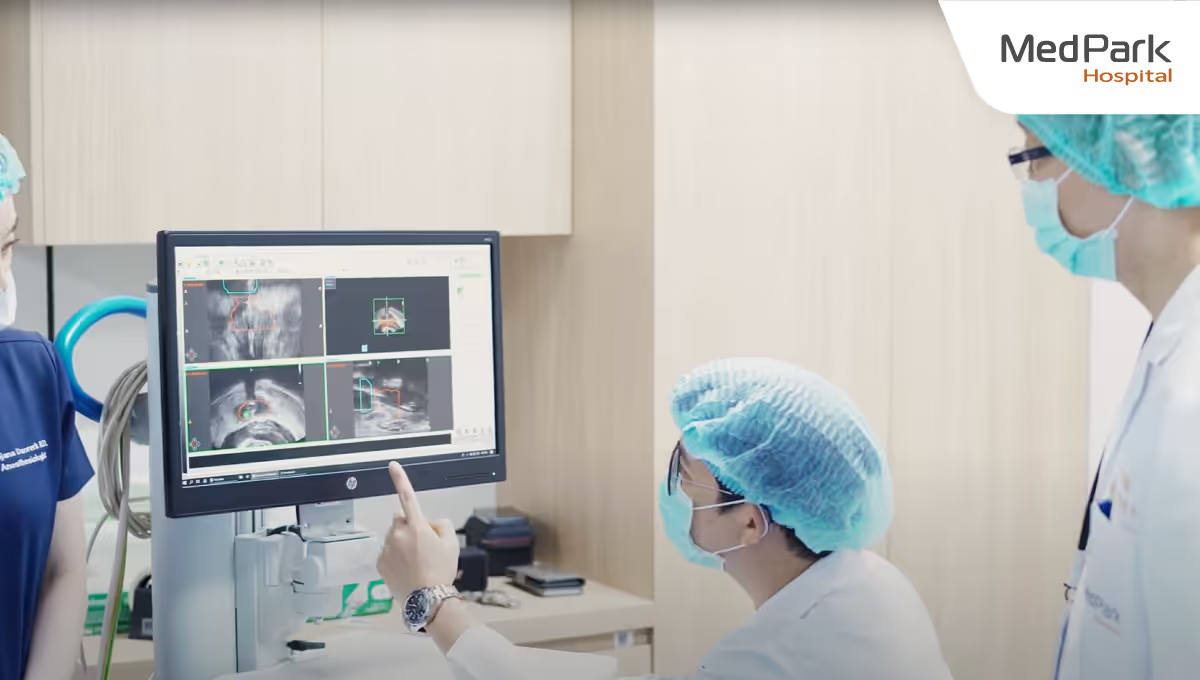
To optimize efficacy, doctors use PSMA PET/CT scans to map cancerous lesions with extreme detail. The scan enables highly targeted planning and often removes the need for future surgery. In many instances, brachytherapy alone can effectively control the cancer. However, the final treatment strategy depends on the assessment and discretion of a specialist physician.
Is Brachytherapy An Option for Patients Who Have Had Prostate Surgery?
While brachytherapy is technically more complex for patients who have already had previous prostate surgery due to anatomical changes, it may still be an option in select cases. Physicians could still suggest alternative treatments, depending on the disease characteristics and the patient’s physical condition.
Therefore, if any abnormalities are detected or if concerns arise regarding treatment, early consultation with a specialist is crucial to developing a plan that addresses both clinical outcomes and long-term well-being.
More Than a Cure: Prioritizing Patients’ Quality of Life.
Cancer treatment guidelines now prioritize not only disease control but also patients' quality of life post-treatment. It is particularly pivotal for prostate cancer patients, as certain treatment modalities can lead to long-term life-altering side effects, such as prolonged recovery periods, urinary incontinence, or erectile dysfunction. In contrast, brachytherapy offers significant advantages; it is painless, requires no incisions, and helps preserve sexual function. For these reasons, brachytherapy, especially the High-Dose-Rate (HDR) approach, has become a compelling choice for those seeking effective treatment while maintaining a high quality of life.
 |
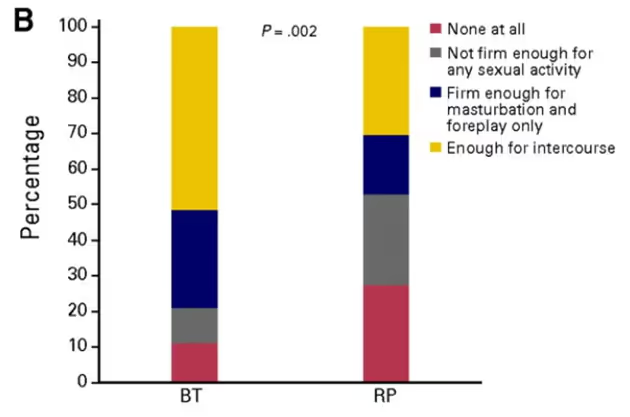 |
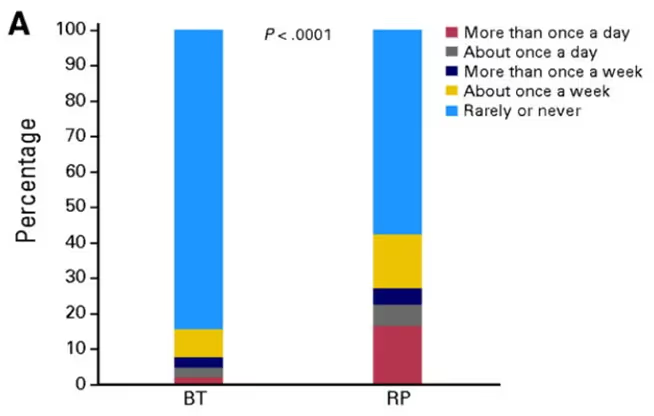
| Figure 1: Chart comparing urinary continence survey results between Brachytherapy (BT) and Radical Prostatectomy (RP). | Figure 2: Chart comparing sexual potency rates following treatment between Brachytherapy (BT) and Radical Prostatectomy (RP). |
Based on clinical data published in the Journal of Clinical Oncology, patients treated with brachytherapy tend to maintain better urinary continence and sexual function compared to those who undergo surgery. The findings highlight a superior post-treatment quality of life, a crucial factor for long-term well-being (Crook et al., 2011).
Patient Voices: “Beyond treatment. Getting back your life.”
Experiences shared by Thai and international patients who have undergone brachytherapies echo a consistent theme: the treatment is far less intimidating than expected, involves minimal discomfort, and allows for a rapid return to daily life. Significantly, sexual function remains intact during and after treatment.
Mr. Thomas L. Paine, an American patient, described his post-treatment experience simply: “I didn’t feel any pain. There was no bleeding, just a slight grogginess from the anesthesia.”
Meanwhile, Mr. Brad Mason, an Australian, chose this treatment approach to preserve his quality of life, particularly his sexual function. He shared: “Within a few hours after the procedure, I was able to return to my normal routine without any issues. My sexual function remained intact.”
For Mr. Jacques Tardif, a French national, the experience was a non-event: “No pain at all. It felt as if nothing had happened.” He had been researching an alternative to surgery and chemotherapy before finally opting for care at MedPark Hospital.
From another perspective, Mr. Adam Harold emphasized the importance of post-treatment outcomes, sharing, “The results have been excellent. I’m very happy. My PSA levels have plummeted, and there has also been a positive impact on my sexual function.”
Similarly, the family of a patient from Myanmar faced a dilemma while searching for the most suitable treatment for their father. Their uncertainty turned to relief after witnessing a meaningful improvement as he was able to urinate normally again.
Likewise, Mr. Somyos Na Bumrung, a Thai patient who underwent treatment three years ago, spoke with confidence: “An ant bite hurts more. I didn’t feel anything at all. It has been over three years, and my health has remained completely normal.”
Thai and international patients who have undergone brachytherapies consistently vouch for this treatment approach, which preserves quality of life and empowers patients to return to their daily activities with confidence.
Frequently Asked Questions:
- Q: Is brachytherapy safe?
A: Brachytherapy is a well-established and safe treatment supported by extensive clinical evidence. Advanced computer systems precisely plan and direct the placement of radioactive sources, as well as the radiation dosage, minimizing exposure of surrounding healthy tissues. - Q: Does brachytherapy affect the rectum?
A: Radiation therapy may affect nearby organs such as the rectum, as the prostate is next to this area. However, advanced techniques like Hydrogel Spacer can create space between the prostate and rectum, reducing radiation exposure of the rectum and lowering the risk of side effects effectively. - Q: Who are suitable candidates for brachytherapy?
A: Brachytherapy is ideal for early-stage prostate cancer patients with cancer confined to the prostate and selected high-risk patients. However, a thorough evaluation by a specialist is essential to determine the most appropriate treatment for each individual.
Content and infographic referenced from:
- Crook JM, Gomez-Iturriaga A, Wallace K, et al. Comparison of Health-Related Quality of Life 5 Years After SPIRIT: Surgical Prostatectomy Versus Interstitial Radiation Intervention Trial. Journal of Clinical Oncology. 2011;29(4):362–368. doi:10.1200/JCO.2010.31.7305