





Flatfoot Surgery for Athletes and Children Who Wish to Maintain Their Athletic Performance
For some people, flat feet cause no symptoms and have little impact on daily life. For others, however, the condition can make standing, walking, or playing sports more difficult. While shoe inserts (insoles) may provide support and help people carry out their usual activities, flat feet can present a greater challenge for athletes and children who aspire to excel in sports.
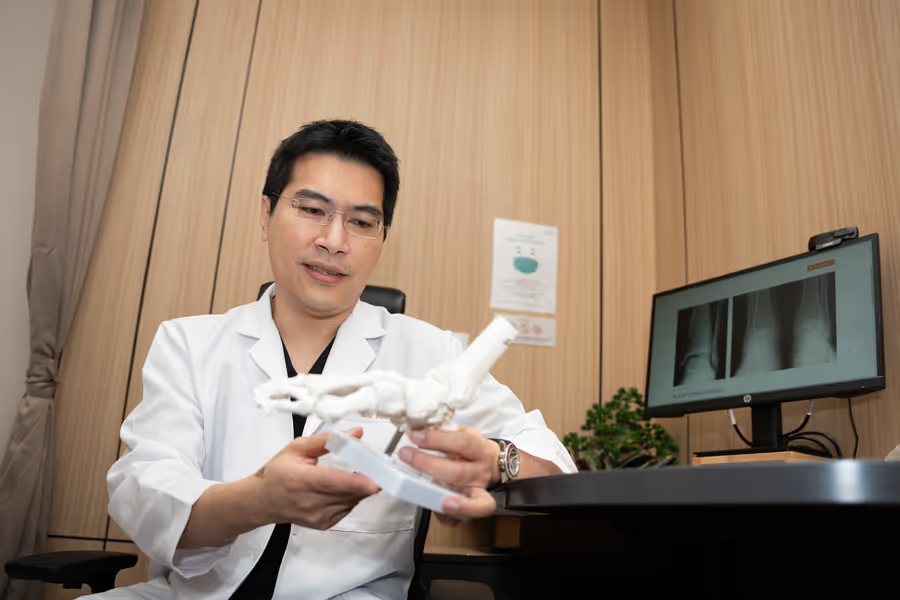
Dr. Krit Prugsawan, an orthopedic surgeon specializing in foot and ankle surgery, shares his insights into advances in medical treatment and innovation, exploring how people with flat feet can return to running and sports while regaining their physical and athletic performance.
Flatfoot Can Begin in Childhood and Become More Problematic with Age
Flatfoot (Pes Planus) is a condition that affects both children and adults. In children under the age of seven, the foot may appear flat due to a fat pad under the arch, which often concerns parents. However, after age seven, this fat pad diminishes, revealing the medial arch, indicating normal foot structure with no underlying issues. If the foot remains flat beyond this age, a true flatfoot can then be confirmed.
Flatfoot can be categorized into two groups based on age: children and adults. In adults, flat feet may develop after an injury, such as an improperly treated midfoot fracture, or due to factors such as rheumatoid arthritis, diabetes, repeated impact, heavy foot activities, and excess body weight, which can gradually flatten the medial arch.
Whether flat feet develop in childhood or later in life, they can often lead to other problems. One of the most noticeable effects is altered walking and standing mechanics. When the feet are flat, the ankles tend to turn inward, collapsing the arches and affecting balance. Weight is no longer distributed squarely through the feet but shifts inward, which can cause pain along the inner side of the foot or ankle. In more severe cases, this altered alignment can also contribute to pain in the knees, hips, and lower back. This is why flat feet are often found in patients with chronic back pain. After the flatfoot is successfully treated, the back pain resolves.
How Does Flatfoot Affect Athletic Performance?
Sports place considerable demands on the body, with repetitive, high-impact movements stressing the muscles and tendons. As we age, degeneration becomes a contributing factor. Tendons naturally degenerate and become more susceptible to tearing, resulting in injury, localized pain, and swelling.
Flatfoot Can Be Classified into 2 Types:
- Flexible flatfoot: The tarsal bones are not fixed, and tendons remain mobile. This is a more common condition and can often be managed effectively with orthotic inserts and physical therapy.
- Rigid flatfoot: There are structural restrictions from abnormal bony fusions, resulting in foot deformity and pain during ambulation. Surgical intervention is usually required to achieve optimal clinical outcomes.
“Flat feet can definitely affect athletic performance, particularly in high-impact sports that involve a lot of jumping, such as basketball, football, badminton, and volleyball. They can limit an athlete’s ability to perform at their best. Flat feet can also cause ankle instability, making the ankle prone to rolling or spraining. As a result, athletes with flat feet may be at greater risk of injury.”
Are there people with flat feet who don’t experience any symptoms or problems?
“Yes. Some people with flat feet have no symptoms at all and can play sports and exercise normally. Their bodies may have adapted to the condition, or they may have well-trained muscles and tendons that help support the foot. It’s difficult to predict who will develop symptoms and who won’t. The concern is really for those who do have symptoms, as these can limit their ability to take part in activities and may require appropriate treatment,” Dr. Krit said.
Treating Flatfoot to Maintain Athletic Performance
Treatment for flatfoot primarily involves strengthening the muscles that support the foot and using orthotic inserts to help improve foot alignment. These inserts can be worn in sports shoes and may help some people maintain or improve their athletic performance. For those who continue to have difficulty with high-impact or strenuous sports, switching to lower-impact activities, such as swimming or cycling, may be an option. Another treatment option is surgical correction of flat feet.
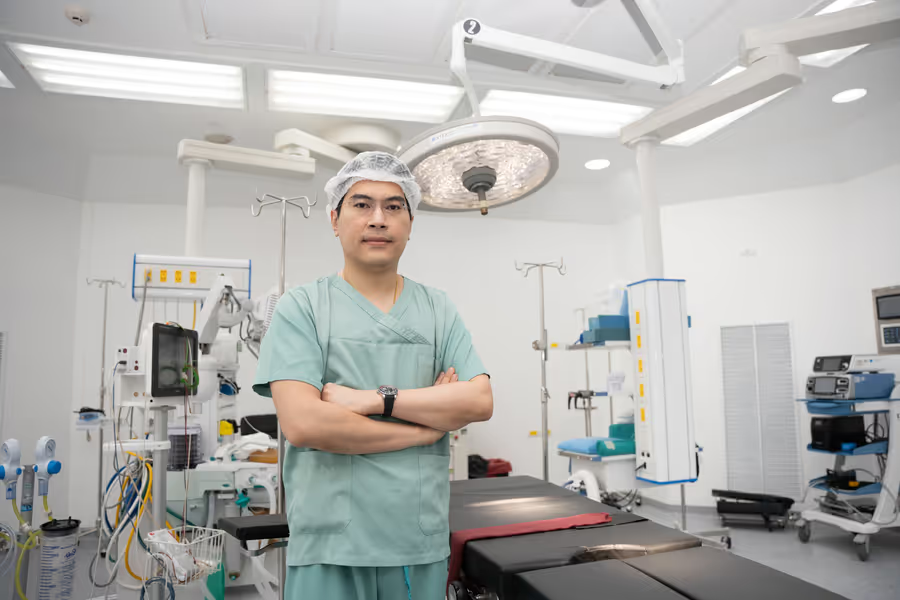
“I once treated an 11-year-old boy who was a national team golfer with flat feet. We initially tried orthotic inserts and other non-surgical treatments, but his symptoms continued to affect his golf game. His performance was significantly impaired, causing him to experience early pain and rendering him unable to complete a full round. He wanted to pursue a career in sport, but the condition was limiting his opportunities, so we eventually decided to proceed with surgery.”
Dr. Krit said children who undergo flatfoot surgery have a better chance of fully recovering their athletic performance than those who undergo surgery later in life. Children generally heal faster, and their bones and tendons have not yet been affected
by age-related degeneration. Following surgery, the young patient was able to play golf better and was much happier because he could return to the activities he enjoyed and resume his normal life.
“In children, surgery also requires smaller incisions and generally has a faster recovery. They can usually begin putting weight on the foot within one to two weeks.”
“For adults, the risk of injury tends to increase with age, as I mentioned earlier. Can they still play professional sports? In some cases, yes, but they need to manage various factors, starting with things they can control, such as strengthening the muscles and using orthotic inserts. If these measures are not enough, they may need to switch to a different sport or consider surgery, just as in children.”

Flatfoot Surgery: Addressing the Problem at Its Root Cause
Surgical treatment for flatfoot differs between children and adults. Surgery performed in childhood generally has a better outcome, with faster and more favorable recovery.
“For some children with flatfoot, it’s not just about playing sports. Even regular walking or taking part in physical education classes with their friends can cause pain in the soles of their feet. They may not even be able to play football with their friends. Once it reaches that point, the condition is unlikely to improve on its own. Flat feet can become progressively more pronounced, and symptoms may worsen over time. A child may have little or no pain today, but the pain can become more severe as time goes by, increasingly affecting everyday life.”
If severe flatfoot goes untreated and eventually causes problems, age-related changes such as joint degeneration and stiffness can make the condition more difficult to treat. At that stage, surgical outcomes may be less favorable than if surgery were performed before significant degeneration develops.
“Orthotic inserts and physical therapy are mainly used to manage symptoms and help people maintain as normal a daily life as possible, but they cannot correct the underlying flatfoot deformity. If symptoms do not improve, surgery addresses the problem at its source. With advances in treatment today, surgery is an option, so people do not necessarily have to live with flat feet for the rest of their lives.”
Modern flatfoot reconstruction addresses the underlying deformity via minimally invasive, small-incision surgery. It is suitable for patients whose flatfoot symptoms have not improved with conservative management, such as orthotic inserts, physical therapy, or muscle strengthening. It is also suitable for pediatric patients seeking early intervention for good long-term outcomes, as well as athletes looking to preserve their athletic and exercise performance. This procedure realigns the foot structure to permanently recreate a functional foot arch by experienced orthopedic foot and ankle specialists.
“Whether flexible or rigid, flatfoot can be managed and treated. If left untreated, the condition may worsen over time, particularly with ongoing use and age-related changes. It is important to consult a specialist to determine the most appropriate treatment plan. Today, surgery can provide a lasting correction for flatfoot.”
Flat feet are more ubiquitous than you may think, and pain does not have to be something you have to put up with. If you experience ankle or heel pain or notice a decline in your athletic performance, seeing a foot and ankle specialist for early evaluation and appropriate treatment can help restore physical function and keep you active.