





IVL: Shockwave Technology for Coronary Calcification Management. New Clinical Approach for Complex Coronary Artery Disease
Coronary artery disease (CAD) is one of the most prevalent cardiovascular conditions worldwide. It is caused by the progressive accumulation of atherosclerotic plaque (lipid and calcium) within the coronary artery walls, leading to arterial narrowing and impaired blood flow to the myocardium. As a result, patients may experience symptoms such as fatigue, chest pain, or, in more severe cases, acute myocardial infarction, which is a life-threatening condition.
CAD typically develops insidiously over many years and often remains asymptomatic in its early stages. Consequently, many individuals are unaware of the disease until it has progressed significantly.
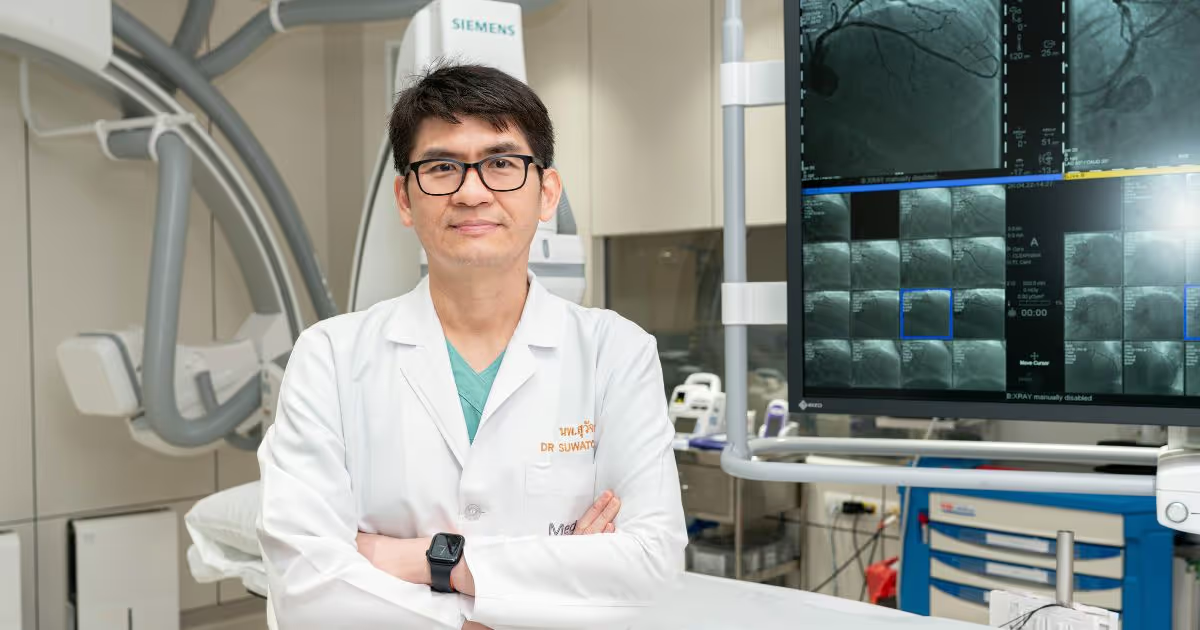
Advanced Cardiovascular Screening Can Detect Risk at an Early Stage
Today, advanced diagnostic technologies can detect the risk of coronary artery disease before clinical symptoms develop. Key screening tools include:
- The coronary artery calcium (CAC) score measures calcified plaque in the coronary arteries to assess future cardiovascular risk.
- Coronary CT angiography (CTA) is a specialized cardiac CT imaging modality that provides high-resolution visualization of the coronary arteries and assessment of plaque location and the severity of arterial narrowing.
- In cases where coronary intervention is required, doctors may employ intravascular imaging techniques, such as Intravascular Ultrasound (IVUS), to assess lesions and devise accurate treatment planning.
Different Types of Coronary Artery Plaques Require Different Treatment Approaches
The management of coronary artery disease depends on the location, severity, and lesion morphology.
In many patients, percutaneous coronary intervention (PCI) with a stent can readily restore coronary blood flow.
However, certain lesion subsets are more complex, including:
- Severe coronary calcification
- Multi-segment stenosis
- Bifurcation lesions
- Chronic total occlusion of the coronary artery
- Lesions in major coronary arteries
These lesion types often require advanced techniques and specialized devices to ensure safe and effective treatment.
The Challenges of Coronary Artery Calcification
One of the key challenges in treating coronary artery disease is extensive arterial calcification.
When calcification is severe, the arterial wall becomes rigid and loses its elasticity, making balloon dilation more difficult. In some cases, even after stent implantation, the stent may not fully expand, which can compromise long-term treatment outcomes and increase the risk of restenosis.
For this reason, vascular preparation before stent deployment is essential.
What Is Intravascular Lithotripsy (IVL)?
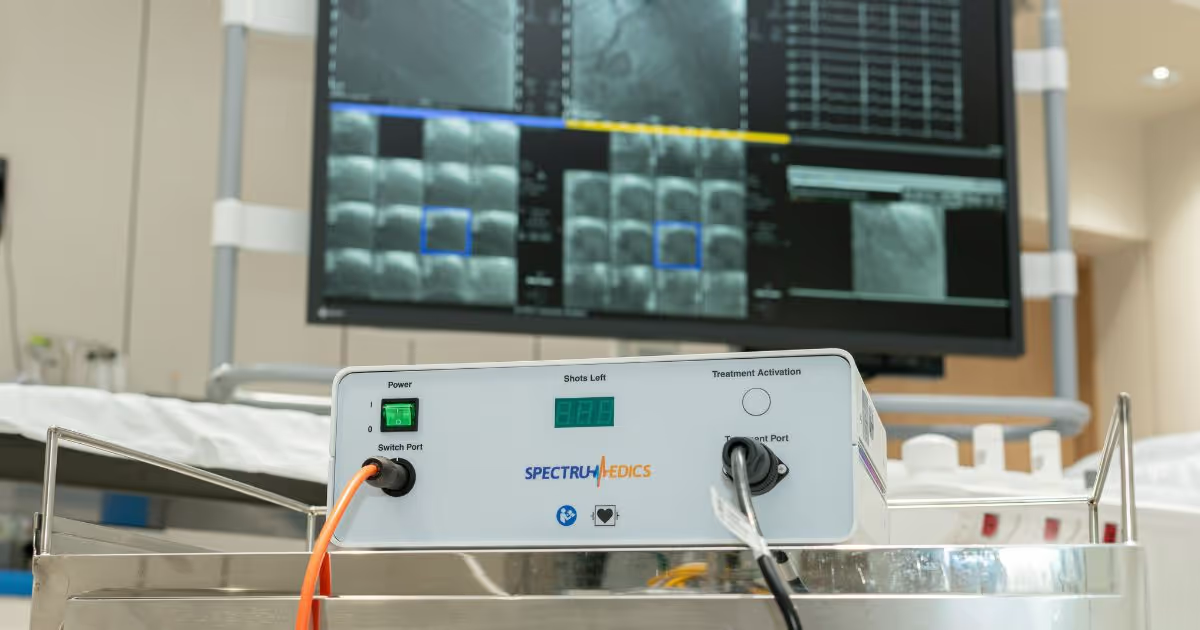
Intravascular Lithotripsy (IVL) is an advanced technology designed to treat calcified plaque within the coronary arteries. It applies the same shockwave-based principle used for decades in medicine to fragment kidney stones (lithotripsy).
During cardiac catheterization, a balloon catheter is guided to the site of calcification. Once in position, the balloon delivers low-energy acoustic shockwaves through the fluid within the balloon, targeting the vessel wall.
These shockwaves generate micro-fractures within the calcified plaque, reducing its rigidity and allowing the artery to regain its flexibility. As vessel compliance improves, stent delivery and expansion become more effective.
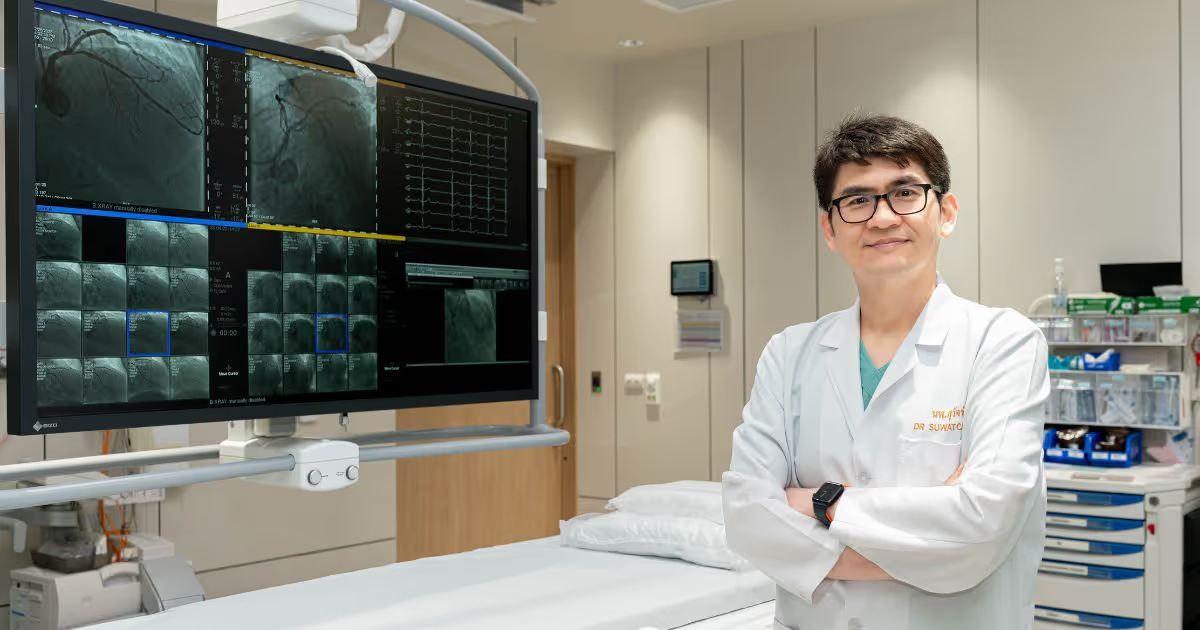
How Does IVL Differ from Other Techniques?
In the past, the treatment of severe calcification required a range of specialized devices, including:
- High-pressure balloons
- Scoring or cutting Balloons
- Rotational atherectomy
Each technique has its own advantages and limitations.
The key strength of IVL is its ability to deliver acoustic shockwaves to fragment and soften calcified plaque within the arterial wall while operating at relatively low balloon pressure. This facilitates improved vessel expansion and enhances stent deployment, particularly in patients with severe calcification.
In selected cases, IVL may be used in combination with other techniques to optimize treatment according to the specific characteristics of each lesion.
When Is IVL Required?
In addition to vessel preparation before stent deployment, IVL may also be used in selected cases of stent underexpansion caused by unyielding calcification.
Stent underexpansion is associated with an increased risk of complications, including restenosis. In such cases, IVL can break down the underlying plaque and facilitate optimal stent expansion.
MedPark Hospital, as stated by Assoc. Prof. Dr. Suwatchai, utilizes advanced technologies for complex percutaneous coronary intervention (PCI) to effectively manage challenging coronary artery disease. The hospital is supported by a team of specialized interventional cardiologists who are well-trained and highly experienced in these technologies, thereby expanding treatment options for patients with coronary artery disease. In the past, certain cases required open-heart surgery; however, with today’s advanced equipment and clinical expertise, many of these cases can now be effectively treated using minimally invasive catheter-based techniques.
“In complex cases, meticulous treatment planning is essential. Physicians must carefully consider each procedural step and the appropriate use of various devices to address the underlying challenges holistically. While this can be demanding, it is also what I find most rewarding.”
In each case, we often need to integrate multiple devices and tailor the procedural sequence to the patient’s specific condition. At times, unexpected situations may arise”
during the procedure. The availability of a full range of equipment in the Cath Lab allows us to proceed seamlessly without interruption or the need to defer treatment. In my view, having comprehensive tools and advanced technology readily available is crucial.”
Because the treatment of any disease is never one-size-fits-all. Management strategies may differ among patients with the same condition. The advent of new medical technologies ultimately broadens therapeutic possibilities, making interventions more comprehensive and versatile across a broad spectrum of patient profiles. Ultimately, this allows patients to receive treatment that is most effective for their condition, leading to the best possible outcomes.