





Osteoarthritis of the Knee and Hip and Innovative Care at Every Stage
Knee and hip osteoarthritis are often age-related wear and tear that is hard to avoid. When the degeneration process has set in, it is irreversible and tends to progress over time.
However, modern orthopedic surgery now offers advanced treatments and strategies to manage the pain associated with these conditions. Dr. Waiwit Sanguanwongwan, an orthopedic surgeon, is here to share interesting and valuable information.
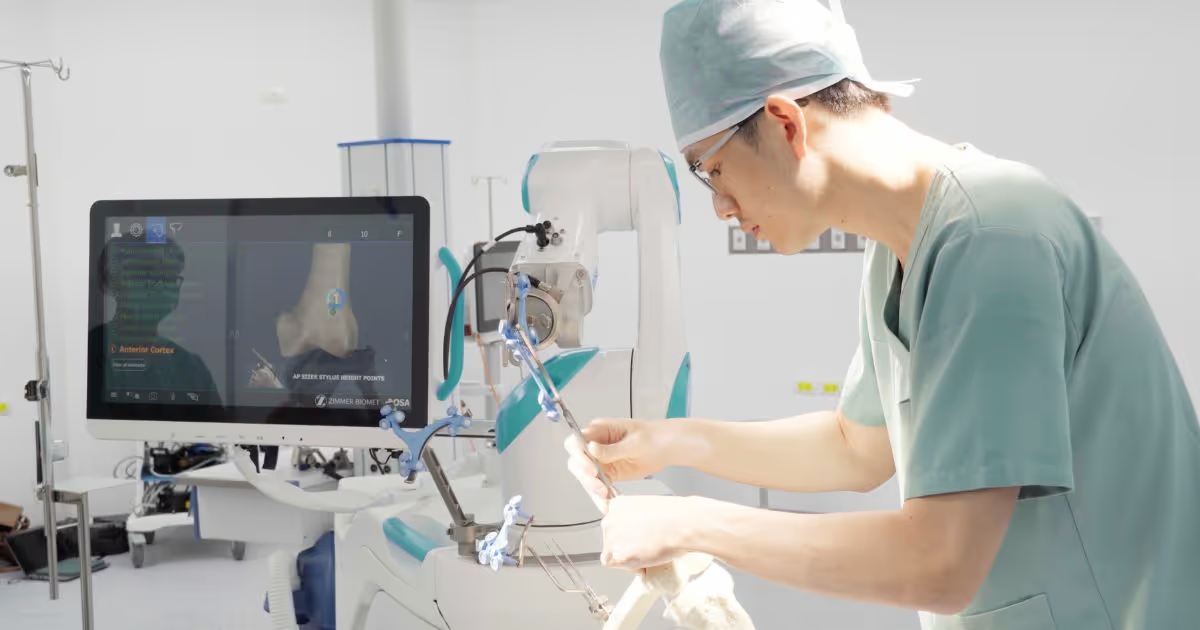
Age, Weight, and Low Muscle Mass: The Primary Causes of Joint Degeneration
Naturally, joints deteriorate as we age. Over years of use, the protective cartilage that cushions our joints begins to wear down, leading to stiffness and pain during movement.
The knees and hips are the most frequently affected joints, having the greatest impact on daily life. Since these joints bear our entire body weight while standing or walking, any impairment can significantly limit mobility.
“Articular cartilage has a key limitation. Once injured, it cannot fully repair itself. As we age, damage to the cartilage gradually accumulates, eventually leading to osteoarthritis, commonly referred to as age-related joint degeneration, which is prevalent in individuals aged 50 to 60 and older.”
“Osteoarthritis may also stem from muscle weakness, which reduces joint support and increases the load on the joint surfaces. Excess body weight further accelerates this process; each additional kilogram of body weight increases the force exerted on the joints 3 to 7 times, depending on the activity and movement.”
Other factors can accelerate the development of osteoarthritis even in younger individuals, including trauma, sports-related injuries, and inflammatory joint conditions that affect the articular cartilage, such as rheumatoid arthritis and gout.
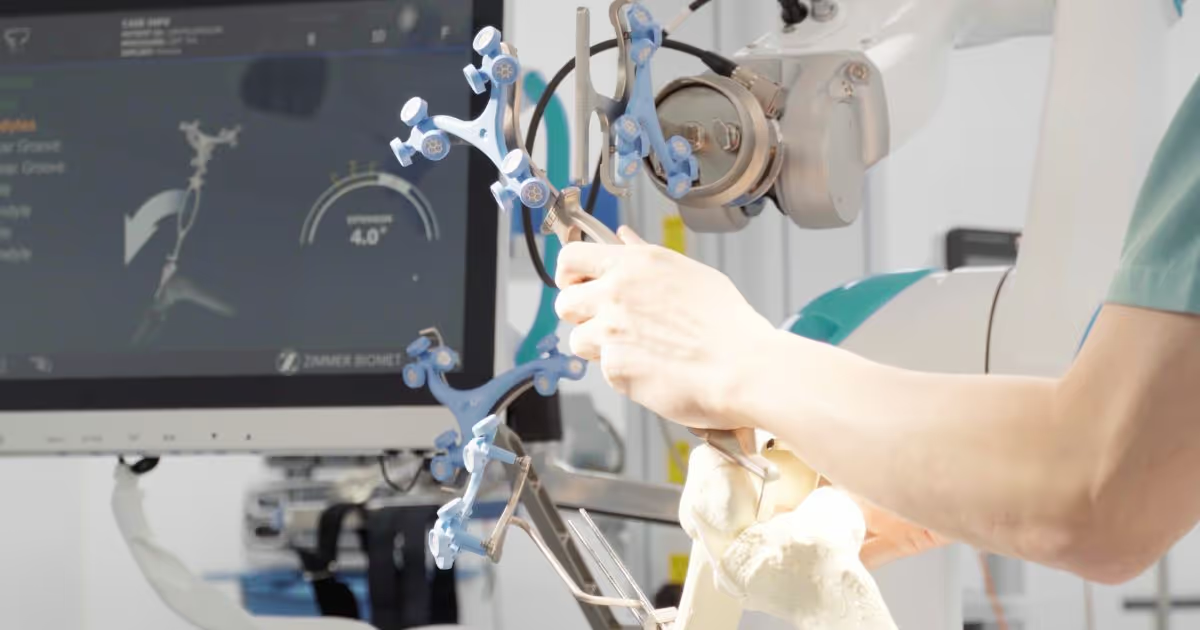
Knee and Hip Osteoarthritis: What Are the Symptoms?
Dr. Waiwit explains that knee osteoarthritis progresses through stages, from mild to severe:
- Early stage: Slight surface irregularities develop in the articular cartilage, leaving a mild, granular joint surface. Patients may experience slight stiffness or a catching sensation when standing up to walk. After a few steps, movement typically becomes normal. Pain may occur occasionally with physical activities.
- Advanced stage: As the condition progresses, cartilage loss becomes more pronounced and could progress to full-thickness loss, exposing the underlying bone. Direct bone-on-bone contact leads to significant pain, even with routine walking. Patients may experience difficulty climbing stairs and joint locking with twisting or bending movements. Over time, persistent friction could result in joint deformity, such as bowing of the legs.
“Symptoms of hip osteoarthritis differ slightly. The hip is a ball-and-socket joint, allowing a greater range of motion than the knee. As degeneration occurs, patients typically experience pain in the groin that may radiate to the thigh or knee. Hip movements, such as stepping into a car or flexing the leg to put on pants, often elicit pain and may be accompanied by stiffness and restricted motion.”
Among the Thai population, primary hip osteoarthritis is less common than knee osteoarthritis. Secondary causes are more frequent, particularly from corticosteroid use and alcohol consumption, both of which can compromise blood supply to the hip joint and lead to osteonecrosis of the femoral head.
Managing Knee and Hip Osteoarthritis at Every Stage
Treatment depends on the stage and severity of the condition.
- Non-pharmacological management: Weight loss, muscle strengthening, and avoiding activities that overstress joints, like prolonged kneeling, deep knee bends, and frequent stair climbing, can help slow early disease progression.
- Pharmacological treatment: These are of two main classes:
- Symptomatic pain relief medications: These include anti-inflammatory drugs, muscle relaxants, topical agents, liniments, cooling sprays, and analgesic patches. These medications relieve symptoms without affecting the disease's natural course of progression, making them suitable for use as needed.
- Symptomatic slow-acting drugs: These medications work cumulatively and require consistent intake to reduce ongoing inflammation in the cartilage and slow disease progression. However, they do not provide immediate pain relief and typically require about 1–2 months before noticeable effects are noticeable.
Doctors may sometimes prescribe a combination of both types of medications to optimize outcomes. The dosage, duration, and dosing intervals are determined based on the doctor’s discretion.
- Intra-articular injections: For patients with moderate knee osteoarthritis who do not respond adequately to oral medications, intra-articular injections are beneficial. The injected agents are of two main groups:
- Corticosteroid injections: Suitable for knees with significant inflammation, swelling, and pain. Corticosteroids exert a direct anti-inflammatory effect and act rapidly. Clinical improvement is observable within 24–48 hours.
- Viscosupplementation (hyaluronic acid) injections: These are administered into the joint to reduce friction and help alleviate inflammation of the articular cartilage over the long term. While slower to act than corticosteroids, the effects can last from 6 months to a year, depending on the severity of joint degeneration.
- Surgery: Surgery is necessary for advanced disease unresponsive to conservative treatment. Options include total knee replacement and partial (unicompartmental) knee replacement. Robotic-assisted techniques help enhance precision and alignment. These procedures offer significant relief, akin to regenerating a new joint.
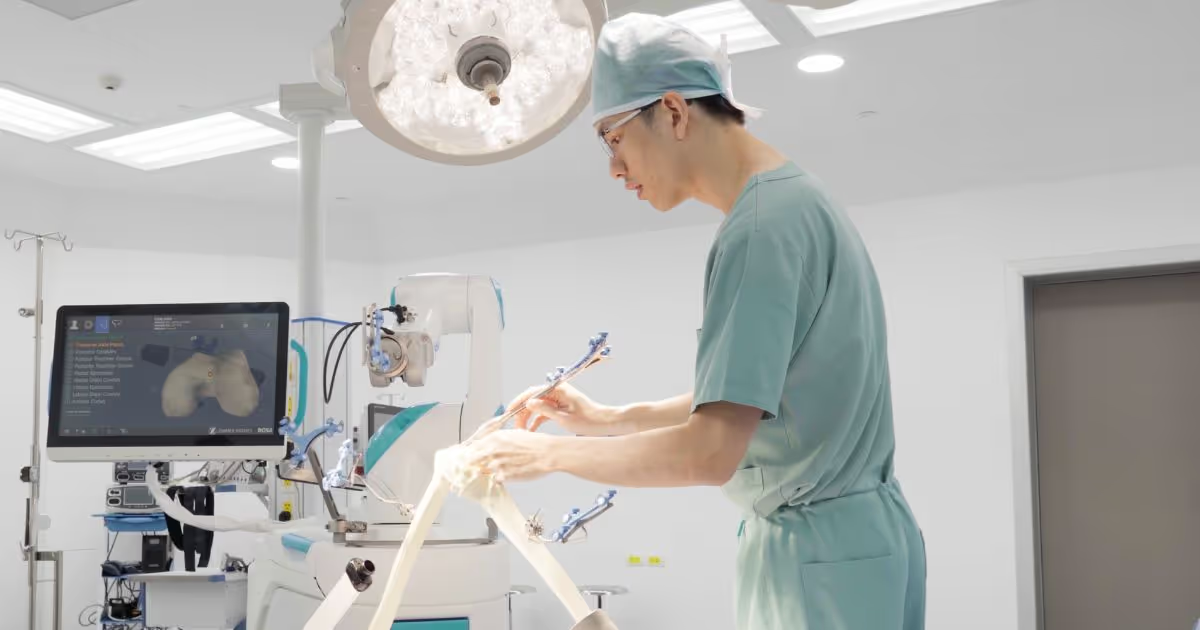
Knee and Hip Replacement: A Treatment That Restores Quality of Life
Today, knee and hip replacement surgery has significantly advanced. They address the underlying cause of the condition, provide highly effective treatment, and enable patients to return to normal daily activities.
Arthroplasty involves implanting prosthetic components made of durable metal alloys to replace the worn joint surfaces. These implants are highly robust, allowing patients to bear full weight as early as the first day after surgery, with an expected lifespan of several decades.
Robotic-Assisted Surgery: Enhancing Precision, Not Replacing Surgeons
Many people may have heard about robotic-assisted surgery. The use of robotic technology in joint replacement is not new; in fact, it was first introduced in the late 1990s and has continued to evolve ever since.
Today, robotic-assisted joint replacement is increasingly adopted worldwide and widely recognized for elevating the standard of care.
Robotic-assisted surgery does not mean “the robot performs the procedure independently”. Rather, it serves as an advanced assistive tool that enables surgeons to plan and execute each step of the operation with a high degree of precision and control.
“Even with highly skilled and experienced surgeons, human error can still inevitably occur. It is where robotic technology plays a pivotal role.”
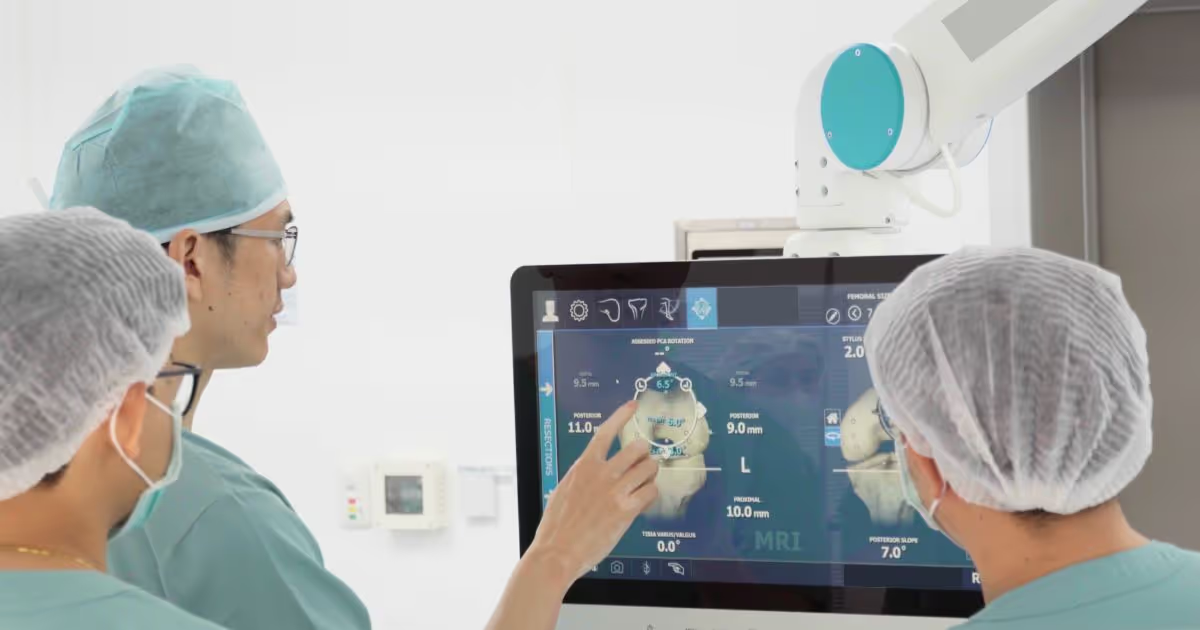
The robot serves as a surgical assistant, helping the surgeon execute the procedure precisely according to the preoperative plan.
The system generates a patient-specific 3D model of the skeletal anatomy.
The surgeon then plans the joint replacement procedure, including bone resection angles, joint balancing, and precise implant positioning. Once finalizing the plan, the robotic arm assists in guiding the procedure to ensure it is executed with high fidelity, minimizing human error variability.”
The integration of robotic technology enables a more patient-specific and high-precision surgical approach. When combined with the surgeon’s expertise, it leads to improved outcomes, reduces tissue trauma, and results in a faster recovery.
Nevertheless, mild or early symptoms should not be left unaddressed. Consulting a specialist early would help streamline treatment and simplify complex conditions.
Nowadays, patients with osteoarthritis need not be overly anxious, as modern medicine offers a full spectrum of treatment options, from early-stage management to advanced interventions, that can effectively restore joint function and enable a return to normal daily life.