





Spinal Disorders Can Cause Disability Beyond Mere Back Pain
Back pain, neck pain, or fatigue from prolonged sitting, often dismissed as “office syndrome”, may in fact be warning signs of structural degeneration that can progress to disability if left untreated. Today, MedPark Hospital presents an in-depth look at spinal disorders through an exclusive discussion with Dr. Sombat Kunakornsawat, an orthopedic spine surgeon and Head of the Orthopedic Center at MedPark Hospital. He addresses common concerns and provides detailed information about spinal health.
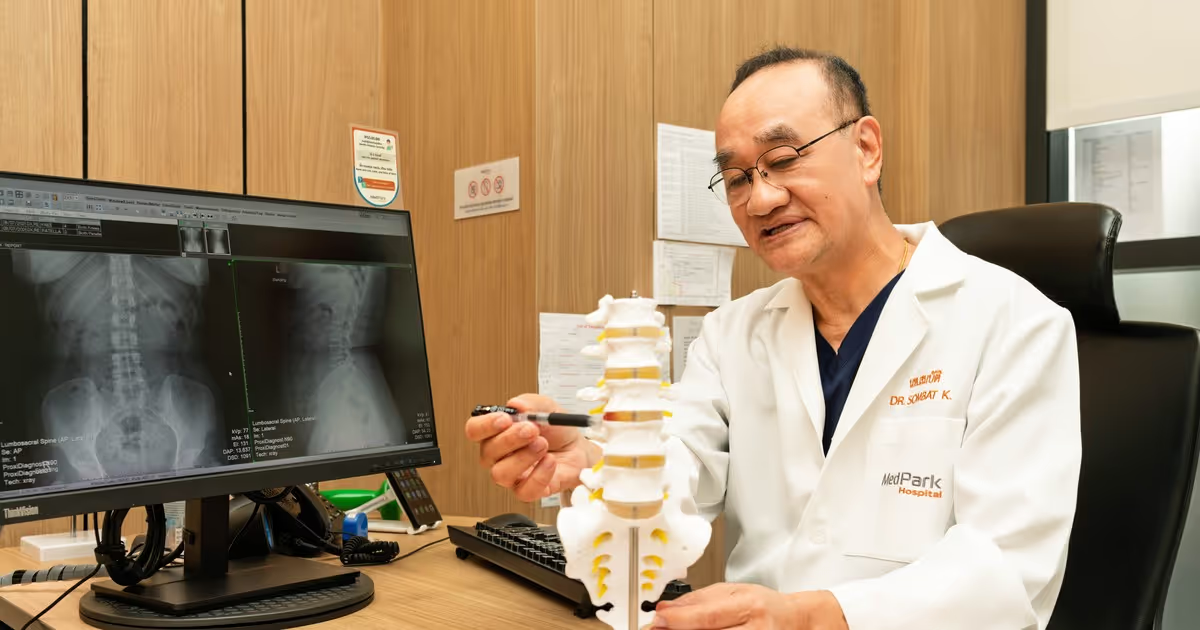
Spinal Disorder Patients Frequently Seek Care at Advanced Stages
The human spine consists of 33 vertebrae: 7 cervical, 12 thoracic, 5 lumbar, 5 sacral, and 4 coccygeal segments. Each of these vertebrae can develop diseases or abnormalities.
Dr. Sombat explains, “The spine consists of bones, ligaments, facet joints, muscles, intervertebral discs, and nerves. All of these components can be affected by spinal disorders. What is concerning is that many patients tend to seek medical attention relatively late, by
The severity of spinal disorders varies significantly depending on the progression of the conditions. Symptoms can range from persistent pain and numbness to muscle weakness, and in severe cases of nerve compression, it can lead to the loss of bowel and bladder control. Spinal conditions like vertebral compression fractures, kyphosis, or scoliosis can cause chronic pain and may lead to permanent disability without prompt medical intervention.
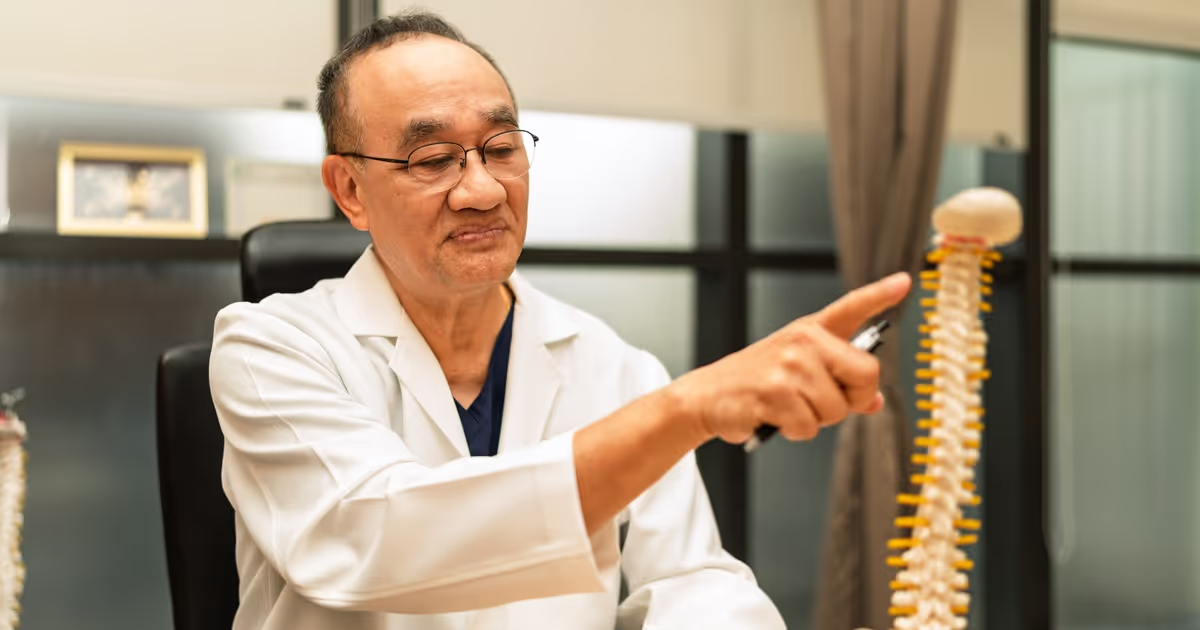
Excess Body Weight Exacerbates the Risk of Spinal Disorders.
“The spine is a primary weight-bearing structure. Excess body weight places increased mechanical stress on the intervertebral discs and facet joints. If patients have poor postural habits, such as repetitive neck flexion and extension and improper lifting techniques that strain the back, this can accelerate degenerative changes and significantly raise the risk of spinal conditions.”
The primary cause of spinal disorders is age-related degeneration. As a weight-bearing structure, the spine continuously supports the weight of the upper body throughout a person’s lifetime.
“The intervertebral discs bear up to 80% of the body’s load. As we age, these discs and spinal joints become degenerated and collapse. Excess body weight further accelerates this process, increasing the risk of nerve compression.”
Certain lifestyles also play a significant role in accelerating spinal degeneration, such as:
Prolonged neck flexion while using a smartphone (Text Neck)
- Looking down shifts the weight of the head forward, forcing the neck muscles to work harder and placing increased mechanical load on the cervical discs, leading to premature degeneration and frequent radiating pain.
- Smoking: While not a direct cause of spinal pain or degeneration, research indicates that smoking causes vasoconstriction (narrowing of blood vessels), which reduces blood flow to the spinal discs and nerves. Consequently, smokers exhibit significantly higher rates of disc degeneration compared to non-smokers.
- Leg Length Discrepancy: When there is an inequality in leg length from the feet to the hips, it causes a pelvic tilt. This imbalance leads to compensatory scoliosis, which is often noticeable as a slanted shoulder.
Beyond degenerative changes, spinal disorders can also arise from trauma and infections, such as tuberculosis or bacteria that spread through the bloodstream to the spine. They may also be due to malignancies, including metastatic cancers from organs such as the breast, prostate, lung, and liver, or primary bone cancers originating in the spine itself.
Modern Spinal Surgery: Minimally Invasive, Less Pain, Greater Safety
In the past, spinal surgery was deemed a high-risk procedure. Many patients were understandably fearful and sought to avoid it, as the precision of surgical techniques and the advancement of medical technology at the time were limited, resulting in a higher risk profile.
Dr. Sombat recounts the advancements in spinal surgery: “In the past, spinal surgery often raised significant concern among patients. Today, however, treatment has advanced considerably. Diagnostic accuracy has improved with MRI, which can identify spinal abnormalities with over 90% accuracy. Endoscopic and microscopic techniques provide clear visualization of nerve compression points during minimally invasive surgery. Advanced technologies, such as navigation systems (Navigator or O-arm) and intraoperative nerve monitoring, alert the surgeon when operating close to neural structures, significantly reducing the risk of complications. Importantly, the benefits of endoscopic surgery include smaller incisions and faster recovery. Most patients require only a one-night hospital stay, while endoscopic spinal fusion may require two nights of hospitalization.”
The Orthopedic Center at MedPark Hospital is fully equipped to provide comprehensive care for patients with spinal disorders. A team of specialized spine surgeons trained at leading institutions in the United States, Europe, Japan, and South Korea, with over a decade of clinical experience, leads the interprofessional care team, integrating expertise from various medical specialties, including anesthesiologists, ensuring that treatment for elderly patients or those with complex underlying conditions is meticulously planned and performed with the highest standards of safety.