





HoLEP (Holmium Laser Enucleation of the Prostate)
HoLEP (Holmium Laser Enucleation of the Prostate) is a minimally invasive surgical procedure for an enlarged prostate (BPH), using a resectoscope inserted through the urethra and a high-powered Holmium laser to cut and remove excess prostate tissue without the need for open surgery. This approach minimizes blood loss and promotes speedy recovery. HoLEP is highly recommended for men with moderate to severe prostate enlargement, those who take blood thinners regularly, or those who have not responded to medication and prefer a quick, permanent cure without long-term drug therapy.
HoLEP is a safe treatment option that delivers precise results while significantly lowering the long-term risk of repeat surgery. Patients interested in HoLEP prostate laser surgery with highly experienced urologists at a hospital equipped with advanced medical technology can schedule an initial consultation to determine their suitability for this leading-edge procedure.
What are the differences between HoLEP, GreenLight Laser, and TURP?
Medical Innovation |
HoLEP |
GreenLight Laser |
TURP |
| Treatment Principle | Enucleates (removes) the entire prostate tissue lobe using a Holmium laser | Vaporizes prostate tissue using a GreenLight laser | Cuts away prostate tissue by piece using an electric wire loop |
| Treatable Prostate Size | All sizes—very large, large, medium, small | Medium-small | Medium-small |
| Blood Loss | Minimal | Low | Moderate-high |
| Risk of Repeat Surgery In 10 Years | Lowest (0.7%) | Higher than HoLEP | Low (10–15%) |
| Hospital Stay | 1–2 days | 1–2 days | 3–5 days |
| Recovery | Very fast recovery | Fast recovery | Slower recovery |
| Suitability for Patients on Blood-Thinning Medication | The safest; can undergo surgery | Safe; can be surgery | Medication must be stopped; carries risk |
| Tissue Specimen for Cancer Screening | Possible | Not possible (tissue is vaporized) | Possible |
| Technical Difficulty/Skill Level Required | High; requires a highly experienced urologist | Moderate-high | Standard: conventional surgical procedure |
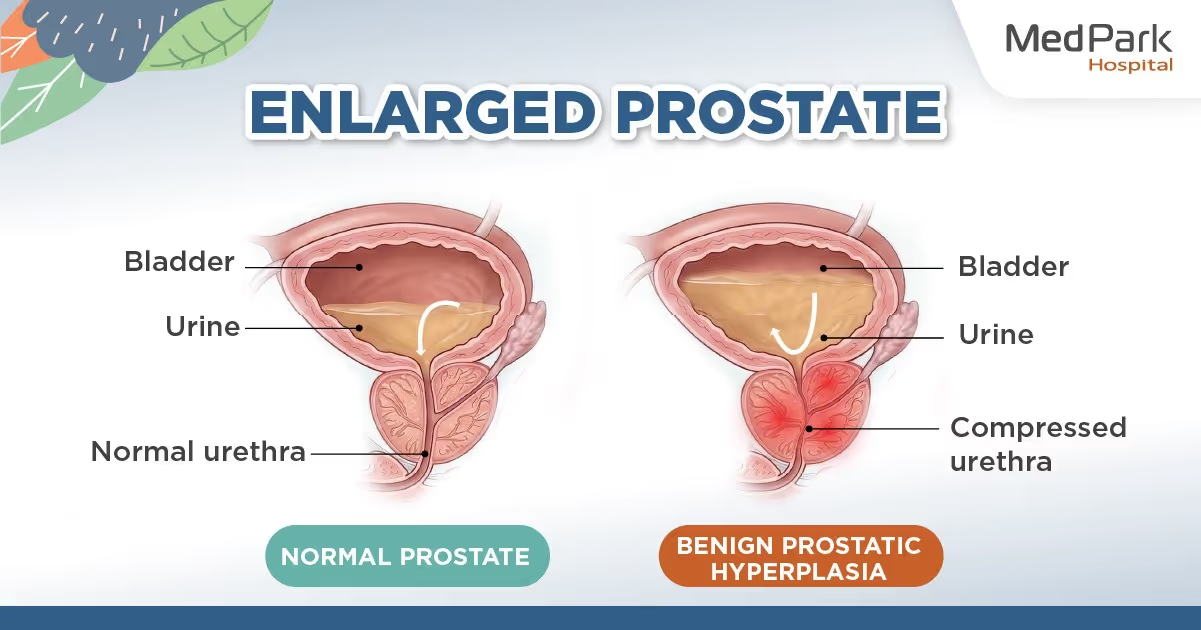
What symptoms of an enlarged prostate require surgery?
Individuals with moderate-to-severe symptoms of Benign Prostatic Hyperplasia (BPH), including the following symptoms:
- Weak or slow urinary stream, an intermittent start-and-stop stream.
- A feeling of incomplete bladder emptying, a frequent urge to urinate
- Difficulty urinating, halting urination, and post-void dribbling.
- Inability to urinate, needing to strain, or a long wait before initiating urine flow
- A painful, burning sensation in the urethra while urinating
- Frequent urination, almost every 2 hours
- Urinary incontinence or leakage, wetting underwear before reaching the bathroom
- Disrupted sleep due to the constant urge to urinate.
- Waking up to urinate 2 or more times per night (nocturia).
- Those who have tried medication or other treatment options without success
- Those experiencing complications from an enlarged prostate, such as frequent blood in the urine, urinary tract infections (UTIs), kidney stones, kidney dysfunction, hydronephrosis (swollen kidneys), or acute urinary retention.
Who is a good candidate for HoLEP?
- Patients diagnosed by a neurologist with a moderate to severe enlarged prostate who prefer an alternative option to conventional TURP surgery
- Patients whose enlarged prostate symptoms have not responded to other treatments, such as Rezum, UroLift, or PAE (Prostate Artery Embolization).
- Patients whose prostate structure is not suitable for other treatment methods.
- Patients who have not responded to medication, who prefer not to take medication, or who cannot tolerate the side effects of the medication.
- Patients with underlying conditions who take blood-thinning medication regularly
- Patients experiencing complications from an enlarged prostate that require urgent treatment
- Elderly patients and patients who wish to improve their overall quality of life.
What is the preparation for HoLEP surgery?
- The urologist conducts a physical examination and specialized pre-operative tests, such as a urinalysis, PSA test, prostate exam, cystoscopy, transrectal ultrasound, or CT scan, at their discretion.
- Patients taking blood-thinning medication or medication for existing medical conditions must inform their doctor in advance.
- Refrain from drinking and eating for 8 hours before the surgery
What is the HoLEP surgery procedure?
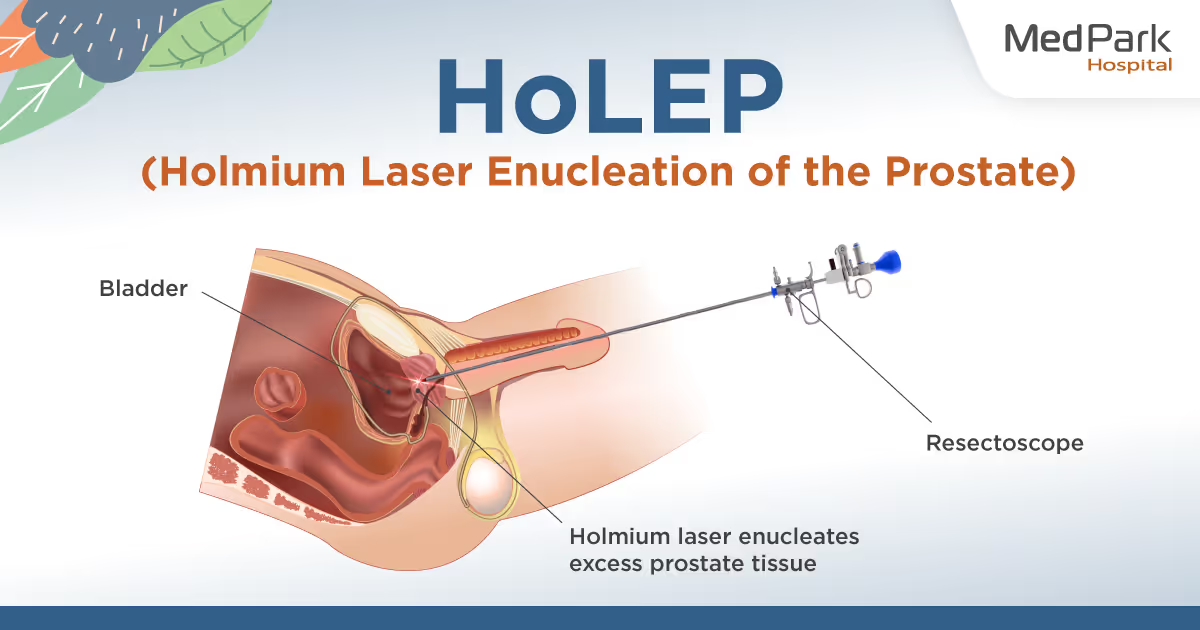
- The anesthesiologist administers general anesthesia or a spinal block; the urologist then inserts a resectoscope, an ultra-small endoscope, through the urethra up to the prostate gland.
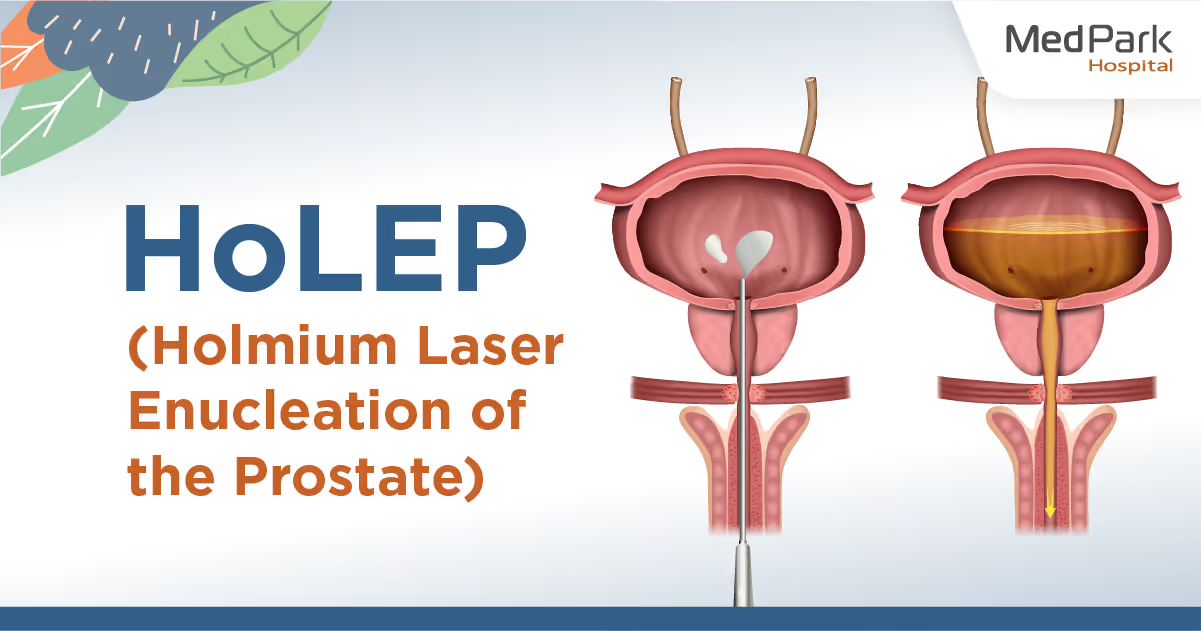
- The urological surgeon inserts a high-powered Holmium laser through the resectoscope to cut and enucleate all of the excess prostate tissue to open the urinary passage (enucleation), followed by laser cauterization to seal off blood vessels.
- The urological surgeon uses a morcellator to cut the enucleated prostate tissue into small pieces and suction them out from the bladder. Tissue samples will be sent for pathological examination to look for prostate cancer cells.
- The urological surgeon inserts a urinary catheter to drain urine, then flushes the urinary tract and bladder with saline solution. The catheter is typically removed the following day.
- HoLEP laser prostate surgery takes approximately 1–3 hours, depending on the complexity of each case. Patients typically can return home within 1–2 days.
What happens after HoLEP surgery?
- During the first 2 weeks, patients may experience some blood in the urine and mild discomfort during urination.
- Within 48 hours, most patients notice a significant improvement—urine flow becomes smoother, more forceful, more continuous, and easier to pass.
- Within 3 months, bladder-related symptoms such as frequent urination, sudden urges to urinate, frequent nighttime urination, urinary leakage, or urinary incontinence gradually improve.
What is the recovery time for HoLEP?
Typically, patients who undergo HoLEP (Holmium Laser Enucleation of the Prostate) require a short hospital stay of only 1-2 days (notably faster than conventional TURP surgery). The Holmium laser technology provides high precision and excellent hemostasis (bleeding control), resulting in minimal blood loss, allowing for early catheter removal and a quicker resumption to normal life.
- Patients can resume light daily activities within 1 week
- Patients can strain during bowel movements, engage in strenuous exercise, and lift heavy objects within 2–4 weeks
- Full physical recovery is typically achieved within 4 weeks
Note: The actual recovery period depends on prostate size, age, and overall health.
What are the risks and complications of HoLEP?
Common risks and complications of HoLEP are typically temporary, mild, and resolve on their own. These include:
- Mild blood in the urine (2–4 weeks)
- Urinary incontinence (improves within 1 month)
- Dry orgasm or retrograde ejaculation (no semen released during ejaculation), occurring in about 90% of cases, which is not harmful
- Serious complications, such as serious infections or urethral strictures, are very rare compared to standard surgical methods
Overall, both the AUA (American Urological Association) and the EAU (European Association of Urology) state HoLEP is a highly effective and safe treatment for an enlarged prostate. The Holmium laser provides high precision, resulting in minimal blood loss and a quick recovery, making it one of the safest treatment options that can truly unwind both patients' and their families' concerns.
Where can I find HoLEP prostate laser surgery in Bangkok?
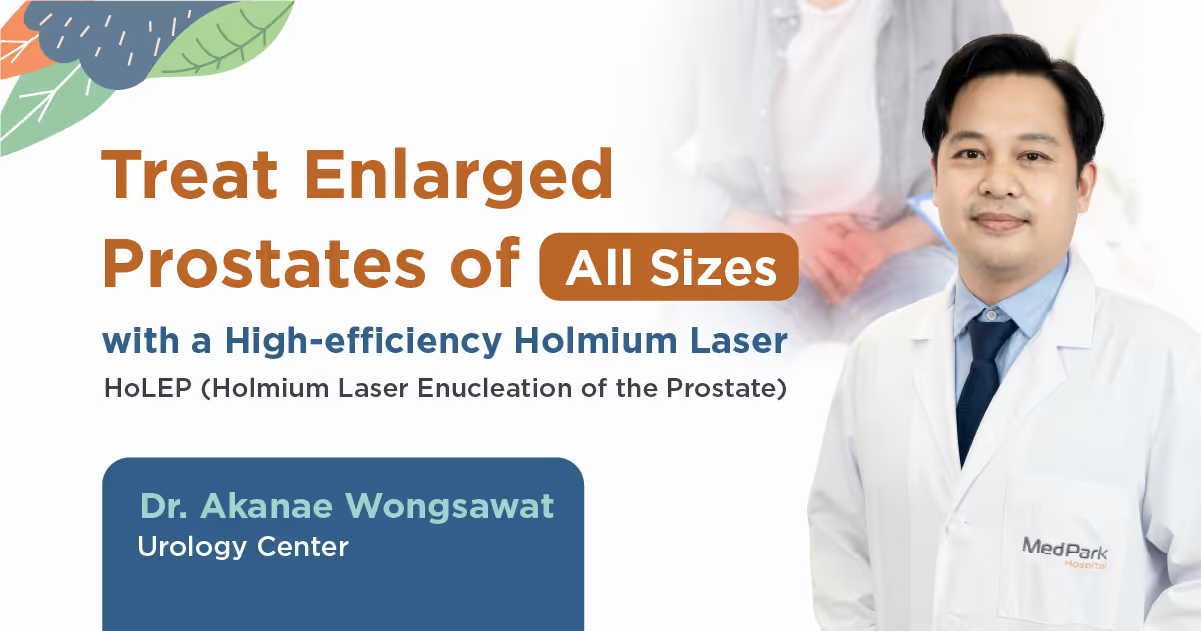
MedPark Hospital, Bangkok, Urology Center features a team of highly skilled, professor-level urological surgeons with extensive experience in successfully curing enlarged prostates of all sizes, ranging from small to very large—including cases involving complications of every level of complexity. Using state-of-the-art technology combined with sophisticated surgical techniques—including endoscopic surgery, GreenLight Laser PVP, and HoLEP Laser—yields highly effective and excellent long-term treatment outcomes.
- Urological Surgeons Specialized in HoLEP with extensive experience in successfully treating and completely curing numerous cases of enlarged prostate, improving urine flow, lowering the risk of repeat surgery, and truly enhancing the patient's overall quality of life.
- Advanced Holmium Laser Technology, performed endoscopically without the need for open abdominal surgery, precisely treats enlarged prostates of all sizes, thoroughly removing excess tissue with minimal pain, minimal blood loss, and a speedy recovery, allowing patients to return home within 1-2 days.
- JCI Accredited, the Highest Safety Standards Hospital, equipped with hybrid ORs (operating rooms) capable of supporting multiple surgical techniques in a single operating room, featuring advanced infection-control systems, ensuring maximum surgical safety, and giving both patients and their families peace of mind.
FAQ
1. When can I resume sexual activities after HoLEP surgery?
Patients who undergo HoLEP (Holmium Laser Enucleation of the Prostate) can typically resume normal sexual activity within 2–4 weeks after surgery. Individual recovery times may vary by patient. However, doctors recommend abstaining from sexual intercourse until the internal surgical site has completely healed or until the doctor assesses that you have sufficiently recovered to resume normal sexual activity safely.
2. Does HoLEP prostate laser surgery affect sexual function?
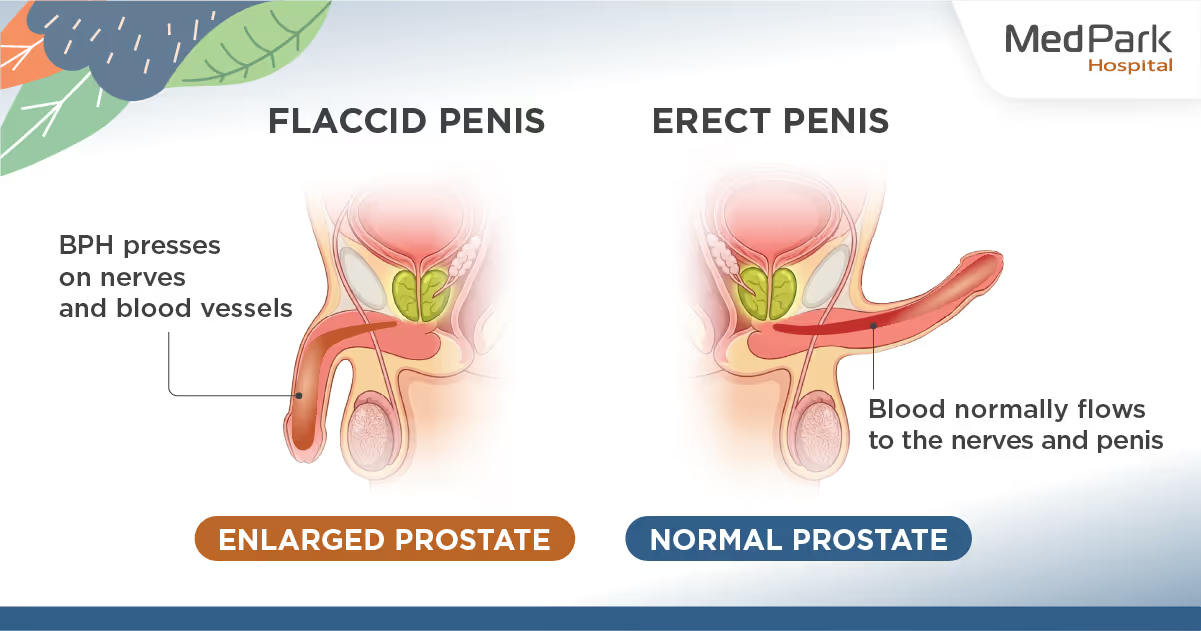
HoLEP (Holmium Laser Enucleation of the Prostate) does not affect sexual function in patients whose sexual function was previously normal. After the surgery, the ability to achieve and maintain erectile function remains fully preserved and functional. Medical research indicates that HoLEP has no impact on erectile function, as the precision of the Holmium laser prevents damaging the nerves controlling erectile function, making HoLEP a treatment method for BPH with a robust safety profile.
3. How much does HoLEP surgery cost?
The cost of HoLEP (Holmium Laser Enucleation of the Prostate) at MedPark Hospital varies by patient, depending on the size of the enlarged prostate, any complications, and additional diagnostic tests such as a biopsy or length of hospital stay. You can make an appointment to evaluate your suitability for this treatment via this website or by calling the Urology Center, MedPark Hospital, 6th Floor, Counter D, Tel. 02-090-3076, to get an immediate diagnosis and treatment plan.